Top 10 Custom Plastic Extrusion Manufacturers Worldwide
Choosing the right partner for custom plastic extrusion can shape an entire product lifecycle. Profile accuracy, material stability, tooling quality, and delivery discipline all matter. A beautiful sample means little if production drifts after 50,000 meters.
Chris Rauwendaal, a recognized extrusion specialist and author of Polymer Extrusion, describes the extruder as “the heart of a plastics processing operation.” That perspective guides this overview. The machines, dies, cooling systems, and operators must work as one system. A small temperature variation can leave visible lines on a profile. Poor die maintenance can create uneven walls, wasted resin, and costly delays.
This article examines ten leading manufacturers worldwide. The comparison considers technical experience, material capabilities, tolerance control, prototyping support, quality systems, and international service. It also considers less visible details, such as engineering communication and response speed when a drawing changes.
No ranking is flawless. Market data changes. Regional strengths differ. A manufacturer excellent at rigid PVC profiles may not suit medical-grade elastomers or complex coextrusion. That limitation deserves honesty.
The selected companies represent different production strengths, including construction profiles, automotive components, seals, tubing, and specialized industrial shapes. Readers should verify certifications, testing methods, minimum order quantities, and tooling ownership before choosing a supplier.
Custom plastic extrusion is not merely a catalog purchase. It is a collaboration between design, polymer science, tooling, and production control. The strongest supplier may not be the largest one. Sometimes, the best fit is the manufacturer that asks the most practical questions.
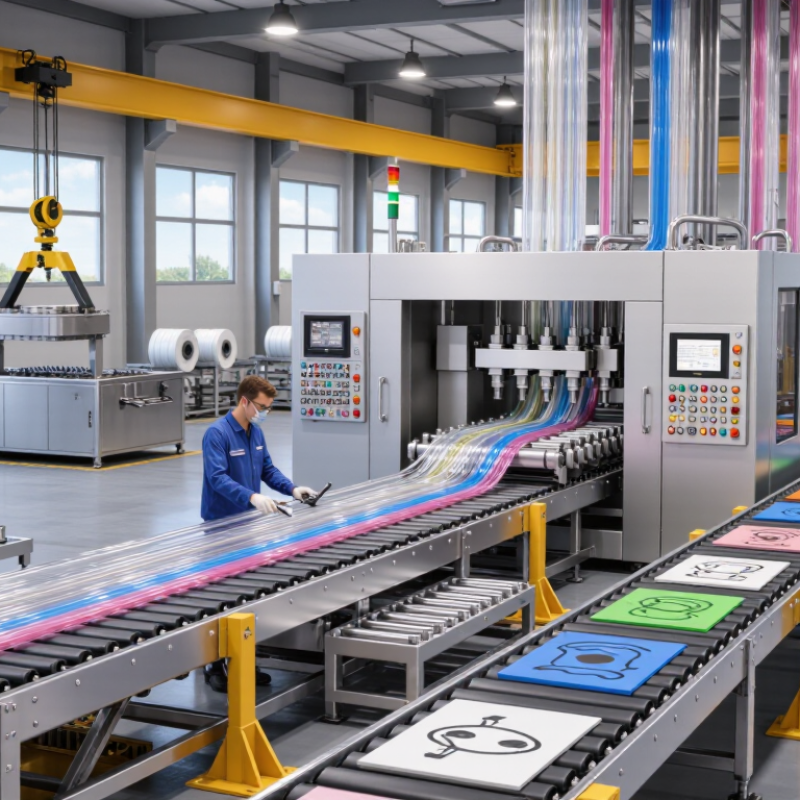
Industry Scope and Criteria for Selecting Custom Plastic Extrusion Manufacturers
The custom plastic extrusion industry covers profiles, tubing, sheets, films, and co-extruded components for construction, medical, electrical, automotive, and consumer applications. Manufacturers may serve local plants or global supply chains. The right choice depends on more than machine size. It requires evidence of repeatable production, material knowledge, and practical engineering support.
Review each manufacturer’s experience with your polymer, geometry, wall thickness, and tolerance requirements. Ask for sample parts, dimensional reports, and details about tooling ownership. A capable supplier should explain die design, cooling methods, line speed, and expected shrinkage in clear terms. Small details matter.
Check resin traceability, process records, operator training, and inspection equipment. Independent testing can confirm strength, color stability, moisture resistance, or thermal performance when the application demands it.
Capacity claims need careful examination. A large facility may still struggle with short runs or frequent design changes. Request a pilot run before approving full production, especially for tight tolerances or multi-layer structures.
Evaluate lead times, backup equipment, packaging, export documentation, and communication across time zones. Environmental practices also deserve scrutiny, including scrap handling, recycled content control, and energy monitoring.
No scorecard is perfect. One overlooked issue, such as inconsistent measurement methods, can create expensive delays. Select a partner that documents limitations honestly and improves through corrective action.
Manufacturing Capabilities and Materials Used by the Top Global Suppliers
Global custom plastic extrusion suppliers compete through process control, tooling depth, and material flexibility. PlasticsEurope’s Plastics—the Fast Facts 2023 reports 400.3 million tonnes of global plastics production in 2022. That scale rewards manufacturers that can move from prototypes to stable, repeatable production.
Leading facilities commonly operate single-screw, twin-screw, coextrusion, and crosshead lines. They produce seals, tubing, channels, films, and complex profiles. Computer-controlled temperature zones protect dimensional stability during long runs. Inline laser gauges can monitor wall thickness within seconds. Custom toolrooms also shorten die-development cycles, although tooling estimates are not always reliable.
Material selection depends on heat, chemicals, flexibility, and outdoor exposure. Polyethylene and polypropylene suit lightweight industrial parts. PVC supports rigid profiles and flexible sealing compounds. ABS offers impact resistance, while polycarbonate handles demanding transparency and strength requirements. TPEs provide rubber-like flexibility without traditional vulcanization. Fluoropolymers serve severe chemical environments, but processing costs remain high.
According to ISO 527 testing principles, tensile performance should be measured under controlled conditions. ASTM D638 is also widely used for plastic tensile testing. Reports from the OECD estimate that global plastic waste reached 353 million tonnes in 2019, increasing pressure for recycled content and design efficiency. Some suppliers now process post-consumer or post-industrial resins, supported by melt filtration and moisture control. Results can vary.
A polished specification sheet is not proof of capability. Buyers should request tolerance data, material certificates, batch records, and samples from actual production lines. Even advanced manufacturers face warpage, color drift, and recycled-material variability. That uncertainty deserves honest engineering review.
Top 10 Custom Plastic Extrusion Manufacturers Worldwide - Manufacturing Capabilities and Materials Used by the Top Global Suppliers
Anonymized global supplier capability benchmark based on commonly available custom extrusion technologies, engineering thermoplastics, secondary operations, and quality practices.
| Rank | Supplier Profile | Primary Market Coverage | Core Extrusion Capabilities | Common Materials Processed | Typical Product Range | Typical Tolerance* | Secondary Operations | Main End-Use Sectors |
|---|---|---|---|---|---|---|---|---|
| 1 | Global Tier A Precision Profile Specialist |
North America, Europe, Asia-Pacific | Single-screw and twin-screw profile extrusion; co-extrusion; rigid and flexible profiles; continuous production | PVC ABS PC TPU TPE | Small tubing to profiles approximately 300 mm wide | Typically ±0.10–0.30 mm, depending on geometry and material | Cutting, drilling, punching, welding, printing, assembly, protective film application | Construction, automotive, lighting, appliances, industrial equipment |
| 2 | Global Tier A Medical Extrusion Specialist |
North America, Europe, Asia-Pacific | Medical tubing, multilumen tubing, micro-extrusion, co-extrusion, cleanroom manufacturing | PVC PE PP TPU TPE PEEK | Micro-tubing below 1 mm to larger medical tubing above 10 mm | Often ±0.02–0.15 mm for controlled tubing dimensions | Tip forming, flaring, skiving, slitting, bonding, cleanroom packaging, inspection | Catheters, diagnostic devices, fluid management, laboratory equipment |
| 3 | Global Tier A Automotive Systems Supplier |
North America, Europe, China, Southeast Asia | Multi-layer tubing, reinforced hose extrusion, profile extrusion, in-line inspection | PA PE PP PVC TPE TPV | Flexible tubing, seals, channels, conduits, and profiles up to approximately 250 mm wide | Typically ±0.15–0.50 mm, based on product design | Cut-to-length, punching, forming, joining, labeling, leak testing, kitting | Automotive fluid systems, weather seals, wire management, interiors |
| 4 | Global Tier B Technical Tubing Manufacturer |
Europe, North America, Asia-Pacific | Single-layer and multilayer tubing; high-temperature and chemical-resistant extrusion | PTFE PVDF FEP PFA ETFE PEEK | Tube inside diameters from sub-millimeter sizes to approximately 100 mm | Typically ±0.03–0.25 mm for tubing dimensions | Bellows forming, flaring, cutting, heat setting, braid insertion, pressure testing | Chemical processing, semiconductor, aerospace, medical, laboratory systems |
| 5 | Global Tier B Building Products Specialist |
Europe, North America, Latin America, Asia-Pacific | High-volume rigid profile extrusion; co-extrusion; foamed profiles; calibrated shapes | uPVC PVC ASA ABS PE WPC | Window, door, decking, trim, and channel profiles up to approximately 600 mm wide | Typically ±0.30–1.00 mm, depending on profile size | Cutting, drilling, routing, welding, lamination, foil wrapping, fastening preparation | Windows, doors, façades, flooring, decking, interior finishing |
| 6 | Global Tier B Wire and Cable Compound Specialist |
North America, Europe, Middle East, Asia-Pacific | Insulation and jacketing extrusion; tandem lines; thin-wall coating; high-speed production | PVC PE XLPE TPU TPE LSZH | Fine wire coatings to heavy-duty cable jackets exceeding 50 mm diameter | Typically ±0.02–0.30 mm for insulation or jacket thickness | Stripping, marking, spark testing, dimensional inspection, coiling, take-up packaging | Power cables, data communications, industrial automation, renewable energy |
| 7 | Global Tier C Consumer and Appliance Profile Supplier |
Asia-Pacific, Europe, North America | Decorative profiles, soft-touch co-extrusion, sheet and strip extrusion, high-volume tooling | ABS PC PP HIPS TPE PMMA | Thin strips and trims to profiles approximately 200 mm wide | Typically ±0.20–0.60 mm | Embossing, printing, laser marking, cutting, adhesive application, assembly | Appliances, electronics, furniture, retail fixtures, consumer products |
| 8 | Global Tier C Industrial Conveyor and Sealing Specialist |
Europe, North America, Asia-Pacific | Wear strips, guides, gaskets, seals, flexible profiles, filled polymer extrusion | UHMW-PE HDPE Nylon POM TPU EPDM | Small wear components to profiles approximately 300 mm wide | Typically ±0.15–0.50 mm | Drilling, milling, notching, splicing, vulcanizing, bonding, surface finishing | Material handling, packaging machinery, food processing, industrial automation |
| 9 | Global Tier C Energy and Infrastructure Supplier |
North America, Europe, Australia, Asia-Pacific | Large-profile extrusion, conduit and duct production, fire-retardant compounds, co-extrusion | HDPE MDPE PVC PP FR-ABS PA | Small conduits to large ducts and profiles exceeding 500 mm in section width | Typically ±0.50–2.00 mm for large profiles | Socketing, flaring, drilling, grooving, fusion preparation, pressure and dimensional testing | Utilities, telecommunications, electrical infrastructure, water management |
| 10 | Global Tier C Rapid Customization and Prototyping Supplier |
North America, Europe, Asia-Pacific | Low-to-medium-volume custom profiles, rapid tooling, flexible production, material trials | PLA ABS PC PETG TPU PE PP | Prototype sections to production profiles approximately 150 mm wide | Typically ±0.30–1.00 mm during development and small-batch production | Prototype tooling, sample cutting, 3D measurement, drilling, printing, small-batch assembly | Product development, industrial design, packaging, robotics, specialty equipment |
*Tolerance ranges are representative industry benchmarks rather than guaranteed specifications. Actual capability depends on polymer grade, profile geometry, tooling design, line speed, cooling method, and inspection requirements. Material abbreviations: PA = polyamide, PC = polycarbonate, PE = polyethylene, PP = polypropylene, PVC = polyvinyl chloride, POM = acetal, PTFE = polytetrafluoroethylene, TPU = thermoplastic polyurethane, TPE = thermoplastic elastomer, and WPC = wood-plastic composite.
Profiles of Ten Leading Custom Plastic Extrusion Manufacturers Worldwide
Selecting leading custom plastic extrusion manufacturers requires more than counting revenue. The ten profiles examine tooling expertise, material control, global production, and documented quality systems. MarketsandMarkets estimated the global plastic extrusion market at USD 7.5 billion in 2023. It projects approximately USD 9.3 billion by 2028, representing a 4.4% compound annual growth rate.
The profiled manufacturers serve distinct application needs. One focuses on tight-tolerance medical tubing and cleanroom production. Another specializes in automotive seals, using inline inspection and controlled cooling. Several support construction profiles, cable insulation, packaging components, and industrial guides.
Their strongest common feature is process evidence: resin batch records, dimensional reports, traceability, and repeatable die maintenance. ISO 9001 is useful, but certification alone proves little. Shop-floor discipline matters more.
Fortune Business Insights reported a plastic extrusion market value of about USD 7.84 billion in 2023, with continued growth expected through 2032. That expansion increases pressure on capacity, energy use, and delivery reliability. Practical buyers should request sample sections, tolerance data, scrap rates, and realistic lead times. Public information remains uneven. Some manufacturers publish impressive capabilities but limited performance data. That weakness deserves scrutiny. A technically strong supplier may still fail when tooling changes, resin availability shifts, or a profile needs rapid redesign.
Quality Standards, Engineering Support, and Customization Services
Choosing among the top 10 custom plastic extrusion manufacturers worldwide requires more than comparing catalogues. Quality systems should be visible in daily production, not only stated in brochures. Look for documented material checks, dimensional inspections, and traceable batch records. ISO-based procedures can support consistency, but certification alone does not guarantee a suitable profile. Ask how suppliers control wall thickness, surface finish, color stability, and cut length.
Engineering support often separates a capable partner from a basic processor. Experienced teams review drawings, polymer selection, tolerances, and tooling risks before production begins. They may suggest a radius change to prevent stress or adjust a hollow section for smoother cooling. A practical supplier can provide prototypes, inspection samples, and clear feedback when a design is difficult to manufacture. Details matter.
No process is perfect. Even strong manufacturers may miss an assumption during early development. Reliable communication helps expose that weakness before it becomes costly. Customization services should cover tooling design, co-extrusion options, drilling, punching, cutting, and secondary assembly when appropriate. Testing should reflect real use, including heat, moisture, pressure, or repeated movement. Request measurable acceptance criteria and review sample results with the engineering team. A manufacturer earns trust through evidence, responsive problem-solving, and honest limits, rather than confident promises.
Applications, Market Coverage, and Supplier Comparison Factors
Top 10 Custom Plastic Extrusion Manufacturers Worldwide
Applications, market coverage, and supplier comparison factors reveal more than production volume. PlasticsEurope reported global plastics production of about 413.8 million tonnes in 2023. Grand View Research estimates the plastic extrusion market was worth nearly USD 7.9 billion that year. Demand is visible in construction profiles, medical tubing, automotive seals, cable insulation, and packaging components. Each application requires different control over wall thickness, surface finish, heat resistance, and dimensional stability.
A useful top-ten comparison should examine more than factory size. Review resin expertise, tooling capability, tolerance records, and production scale. ISO 9001 supports quality management, while ISO 13485 or IATF 16949 may matter for regulated medical or automotive projects. Market coverage also deserves close attention. Regional warehouses, export experience, technical support, and backup production can reduce delays. Ask for inspection data, sample approval procedures, and documented change control.
Cost remains important, but it can mislead. A cheaper profile may create higher scrap, slower assembly, or expensive tooling revisions. Supplier audits often reveal practical details that brochures omit. I would also compare recycled-content options and energy reporting, because environmental claims need evidence. Market reports can lag behind capacity changes. That is a weakness. Buyers should validate current lead times, machine availability, and material sourcing before ranking manufacturers.
Related Posts
-
2025 Ultimate Guide to Choosing the Best Plastic Profiles for Your Projects
-
What is Plastic Profiles and How Are They Used in Industry?
-
2026 How to Choose the Best Plastic Extrusion Profiles?
-
Top Plastic Extrusion Manufacturers for Global Buyers
-
Top 5 Plastic Extrusion Tips for Efficient Production?
-
How to Choose the Right Plastic Extruder for Your Needs?