How to Choose the Right Plastic Extruder for Your Needs?
Choosing the right plastic extruder is a vital decision in manufacturing. According to industry expert Dr. Emily Chen, "Selecting the correct plastic extruder impacts production efficiency and product quality." This highlights the importance of understanding your specific needs.
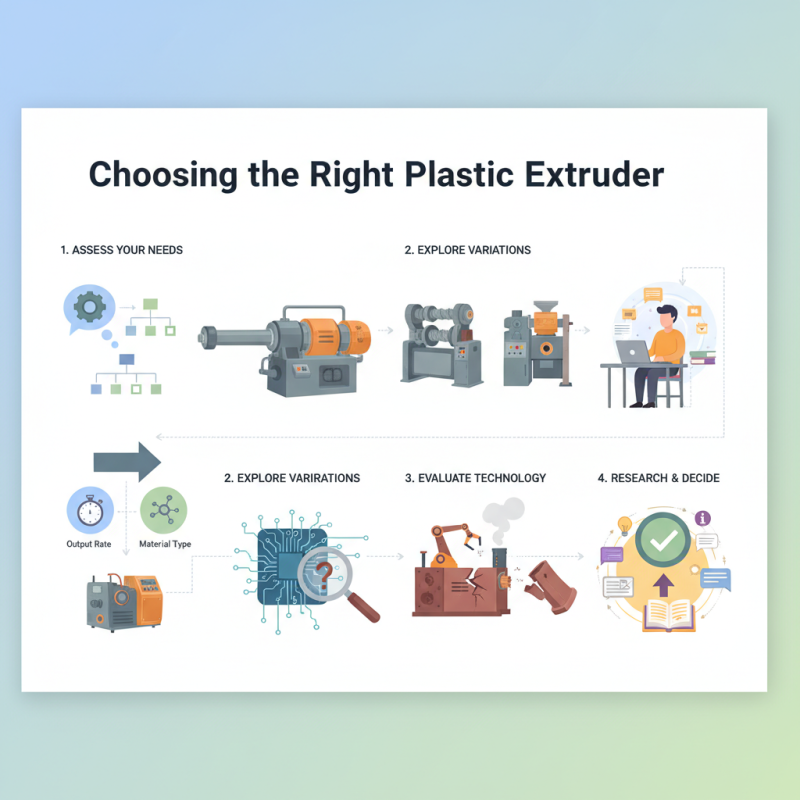
Different applications require different features. For instance, the desired output rate and material type play a significant role. A plastic extruder can vary greatly in design and capability. This emphasizes the need for a thorough evaluation before making a choice.
Moreover, not all plastic extruders are created equal. Some might have advanced technology while others lack reliability. It's essential to reflect on your requirements and do careful research. Making a rash decision may lead to operational challenges down the line. Consider all options and gather insights to find the best fit for your needs.
Understanding the Basics of Plastic Extrusion Technology
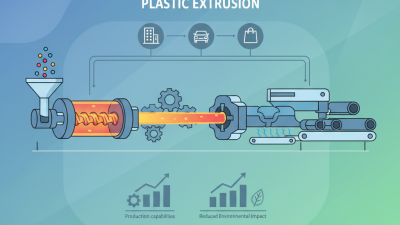
Plastic extrusion is a critical process in manufacturing. It allows for the creation of various plastic products. Understanding its basic principles can help you choose suitable equipment.
At its core, plastic extrusion involves melting plastic pellets and forcing them through a-shaped die. The extruded material cools and solidifies into a specific shape. This method produces parts like pipes, sheets, and films. Variations exist, such as the need for different temperatures or pressures depending on the plastic type.
Choosing the right extruder can be challenging. You need to consider factors like desired output, material properties, and cost. A miscalculation can lead to inefficiency. Reflecting on specific needs will provide clarity. Make sure to evaluate production volume and product specifications carefully.
Plastic Extruder Types and Their Applications
This chart illustrates the various types of plastic extruders and their applications based on the number of uses. Single screw extruders are the most commonly utilized, while pipe extruders have the least applications in the current market.
Identifying Your Specific Plastic Extrusion Application Requirements
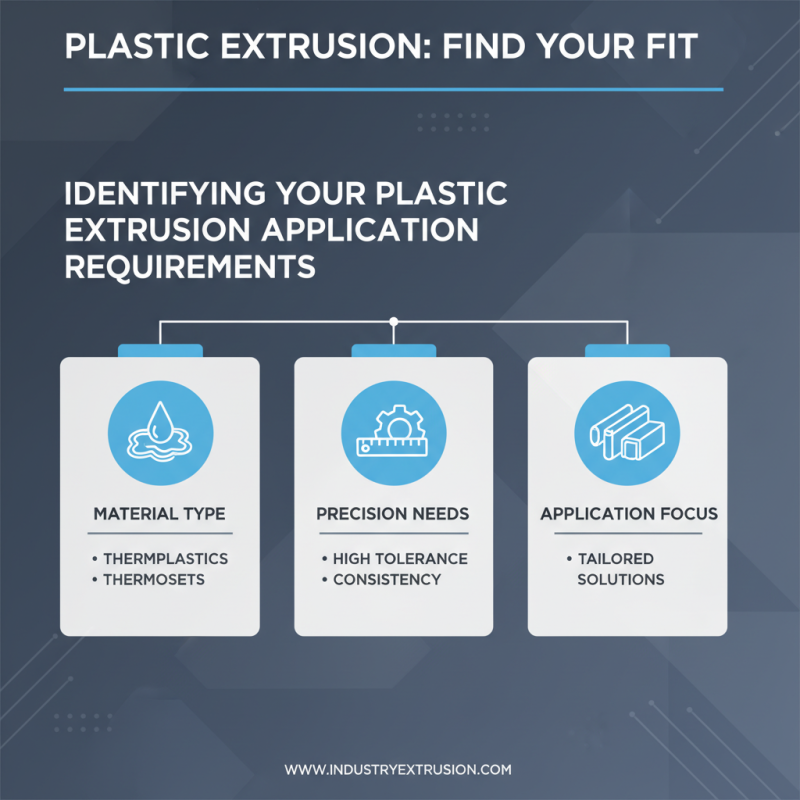
Choosing the right plastic extruder begins with understanding your specific application. Different projects have unique requirements that demand tailored solutions. Consider the type of plastic you will be using. Different extruders perform better with specific materials, such as thermoplastics or thermosets. If your project requires high precision, ensure the extruder can maintain tight tolerances.
Next, think about the production volume. Are you working on prototypes or large-scale manufacturing? Some extruders cater to small batches while others are built for mass production. Each choice impacts speed, efficiency, and cost. Additionally, assess the extruder's capabilities to handle varying temperatures. Some applications may require precise thermal control to maintain material integrity.
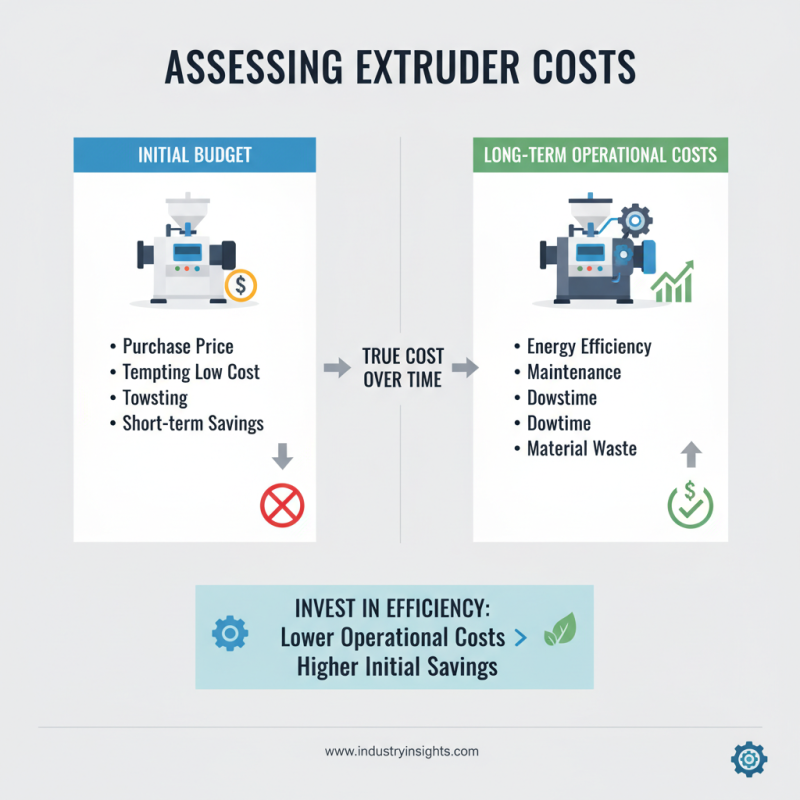
Don't overlook energy efficiency. It can significantly affect operational costs over time. An extruder that consumes less power may be appealing in the long run. However, the initial investment might be higher. Consider this trade-off carefully. Finally, consult with experts in the field. Their insights can help navigate challenges, as every application may not fit the general mold. Your specific needs should guide your decision, even if this process feels overwhelming at times.
Evaluating Key Features of Plastic Extruders for Performance
When selecting a plastic extruder, understanding the key features is crucial. One of the most important factors is the barrel design. A well-designed barrel can dramatically impact the efficiency and quality of the extrusion process. Look for options with features like adjustable temperature zones. This will allow for better control over the melting process of plastic materials.
Another vital aspect is the screw configuration. Different screw designs fulfill varying functions, impacting mixing, conveying, and pumping. Ensure the extruder screw matches your specific application. If producing complex profiles, a specially designed screw may be necessary. This can lead to more consistent product quality, which is always beneficial in any manufacturing environment.
Consider also the maintenance requirements of your selected extruder. Easy access to components for cleaning and repair is a plus. Frequent maintenance can lead to downtime, affecting production rates. Reflecting on these needs is essential as every manufacturing environment differs. Balancing performance and reliability can be challenging. Look for an extruder whose design and features align with your production goals.
How to Choose the Right Plastic Extruder for Your Needs? - Evaluating Key Features of Plastic Extruders for Performance
| Feature |
Importance |
Options Available |
Considerations |
| Material Compatibility |
High |
PLASTICS: ABS, PVC, PE, etc. |
Ensure extruder can handle chosen materials. |
| Screw Design |
Critical |
Single, Twin, Barrier Screws |
Influences mixing and output quality. |
| Production Rate |
High |
Expressed in kg/hr |
Match capacity with demand needs. |
| Heating and Cooling System |
Important |
Convection, Water, Oil |
Effective temperature control is crucial. |
| Machine Size |
Medium |
Compact, Standard, Large |
Consider floor space and installation needs. |
| Control System |
High |
PLC, Touch Screen, Manual |
Ease of use affects productivity. |
| Price |
Critical |
Range varies widely |
Balance cost with features and quality. |
Comparing Different Types of Plastic Extruders on the Market
When exploring plastic extruders, one must consider various types available on the market. There are single-screw, twin-screw, and co-rotating extruders. Each type serves unique applications. According to industry reports, twin-screw extruders have seen a rise in popularity due to their high mixing efficiency and versatility. They account for approximately 35% of the market share, reflecting manufacturers' growing needs for complex material formations.
Single-screw extruders are ideal for simple processes. They are easier to maintain and generally more cost-effective. However, their mixing capability is limited compared to twin-screw options. For those starting out, single-screw models might seem appealing for their simplicity. Yet, this could lead to challenges in producing specific compositions or properties.
Tip: Assess your production volume and desired material properties carefully. This will help in deciding which extruder type fits best. If you often adjust formulations, consider investing in more versatile equipment despite higher initial costs. Recognizing your specific needs can prevent costly missteps. Remember, no extruder type is perfect; each has strengths and weaknesses that must be weighed against your production goals.