What Are Plastic Extrusion Profiles and Their Types?

Plastic extrusion profiles are continuous plastic shapes produced by forcing heated resin through a shaped die. Unlike injection-molded parts, they can extend for many meters with the same cross-section. Window frames, cable channels, seals, trim, tubing, and protective edge guards are common examples. The process looks simple, but consistent results depend on careful control.

A profile begins with material selection. PVC, polyethylene, polypropylene, ABS, and thermoplastic elastomers each behave differently during heating and cooling. Rigid profiles support structures, while flexible profiles bend around doors, panels, or cables. Co-extruded profiles combine materials, such as a firm base with a soft sealing lip. Foamed profiles reduce weight, although their surface finish and dimensional stability require closer attention.

In practical production, die design, temperature balance, cooling speed, and haul-off control shape the final result. A small temperature shift can twist a long trim section. It may also change its fit. Engineers usually review wall thickness, shrinkage, corner radii, tolerance requirements, and installation conditions before production begins. Samples should be measured, tested, and compared with the intended application.

No single profile fits every project. That matters.

This guide explains the main types of plastic extrusion profiles and the decisions behind them. It also considers material performance, manufacturing limits, and real-world use. Some designs appear efficient on paper but prove difficult during assembly. That honest gap deserves attention. Reliable selection combines supplier experience, documented testing, and clear technical requirements rather than attractive drawings alone.
What Are Plastic Extrusion Profiles and Their Types?

What Are Plastic Extrusion Profiles?

Plastic extrusion profiles are continuous plastic shapes made by pushing heated material through a designed opening called a die. The die controls the profile’s cross-section, such as a tube, channel, seal, frame, or flat strip. After leaving the die, the softened plastic is cooled, sized, and cut into required lengths.

Manufacturers commonly produce rigid profiles for window frames, protective edges, and construction channels. Flexible profiles suit sealing strips, cable covers, and soft trim. Hollow profiles reduce weight while maintaining useful strength. Co-extruded profiles combine two materials or colors in one section. Custom profiles can include slots, lips, chambers, or interlocking edges.

Material selection matters greatly.

Common choices include PVC, polyethylene, polypropylene, and thermoplastic elastomers. Each material responds differently to heat, pressure, sunlight, impact, and chemicals. In practical production, engineers check wall thickness, shrinkage, surface finish, and dimensional tolerance. A profile may look correct but still fail during installation if its flexibility is poorly judged. This is an easy mistake to overlook. Cooling speed and die alignment also affect straightness. The word “standard” can mislead, because every application may need small adjustments. Testing samples under real temperature and load conditions provides more dependable results than relying only on drawings.

What Are Plastic Extrusion Profiles and Their Types?

Typical melt-temperature windows for thermoplastics commonly used to produce solid, hollow, multi-lumen, co-extruded, and custom plastic profiles.

Plastic extrusion profiles are continuous shapes formed by pushing softened polymer through a die. Solid profiles have a fully filled cross-section, hollow profiles contain one or more cavities, multi-lumen profiles contain several internal channels, and co-extruded profiles combine different materials or colors in one continuous shape. The temperature ranges shown are representative processing windows; the exact setting depends on the material grade, additives, die design, and equipment.

How Are Plastic Extrusion Profiles Manufactured?

Plastic extrusion profiles are continuous shapes made by forcing softened plastic through a shaped die. They can become window seals, cable channels, trim, guides, or protective edges. Their cross-sections remain consistent along the length. Manufacturing begins with selecting a polymer that suits temperature, flexibility, strength, and chemical exposure. Additives may improve color, weather resistance, or impact performance.

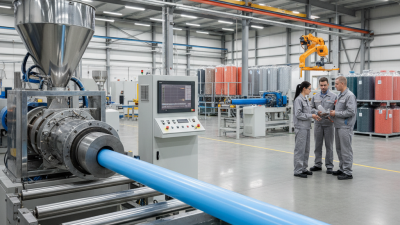
The material usually enters a hopper as pellets. A heated barrel and rotating screw gradually melt and mix them. Temperature zones must remain controlled. Too much heat can degrade the polymer, while insufficient heat may create rough surfaces or weak areas. The molten plastic then passes through a precision die. The die determines the profile’s basic geometry, but it does not guarantee perfect results.

Calibration equipment cools and stabilizes the emerging profile. Vacuum sizing can hold tight dimensions, while water or air removes heat. Pullers maintain steady speed, and cutting systems produce specified lengths. Operators inspect edges, surface finish, wall thickness, and dimensional stability during production. Small changes matter. A slight speed variation may cause twisting or uneven thickness.

In practical manufacturing, quality control is not purely automatic. Skilled technicians adjust temperatures, pressure, cooling, and line speed when materials behave differently. Even carefully designed tooling may need refinement after testing. This is where production experience becomes valuable. Samples are measured against technical drawings, then tested for fit and performance. The first batch may be usable, but it is not always the final answer.

What Are the Main Types of Plastic Extrusion Profiles?

Plastic extrusion profiles are continuous plastic shapes produced by pushing melted material through a designed die. Their cross-sections remain consistent along the full length. Common examples include trims, channels, seals, tubes, frames, and protective edges.

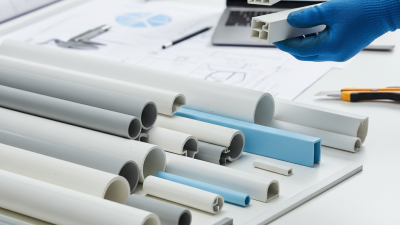
The main types differ by structure and function. Solid profiles have a dense cross-section and suit rails, handles, and support strips. Hollow profiles contain one or more internal cavities, reducing weight while preserving useful stiffness. Flexible profiles use softer materials for gaskets, edge guards, and vibration control. Co-extruded profiles combine two materials or colors in one piece. A rigid base may support a soft sealing lip. Custom profiles follow detailed drawings and often include mounting slots, ribs, or snap-fit features. In practice, small die changes can affect wall thickness, cooling, and final dimensions. That detail is easy to underestimate.

Tips: Check the profile’s critical dimensions before production. Measure wall thickness at several points, not only near the ends. Confirm hardness, color, surface finish, and cut length with real samples. Keep the design practical. Very thin corners may deform during cooling. I have seen attractive profiles fail because assembly force was ignored. Tolerances should reflect actual use, tooling limits, and temperature changes. A prototype test can reveal problems that drawings miss. Even experienced teams need to review assumptions.

Which Materials Are Used in Plastic Extrusion Profiles?

Plastic extrusion profiles are shaped by material choice long before they leave the die. PVC remains common for window seals, cable channels, and rigid construction trims because it offers dimensional stability and weather resistance. Polyethylene and polypropylene suit lightweight guides, protective edges, and chemical-handling applications. Their low density also reduces transport weight. According to PlasticsEurope’s Plastics – the Fast Facts 2023 report, global plastics production reached about 400.3 million tonnes in 2022. That scale explains the industry’s broad material selection.

Performance needs can change the formula. ABS provides impact resistance for indoor housings, while polycarbonate supports profiles requiring transparency and toughness. Thermoplastic elastomers create soft, flexible sealing lips without separate rubber vulcanization. Recycled polymers can reduce virgin resin demand, but quality may vary between production batches. Not always simple. The OECD’s Global Plastics Outlook estimates that global plastic waste reached 353 million tonnes in 2019, nearly twice the 2000 level. This figure makes material recovery more than a marketing concern.

In practical manufacturing, engineers compare melt flow, shrinkage, UV exposure, operating temperature, and fire behavior. A rigid PVC profile may crack in severe cold, while a flexible TPE profile may deform under constant pressure. Additives can improve color stability or weathering, yet they may complicate recycling. Material datasheets provide useful limits, but real-world testing remains essential. A profile exposed to sunlight, dust, and repeated bending often behaves differently from a laboratory sample. That gap deserves honest review.

What Are Plastic Extrusion Profiles and Their Types? - Which Materials Are Used in Plastic Extrusion Profiles?

Plastic extrusion profiles are continuous plastic shapes produced by forcing a heated thermoplastic material through a shaped die. The table below compares common profile types, suitable materials, typical characteristics, and practical applications.

Profile Type Typical Cross-Section or Geometry Common Materials Key Material Characteristics Typical Applications Main Advantages Important Design Considerations
Solid Profiles Solid strips, bars, rods, square sections, rectangular sections, and custom continuous shapes. PVC PE PP ABS PC Available with different combinations of rigidity, impact resistance, chemical resistance, and weatherability. Trim strips, guides, rails, edge protectors, spacers, and structural plastic components. Simple geometry, efficient continuous production, and broad material selection. Maintain reasonably uniform wall dimensions and avoid abrupt thickness changes that can cause warpage or uneven cooling.
Hollow Profiles Single- or multi-chamber tubes, rectangular hollow sections, channels, and enclosed structural sections. PVC HDPE PP PC ABS Lightweight construction with useful stiffness-to-weight performance; material choice determines impact and temperature resistance. Window and door components, conduit, tubing, frames, protective housings, and lightweight supports. Reduces material usage and weight while preserving geometric stiffness. Internal webs should be balanced, corners should be rounded, and cooling must be controlled to prevent dimensional distortion.
Tubing and Pipes Round, oval, or multilayer hollow tubes with a continuous internal passage. PVC HDPE LDPE PP TPU Can provide flexibility, chemical resistance, pressure resistance, or abrasion resistance depending on polymer and construction. Fluid transfer, electrical protection, pneumatic lines, irrigation, medical tubing, and cable routing. Continuous lengths, consistent internal diameter, and suitability for many fluid-handling systems. Control melt temperature, sizing, vacuum calibration, wall thickness, ovality, and pressure-rating requirements.
U-Channels and J-Channels Open channels with parallel legs; J-channels include an extended or asymmetrical return leg. PVC PE PP TPE ABS Can be rigid or flexible and may provide edge protection, retention, or concealment. Panel edging, cable management, glazing components, sheet retention, and protective trim. Easy installation, good edge coverage, and compatibility with snap-fit designs. Leg balance, opening width, shrinkage, and retaining force should be tested against the mating component.
L-Angles and T-Sections Two-leg right-angle sections or intersecting perpendicular flanges. PVC ABS PP PC PA Useful for corner protection, reinforcement, alignment, and lightweight framing. Furniture trim, construction details, equipment frames, shelving, and protective corners. Simple geometry with good bending stiffness in two directions. Unequal wall thickness can produce differential shrinkage; use radiused corners and balanced cross-sections where possible.
Seals and Gaskets Solid or hollow sealing lips, bulb seals, compression seals, and co-extruded sealing channels. PVC TPE TPU Silicone Designed for flexibility, compression recovery, sealing performance, and resistance to moisture or environmental exposure. Doors, windows, enclosures, automotive components, appliances, and industrial equipment. Continuous sealing lengths and the ability to combine rigid and flexible sections. Compression set, hardness, sealing force, corner joining, tolerances, and compatibility with the mating surfaces are critical.
Flexible Trim Profiles Flexible edging, bulb trim, channel trim, lip seals, and soft protective strips. TPE TPU Soft PVC EPDM High elasticity and conformability; hardness can range from soft rubber-like grades to semi-rigid grades. Automotive trim, furniture edging, sheet-metal protection, access panels, and protective covers. Good fit on irregular edges, reduced assembly damage, and clean continuous appearance. Specify hardness, friction, tear strength, UV exposure, temperature range, and attachment method.
Decorative and Architectural Profiles Ornamental moldings, skirting, trims, façade components, and textured or wood-grain-like sections. PVC ABS PMMA ASA Selected for surface appearance, color stability, weather resistance, or the ability to accept finishes. Interior trim, wall panels, ceiling systems, displays, signage, and exterior architectural details. Repeatable appearance, low maintenance, and the ability to produce long continuous decorative parts. Control surface defects, gloss, color consistency, thermal expansion, UV resistance, and joining details.
Transparent Profiles Clear or translucent tubes, covers, lenses, light guides, and protective panels. PMMA PC PETG TPU High optical clarity or controlled light diffusion; impact performance and chemical resistance vary by polymer. Lighting components, display covers, machine guards, transparent tubing, and optical diffusers. Allows visual inspection, light transmission, and attractive product presentation. Prevent contamination, bubbles, die lines, and scratches; control moisture and cooling to preserve optical quality.
Co-Extruded Profiles Two or more polymer layers or materials combined in one continuous profile. Rigid PVC + Soft PVC PP + TPE PC + TPE ABS + TPE Combines different functions, such as structural rigidity with soft sealing, grip, cushioning, or color contrast. Sealing systems, automotive components, appliance trims, ergonomic grips, and protective edge profiles. Integrates multiple functions and can reduce assembly steps and separate fasteners. Materials must bond adequately or be mechanically locked; shrinkage, melt compatibility, and processing temperatures must be matched.
Fiber-Reinforced Profiles Continuous or shaped sections containing reinforcing fibers, commonly glass fibers. PA PP PVC PBT Higher stiffness, strength, and dimensional stability than many unfilled polymers; may have increased anisotropy. Industrial supports, electrical components, machine parts, structural guides, and transportation components. Improved mechanical performance and reduced thermal expansion in suitable formulations. Fiber orientation, die wear, surface finish, moisture control, and directional strength must be considered.
Wire and Cable Insulation Profiles Continuous concentric or shaped insulation and protective jacketing around conductors or cable assemblies. PVC PE XLPE TPU Fluoropolymers Electrical insulation, abrasion resistance, flexibility, flame performance, and environmental resistance depend on the compound. Power cables, communication cables, sensor cables, flexible cords, and industrial wiring. Uniform coverage, continuous production, and precise control of insulation thickness. Concentricity, dielectric requirements, melt adhesion, cooling, spark testing, and applicable electrical standards are essential.
Material selection note: The most suitable polymer depends on required stiffness, flexibility, impact resistance, chemical exposure, operating temperature, weatherability, transparency, flame performance, regulatory requirements, and expected service life. Actual performance varies by grade, additives, reinforcement, profile geometry, and processing conditions.

Where Are Plastic Extrusion Profiles Commonly Used?

Plastic extrusion profiles are continuous plastic shapes made by forcing heated material through a shaped die. Common types include channels, trims, tubes, seals, rods, and custom frames. Their cross-sections remain consistent along the entire length. This makes them useful when projects need repeatable dimensions, clean edges, and efficient production.

Construction uses profiles around windows, doors, wall panels, and flooring systems. A flexible edge trim can cover a rough panel edge and reduce contact with moisture. Rigid channels can guide cables without adding much weight. In interior spaces, decorative strips create neat transitions between different surfaces. Small details matter here.

Manufacturing facilities also use plastic profiles for machine guards, conveyor guides, protective rails, and storage dividers. In furniture production, profiles can reinforce lightweight panels or hide exposed board edges. Outdoor equipment may use UV-resistant profiles around covers and access doors. Material selection depends on temperature, impact, chemicals, flexibility, and expected service life. Polyvinyl chloride, polyethylene, polypropylene, and thermoplastic elastomers each perform differently.

In practice, designers should measure the installation gap carefully. A profile that fits perfectly on paper may loosen after heat expansion. I have seen attractive sections fail because their clips were too weak for repeated removal. Drainage, surface friction, and cleaning access also deserve attention. The cheapest profile is not always the most economical choice. Sometimes, a slightly thicker wall prevents early deformation and costly replacement.