2026 Top Clear Acrylic Tube Types for Global Buyers

Choosing the right clear acrylic tube in 2026 requires more than comparing prices or wall thicknesses. Global buyers now assess clarity, impact resistance, dimensional accuracy, and supply reliability together. A laboratory may need a clean, low-distortion tube for fluid observation. A retail designer may prefer a polished tube for displays, packaging, or lighting projects. Different uses demand different specifications.

This guide introduces the main clear acrylic tube types available to international purchasers. It examines extruded and cast options, transparent and tinted grades, thick-wall and thin-wall designs, and tubes with custom cutting or machining. Real purchasing decisions often depend on small details. End-cap fit, protective film quality, surface scratches, and tolerance consistency can affect the final result. They matter more than expected.

Material selection should match the working environment. Acrylic offers excellent transparency and useful weather resistance, but it is not automatically suitable for every temperature, chemical, or pressure condition. Confirm operating limits with technical datasheets. Request samples when appearance matters. Check certificates, production records, packaging methods, and export experience before placing a large order. Requirements may also differ by destination, industry, and project risk.

Some recommendations remain conditional. A low-cost tube can be practical for short-term displays, yet unsuitable for demanding outdoor use. A premium grade can improve performance, but it may not justify the added expense. This overview combines manufacturing knowledge, buyer-focused checks, and realistic sourcing considerations. It is designed to help distributors, engineers, fabricators, and project managers compare options with greater confidence. Clear decisions begin with accurate questions.
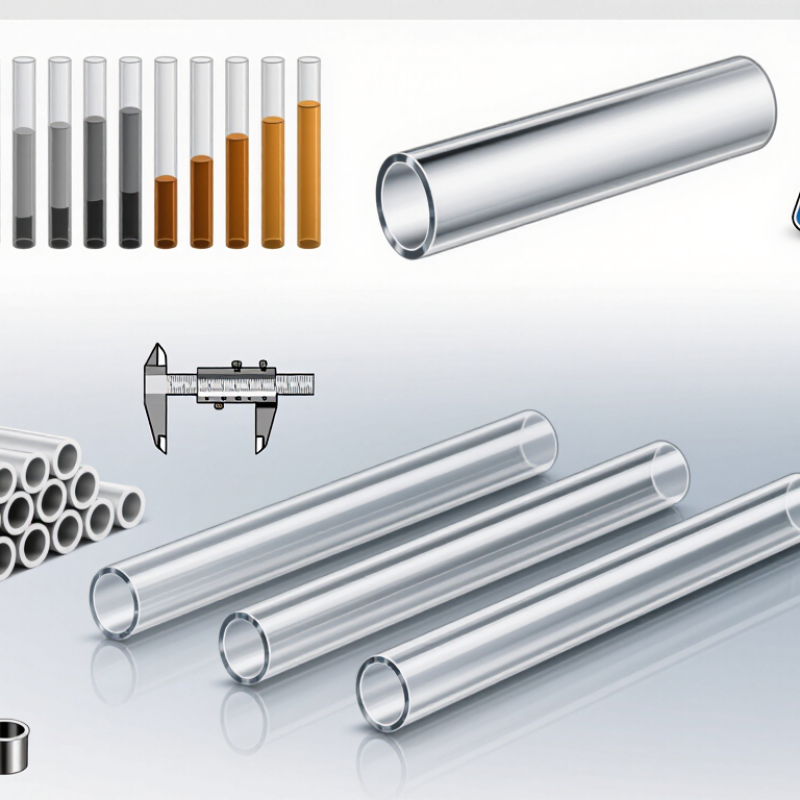
2026 Top Clear Acrylic Tube Types for Global Buyers

Clear Acrylic Tube Basics and Key Material Properties

Clear acrylic tubes are commonly made from polymethyl methacrylate, often called PMMA. Their glass-like appearance supports display, lighting, laboratory, and protective applications. Light passes through the wall with minimal visual distortion. The surface also accepts clean machining and polishing.

Acrylic offers good weather resistance and stable color under normal outdoor exposure. It is lighter than glass, which can simplify handling and reduce shipping weight. However, it is less impact-resistant than polycarbonate. Acrylic can crack when drilled poorly, tightened excessively, or exposed to sudden force. Small details matter. Wall thickness, outside diameter, and length should match the working load, not only the drawing.

Temperature is another key property. Standard acrylic performs well in moderate conditions but may soften near heat sources. Chemical compatibility also requires checking. Oils, solvents, and aggressive cleaners can cause clouding or stress cracks. A buyer should request dimensional tolerances, hardness data, light-transmission information, and sample pieces before approving volume production. Clear does not always mean optically perfect. Tiny bubbles, faint extrusion lines, or cut-edge marks may appear. That assumption can fail. In practice, no tube is flawless, so inspection criteria should be agreed in writing. Packaging deserves attention too, because surface scratches often happen during international transport rather than manufacturing.

Main Clear Acrylic Tube Types Available in 2026

Clear acrylic tubes in 2026 are available in several practical forms. Extruded tubes suit high-volume projects, with consistent dimensions and lower processing costs. Cast acrylic tubes offer better optical clarity and stronger wall thickness control. They work well for display cylinders, laboratory covers, and architectural lighting. Square and rectangular tubes provide cleaner alignment in framed structures, although they can be harder to source.

Precision tubes are produced for tighter tolerances and smoother internal surfaces. Thick-wall tubes handle greater mechanical demands, but they add weight and material cost. According to Grand View Research’s 2024 acrylic sheets market report, the acrylic market is expected to grow at over 5% annually through 2030. This supports continued demand for transparent plastic components. Another market assessment from Mordor Intelligence places PMMA market growth near 6% CAGR during the same period.

Small details matter. Ask about outer diameter, inner diameter, wall tolerance, end squareness, and light transmission. Flame-polished edges may look clearer, but machining can leave stress marks. UV resistance also varies by formulation, not only by appearance. A tube can look perfectly clear and still yellow earlier than expected. This is easy to overlook. Buyers should request samples, inspection records, and test data before approving large quantities. In practice, “clear” is not a complete specification.

Size, Shape, Wall Thickness, and Customization Options

Clear acrylic tubes are becoming more specialized for global buyers.

Grand View Research estimated the global acrylic sheets market at approximately USD 4 billion in 2023, with steady growth expected through 2030. This expansion supports wider tube choices, but standard dimensions still do not fit every application.

Size affects both appearance and performance.

Common outside diameters range from 10 to 300 millimeters, while cut lengths may extend beyond two meters. Always confirm whether measurements refer to the inside diameter, outside diameter, or finished length.

A 50-millimeter outside diameter with a 3-millimeter wall provides only 44 millimeters of usable internal space.

Small detail. Large consequence.

Shape selection depends on installation and visual purpose.

Round tubes suit displays, guards, and fluid observation. Square or rectangular profiles offer flatter mounting surfaces, although they may show stress more easily at corners. Wall thickness commonly ranges from 1 to 10 millimeters. Thicker walls improve impact resistance, but they also increase weight and cost.

Custom options include colored acrylic, frosted surfaces, drilled holes, slots, flanges, threaded ends, and polished edges.

Industry guidance from the Plastics Industry Association emphasizes matching material design with processing and service conditions. I would not specify thickness from appearance alone. Temperature, load, UV exposure, and transport vibration deserve equal attention. Even experienced buyers sometimes overlook the final assembly clearance.

Choosing the Right Tube for Different Global Applications

2026 Top Clear Acrylic Tube Types for Global Buyers

Choosing the Right Tube for Different Global Applications

Clear acrylic tubes serve very different purposes across global markets. Extruded tubes suit retail displays, lighting covers, and protective sleeves. They offer stable dimensions and lower production costs. Cast tubes provide better optical clarity and tighter customization. They fit laboratory equipment, architectural models, and premium display systems.

The choice depends on more than appearance. For outdoor signage, buyers should request UV-stabilized acrylic and verify weathering data. For fluid observation, wall thickness, internal smoothness, and chemical resistance matter more. Grand View Research projects the global acrylic market to grow at about 5.6% annually from 2024 to 2030. This growth reflects wider use in construction, lighting, and industrial components. Demand is rising, but specifications remain uneven across regions.

Acrylic also has limits. It can crack under sudden impact and soften near continuous high temperatures.

Use polycarbonate when impact resistance is critical. Not always acrylic.

For export projects, confirm outer diameter, inner diameter, tolerance, packaging, and required test reports. ASTM and ISO references can improve supplier communication, but they do not replace application testing. A recurring mistake is choosing the clearest tube without checking installation stress. A small mounting defect may become a visible fracture months later. Trial samples, temperature checks, and real-use inspection remain essential for reliable purchasing.

Quality Standards, Sourcing Factors, and Buyer Considerations

Clear acrylic tubes serve display, lighting, laboratory, packaging, and fluid-handling applications. Global buyers should distinguish extruded and cast tubes before comparing prices. Extruded tubes usually offer consistent dimensions and efficient production. Cast tubes can provide better optical clarity and lower internal stress, but availability may vary.

Ask for wall-thickness tolerance, outer-diameter tolerance, transparency, UV resistance, and operating-temperature data.

“Crystal clear” is not a measurable specification.

Quality control should include batch-based dimensional checks, visual inspection, and material verification. Request the acrylic grade, production date, inspection record, and certificate of conformity.

ASTM D788 helps classify acrylic molding materials, while ISO 4892 methods support artificial weathering tests. For outdoor use, accelerated UV data matters more than attractive sample photographs.

The OECD Global Plastics Outlook (2022) reports that global plastic waste doubled from 2000 to 2019, while only 9% was recycled. Therefore, buyers should ask about recycled content, production scrap management, and end-of-life options. Acrylic recycling remains limited in many regions.

Tips: Compare three samples from separate batches. Measure them with calibrated tools. Check haze under side lighting. Confirm packaging protects tube ends from scratches. I would also test a small order before scaling. It costs more initially, but one overlooked tolerance can disrupt an entire assembly. Supplier audits are useful, though they are not perfect. Keep written approval samples and change-control terms before signing a long-term agreement.