Why Choose Acrylic Tube for Global Sourcing Needs?

Global sourcing teams are reconsidering materials that balance clarity, durability, and predictable supply. Acrylic tube offers a practical answer for display systems, lighting components, laboratory equipment, and protective covers. It is lightweight, easy to machine, and available in transparent or tinted grades. The surface feels smooth and clean, even after repeated handling.

Market evidence supports this interest. Grand View Research valued the global acrylic sheets market at approximately USD 3.3 billion in 2023. It forecasts steady growth through 2030, supported by construction, retail, transportation, and lighting applications. Acrylic tube belongs to this wider PMMA supply chain. Therefore, buyers can often access established producers, standard diameters, and customized wall thicknesses. However, market growth does not guarantee consistent quality. Resin grade, extrusion control, annealing, packaging, and inspection still matter.

The material’s history also provides useful perspective. Otto Röhm, the pioneer behind commercial PMMA, described Plexiglas as “glass made from organic material.” That phrase remains relevant, although acrylic tube is not a perfect glass replacement. Its impact resistance, optical clarity, and lower weight can simplify international shipping. ISO 7823 and ASTM D788 provide useful reference points for PMMA specifications. Procurement teams should still request current test reports, dimensional tolerances, UV data, and batch traceability from suppliers. A clear tube with uneven walls may look acceptable online but perform poorly in assembly. Small details matter. Global sourcing is not only about price. It is about dependable performance across distance, climate, and production changes. Admittedly, acrylic can scratch more easily than glass. That limitation deserves honest attention before purchase.

Why Choose Acrylic Tube for Global Sourcing Needs?

What Is an Acrylic Tube?

Why Choose Acrylic Tube for Global Sourcing Needs?

What Is an Acrylic Tube?

An acrylic tube is a hollow profile made from polymethyl methacrylate, commonly called PMMA. It resembles glass, but weighs less and resists ordinary impact better. Its polished surface allows light transmission, making it useful for displays, lighting covers, laboratory equipment, and protective housings.

It can be produced by extrusion or casting. Extruded tubes usually support consistent dimensions and higher-volume purchasing. Cast tubes often offer better optical clarity and controlled wall thickness. The choice is not automatic. A sourcing engineer should check diameter tolerance, wall thickness, transparency, UV exposure, and operating temperature before approving samples.

Industry data supports PMMA’s broad use. Grand View Research estimated the global acrylic sheets market at about USD 4.7 billion in 2023, with continued growth projected through 2030. This figure does not represent tubes alone, but it shows the scale of demand for acrylic-based products. Plastics Europe reported 58.7 million tonnes of plastics production in Europe during 2022, highlighting the importance of documented material selection and traceability.

For global sourcing, request test records referencing recognized methods, such as ASTM D638 for tensile properties or ISO 4892-2 for artificial weathering. Ask for batch identification and dimensional inspection records. Clear is not always better. Some applications need tinted, frosted, or impact-modified material. A common mistake is choosing by appearance alone; even a visually perfect tube may warp, craze, or fail after installation.

Key Properties That Support Global Sourcing

Why Choose Acrylic Tube for Global Sourcing Needs?

Acrylic tube offers a practical balance of clarity, strength, and weight for international procurement. PMMA typically has a density near 1.18 g/cm³, according to ASTM D792 reference values. It is much lighter than glass. This can reduce handling effort and shipping weight. Its light transmission can reach about 92% in clear grades, according to technical data compiled by the European Plastics Converters association. That clarity supports display covers, fluid-viewing parts, lighting components, and protective cylinders.

Dimensional consistency also matters across suppliers. Acrylic tube can be produced through extrusion or casting, with different tolerances and surface finishes. Grand View Research’s acrylic sheets market analysis identifies construction, automotive, and lighting as major demand sectors, reflecting broad material acceptance. However, acrylic is not unbreakable. It can scratch, craze near solvents, or crack under excessive tightening. This detail is easy to overlook. Sourcing teams should request wall-thickness tolerances, impact data, UV performance, and chemical-resistance records before approval.

Tips: Ask for sample tubes from at least two production lots. Measure outer diameter, inner diameter, wall thickness, and optical clarity. Confirm packaging for long-distance transport. Include protective film and separators where surfaces may rub. A supplier’s catalog is useful, but test evidence is stronger. One limitation remains: the lowest unit price may create higher replacement costs later.

Why Choose Acrylic Tube for Global Sourcing Needs? - Key Properties That Support Global Sourcing
Property or Sourcing Dimension Typical Acrylic Tube Data Why It Supports Global Sourcing Practical Considerations
Material Type PMMA thermoplastic A single, widely recognized material specification helps buyers communicate requirements across international supply chains. Confirm whether the application requires cast or extruded acrylic, as manufacturing route can affect tolerances and optical performance.
Density Approximately 1.18 g/cm³ Lower density than common glass allows easier handling and can reduce freight weight for equivalent tube dimensions. Actual shipment weight depends on outside diameter, wall thickness, length, packaging, and end fittings.
Visible Light Transmission Up to approximately 92% for clear sheet-grade PMMA High transparency supports applications requiring visual inspection, light transmission, or product display. Transmission varies with wall thickness, color, surface finish, additives, and manufacturing process.
Refractive Index Approximately 1.49 A consistent optical property supports repeatable design calculations for lighting, display, and fluid-viewing components. Use application-specific optical data when the tube is part of a precision optical assembly.
Tensile Strength Typically about 60–75 MPa Provides a measurable baseline for comparing material suitability across suppliers and production regions. Values vary by grade, test method, temperature, processing history, and specimen orientation.
Flexural Modulus Typically about 2.8–3.3 GPa Useful for assessing stiffness, dimensional stability, and resistance to bending during handling and installation. Tube geometry and support spacing can influence real-world deflection more than material data alone.
Water Absorption Approximately 0.2–0.4% after 24 hours, depending on test method Relatively low moisture uptake helps maintain dimensional consistency in many indoor and controlled-environment applications. Specify the applicable test standard and exposure conditions for products used in humid or submerged environments.
Continuous Use Temperature Commonly around 70–80°C Provides a practical screening range for international procurement and application qualification. Short-term temperature resistance, load, chemical exposure, and design stress must be evaluated separately.
UV and Weathering Performance Generally good for standard outdoor exposure Supports outdoor products where long-term clarity and appearance are important. Request accelerated-weathering data for prolonged sunlight, high-temperature, or severe-climate applications.
Surface Hardness Harder than many common transparent plastics, but softer than glass Offers a practical balance between appearance, weight, and manufacturability. Specify scratch-resistant coatings or protective film when frequent cleaning or abrasive contact is expected.
Chemical Resistance Good resistance to water, dilute acids, and dilute alkalis; sensitive to some solvents Allows buyers to screen suppliers using a clear chemical-compatibility requirement rather than a general material name alone. Verify compatibility with alcohols, ketones, aromatic solvents, cleaning agents, and process chemicals before production.
Manufacturing Flexibility Can be cut, drilled, polished, bonded, and thermoformed Supports multiple fabrication routes and makes local finishing or secondary processing more feasible in different markets. Machining parameters should control heat buildup and prevent cracking, crazing, or stress concentration.
Dimensional Specification Commonly defined by outside diameter, inside diameter, wall thickness, and length A standardized dimensional framework simplifies RFQs, drawings, inspections, and supplier comparisons. State dimensional tolerances, roundness, straightness, end condition, and inspection method on the purchase specification.
Quality-Control Requirements Typical checks include dimensions, appearance, transparency, wall uniformity, and packaging condition Clear acceptance criteria help maintain consistency when sourcing across multiple factories or countries. Define sampling plans, measurement tools, defect limits, traceability, and pre-shipment inspection requirements.
Packaging and Transport Protective film, separators, end protection, and moisture-resistant outer packaging are commonly used Proper packaging reduces scratching, edge damage, contamination, and transit loss during international shipment. Match packaging design to tube length, stacking method, container loading, and local handling conditions.

Note: The values shown are typical reference ranges for general PMMA acrylic and may vary by grade, tube geometry, production method, test standard, and operating conditions. Final sourcing specifications should be confirmed with application-specific technical data and agreed inspection criteria.

Common Industrial and Commercial Applications

Acrylic tube is widely used when visibility, light weight, and clean presentation matter. In industrial settings, it serves as a protective sleeve for sensors, gauges, and small mechanical components. Clear walls allow technicians to inspect fluid movement without opening the system. This can reduce downtime during routine checks.

Commercial applications are equally practical. Retail displays use acrylic tubes for product holders, sample containers, and illuminated fixtures. In laboratories, they can support low-pressure fluid handling, educational equipment, and protective covers. Their smooth surface is easy to clean, while custom diameters help designers fit tight spaces. Acrylic also offers good weather resistance for indoor and moderate outdoor installations.

Global sourcing requires more than comparing unit prices. Buyers should confirm inner and outer diameter tolerances, wall thickness, cut quality, packaging, and available test records. A tube that looks clear may still contain stress marks or uneven walls. That matters during machining or repeated handling. Acrylic is not ideal for high heat, harsh solvents, or heavy pressure. This limitation is sometimes overlooked. Requesting samples and checking performance under actual conditions is wiser than trusting a specification sheet alone. Suppliers should also explain production consistency, inspection methods, and replacement procedures when batches do not match expectations.

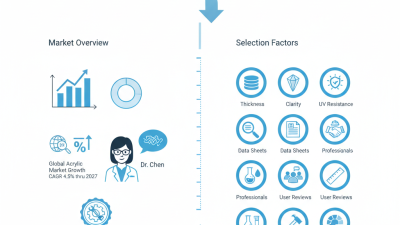
Factors to Evaluate When Selecting a Supplier

For global sourcing, an acrylic tube supplier should offer more than an attractive unit price. The 2024 PlasticsEurope report placed global plastics production at 413.8 million tonnes in 2023. This scale increases material choices, but also increases quality variation. Ask for resin grade, wall-thickness tolerance, outer-diameter tolerance, and UV resistance data. A clear sample is not enough. Request production samples from several lots.

A supplier’s quality system deserves close inspection. The ISO Survey 2023 recorded 1,265,216 valid ISO 9001 certificates across 189 countries and economies. Certification supports process control, but it does not guarantee perfect tubes. Check the certificate scope, audit date, calibration records, and corrective-action reports. Independent testing should verify transparency, impact performance, chemical resistance, and dimensional stability. Standards such as ASTM D788 can help define acrylic material classifications. Still, the tube’s end use may require additional testing.

Traceability matters during international shipments. Each carton should show the resin batch, production date, quantity, and inspection result. Packaging must protect polished surfaces from scratches and prevent oval deformation. Confirm lead times using a written production schedule, not a sales promise. A low quotation can look clever. Sometimes it is not. Freight, rejected lots, tooling changes, and replacement delays may cost more than the original saving. Suppliers should also explain minimum order quantities, payment terms, export documents, and response times for nonconforming goods. Some supplier audits remain too friendly; buyers should record weaknesses, not hide them.

International Procurement, Quality, and Compliance Considerations

Acrylic tube suits global sourcing when clarity, low weight, and stable dimensions matter. In practical procurement, buyers should request samples from multiple production lots. Small differences in wall thickness can affect cutting, sealing, and assembly. Ask suppliers for dimensional reports, optical inspection records, and impact-test results. ISO 7823-1 provides relevant requirements for cast acrylic sheet properties and testing. Tube specifications should also define the resin type, tolerance range, surface finish, and packaging method. Vague drawings create expensive disputes.

Quality alone does not ensure import readiness. The OECD’s Global Plastics Outlook reports 353 million tonnes of plastic waste in 2019, while only 9% was recycled. This figure supports stronger material traceability and waste-control questions during supplier audits. Request declarations for REACH and RoHS where applicable, plus test reports from competent laboratories. Check whether food-contact, medical, or construction requirements apply to the final use. Plastics Europe reported global plastics production of 400.3 million tonnes in 2022, showing how complex international material flows have become. A certificate is not proof of every batch. That assumption needs challenging. Procurement teams should verify production dates, sample retention, labeling, and shipping protection before approving repeat orders. Condensation inside cartons can scratch polished surfaces. Simple details matter.

Why Choose Acrylic Tube for Global Sourcing Needs?

Clear PMMA acrylic combines low density with approximately 92% visible-light transmission, making it a practical option when transparency, weight reduction, and visual inspection are important. Final purchasing specifications should confirm dimensions, tolerance, UV stability, impact requirements, and the applicable REACH, RoHS, or market-specific compliance documentation.

Values shown are typical published engineering values for clear PMMA, soda-lime glass, and polycarbonate; actual results depend on grade, formulation, wall thickness, and test method.