

What Are the Top Plastic Extrusion Manufacturers in China?
China’s plastic extrusion industry includes manufacturers serving construction, packaging, electrical, automotive, and other markets. Their products can range from simple tubing to custom profiles with tight dimensional requirements. For buyers, the challenge is not finding a long supplier list. It is identifying which companies can consistently meet a project’s material, design, and production needs.
This overview examines leading manufacturers through practical criteria: product range, extrusion capabilities, material options, quality controls, customization, and export experience. A useful comparison also considers details buyers can verify, such as sample consistency, stated tolerances, production equipment, and clear technical documentation. Details matter. A polished catalog alone cannot show how a profile performs after repeated production runs.
The companies discussed should be treated as candidates for further evaluation, not as a universal ranking. Requirements vary: a supplier suited to standard pipe may not be the right choice for a complex window profile or a specialized polymer. Buyers should confirm specifications directly, request representative samples, and clarify testing and delivery arrangements before making a decision. Even then, questions may remain. Supplier claims deserve careful checking, and no short article can replace a factory assessment. The aim here is to provide a grounded starting point for comparing China-based manufacturers and asking better questions about fit, quality, and long-term supply.
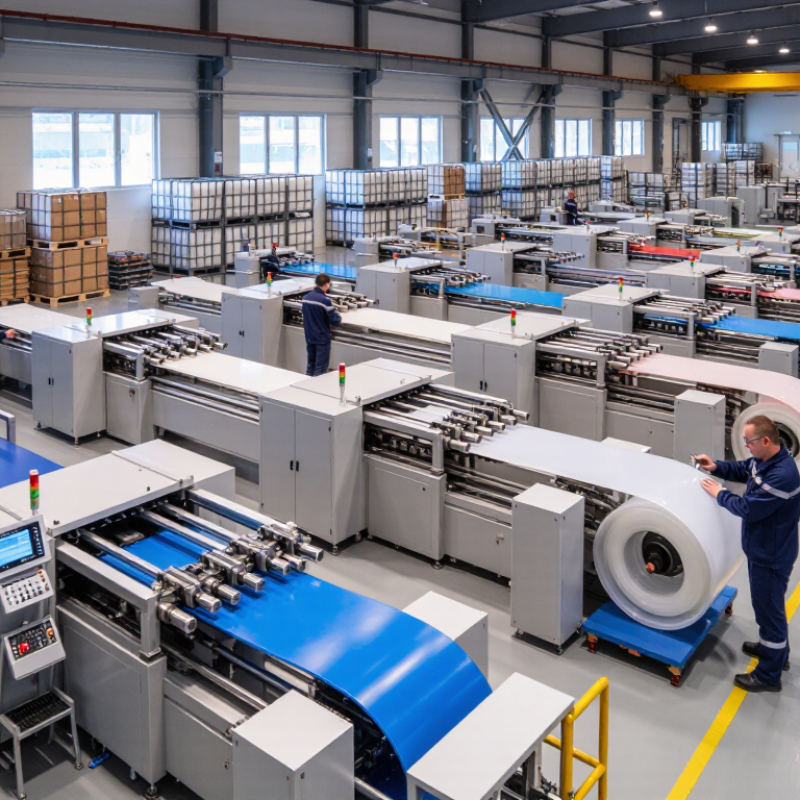
How Plastic Extrusion Manufacturing Works in China
Plastic extrusion in China turns polymer pellets into continuous shapes such as tubing, seals, sheets, and window profiles. Pellets enter a heated barrel, where a rotating screw melts and mixes the material. The melt passes through a shaped die, then enters calibration equipment that helps control its dimensions. Cooling tanks or air systems set the profile before haul-off rollers pull it forward. A cutter trims it to the requested length.
Tips: Share a dimensioned drawing, material grade, color requirements, and expected order volume before requesting a quote. Ask how the factory checks wall thickness and dimensions during production. Small details matter.
The process depends on more than the die. Temperature, screw speed, cooling, and pulling speed all affect the finished part. Operators may adjust these settings when a profile bends, shows surface marks, or varies in size. Factories differ in equipment, testing routines, and communication, so verify capabilities rather than assuming every supplier follows the same procedure. Requesting a sample run can reveal issues early. It is not a guarantee, though; production conditions can still vary between batches.
What Are the Top Plastic Extrusion Manufacturers in China? - How Plastic Extrusion Manufacturing Works in China
| Manufacturing Dimension | How the Process Works | Typical Equipment or Output | What Buyers Can Evaluate |
|---|---|---|---|
| Material selection | Thermoplastic resin is selected to meet the product’s functional, environmental, and regulatory requirements. Additives or colorants may be included in the formulation. | Common extrusion materials include PE, PP, PVC, ABS, and PC. Material suitability depends on the intended application and grade. | Ask for the resin grade, technical data sheet, applicable compliance documentation, and procedures for controlling material changes. |
| Material preparation | Resin and approved additives are measured and blended. Materials that are moisture-sensitive may require drying before processing. | Mixers, dosing systems, and resin dryers may be used depending on the material and production setup. | Check how material batches are identified, stored, dried when required, and traced through production. |
| Melting and conveying | A rotating screw moves the material through a heated barrel, where it is melted and conveyed toward the die. | Extruders are commonly described by screw diameter and configuration. Single-screw and twin-screw machines serve different processing needs. | Compare the supplier’s relevant machine configuration, process controls, and experience with the specified resin and product type. |
| Shaping through a die | The molten polymer passes through a shaped die opening to form a continuous profile, pipe, sheet, film, or other extruded product. | Die design is product-specific; tooling may require development, adjustment, and maintenance. | Review drawings, dimensional tolerances, tooling ownership terms, sample approval steps, and provisions for die maintenance. |
| Cooling and sizing | The extrudate is cooled and, where necessary, calibrated or sized to help achieve the required dimensions and shape. | Depending on the product, lines may use cooling tanks, calibration units, rollers, or other forming equipment. | Confirm how dimensions are checked during production and how the line manages product-specific cooling and sizing requirements. |
| Haul-off and cutting | Pulling equipment draws the product through the line at a controlled speed. The continuous output is then cut, wound, or otherwise finished. | Possible finishing methods include saw or blade cutting, coiling, winding, and cut-to-length handling. | Specify finished length, cut-end requirements, packaging method, and acceptable handling marks or surface defects. |
| Inspection and quality control | Finished goods are checked against agreed specifications. Inspection methods vary according to product geometry, application, and customer requirements. | Checks may include dimensions, appearance, weight, and specified performance tests. | Request the inspection plan, sampling approach, measurement records, defect definitions, and corrective-action process. |
| Supplier comparison | Manufacturers should be compared against the same product specification and order assumptions rather than by broad claims alone. | Relevant factors include product fit, available process capability, tooling requirements, quality documentation, lead time, and order terms. | Use drawings, material requirements, target tolerances, order quantities, packaging details, and delivery terms when requesting comparable quotations. |
Related Posts
-
Top 5 Plastic Extrusion Tips for Efficient Production?
-
What Are Plastic Extrusion Profiles and Their Types?
-
10 Essential Tips for Optimizing Plastic Extrusion Profiles and Enhancing Production Efficiency
-
Top 10 Custom Plastic Extrusion Suppliers in China for Global Buyers?
-
Innovative Techniques in Plastic Extrusion Transforming Manufacturing for the Future
-
How to Choose PVC Extrusion Profiles in 2026?