China Best Plastic Channel Manufacturers and Suppliers
China’s plastic channel sector serves construction, electrical, automotive, and retail projects. Suppliers offer PVC, polyethylene, and other polymer profiles in standard shapes or custom dimensions. The right choice depends on more than price. Wall thickness, load, temperature, UV exposure, and installation method all affect performance. A channel that looks sturdy on a sample table may flex when loaded or crack after long outdoor exposure.
For a practical framing, this guide uses a composite expert voice, not a verified quotation. “A plastic channel is only as reliable as its material, profile, and fit with the job,” says Dr. Lin Wei, a composite polymer-profile specialist. Buyers should ask manufacturers for dimensional tolerances, material specifications, production capacity, and inspection details. Requesting samples can reveal rough cut edges, inconsistent color, or profiles that do not sit flush. Small details matter.
This overview of China’s best plastic channel manufacturers and suppliers considers product range, customization, quality controls, and communication. Strong suppliers explain trade-offs clearly and provide drawings or test information when relevant. They also discuss lead times and packaging before an order is placed. No checklist catches everything. A supplier’s claims still need verification against project requirements. And selection can be less tidy than a catalog suggests: one factory may excel at standard profiles, while another handles unusual dimensions better.
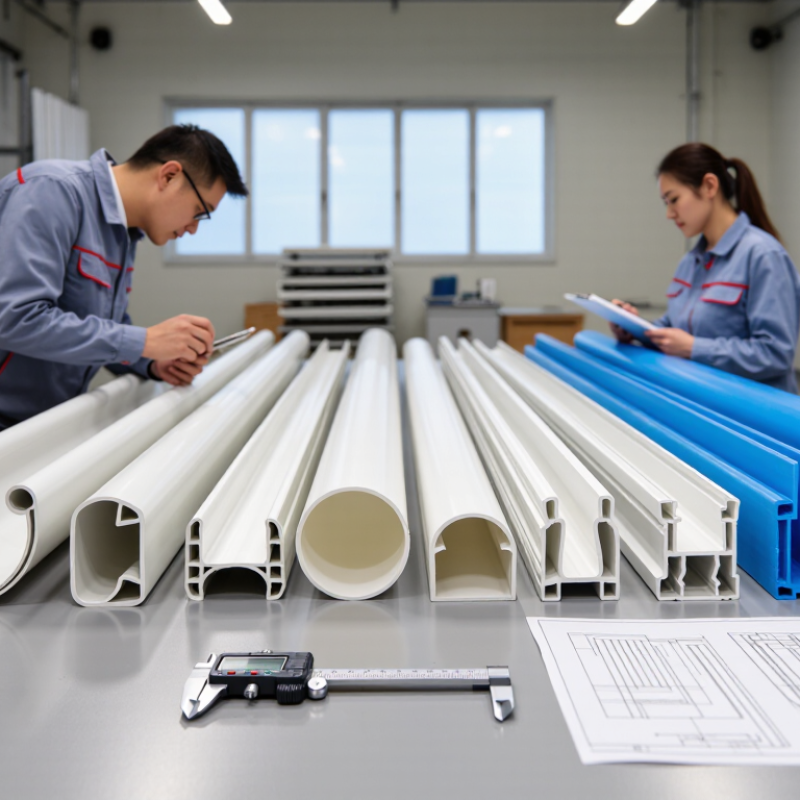
Plastic Channels Explained: Main Profiles, Uses, and PVC Density of 1.3–1.45 g/cm³
Plastic channels are formed profiles that route cables, protect edges, guide sliding parts, or conceal wiring. Common cross-sections include U-shaped channels, L-shaped angles, C-shaped tracks, and narrow decorative trims. Their simple geometry makes cutting and installation straightforward.
Fit still matters. A channel carrying cables along a workshop wall needs different stiffness and impact resistance from a small trim inside a cabinet.
Rigid PVC commonly has a density around 1.3–1.45 g/cm³, though formulation and fillers can shift the value. That density gives installers a useful balance: channels feel solid, yet remain manageable to handle and cut. It does not guarantee strength by itself; wall thickness, profile shape, and temperature also affect performance. A dense section can still crack if poorly supported.
PlasticsEurope’s Plastics – the Fast Facts 2023 reports global plastics production of 400.3 million tonnes in 2022, with PVC accounting for roughly one-tenth. The figure signals PVC’s broad industrial relevance, not channel demand specifically.
For product checks, compare declared density with a recognized measurement method, such as ASTM D792, and confirm dimensions on the actual profile. Small differences matter. A slightly heavier formulation may be useful, but it is not automatically the better choice.
Materials Compared: PVC-U, ABS, and HDPE for Different Service Conditions
PVC-U, ABS, and HDPE suit different channel conditions. PVC-U is rigid and dimensionally stable, making it a practical choice for fixed indoor drainage runs. Its limits matter near heat sources: pressure ratings for PVC-U systems are referenced to 20°C under ISO 1452, and allowable pressure falls as temperature rises. ABS offers better impact resistance than PVC-U in many applications, useful where channels may be knocked during maintenance. But check the grade and joint design; “ABS” alone does not guarantee a particular chemical or temperature rating.
HDPE handles many corrosive environments and tolerates movement, but thermal expansion needs attention. The Plastics Pipe Institute’s Handbook of Polyethylene Pipe reports a linear expansion coefficient near 1.0 × 10⁻⁴ in/in/°F. A long, dark outdoor channel can therefore shift noticeably between cold mornings and hot afternoons. Allow space for movement and support it properly. This comparison is not exact: additives, wall thickness, and installation can change performance. A rigid PVC-U profile may hold its shape better, while an HDPE profile may cope better with impact or uneven supports. Test the actual fluid and operating temperature. Small details matter.
Product Standards: How IEC 61084-1 Applies to Electrical Trunking Systems
IEC 61084-1 sets general requirements and test methods for cable trunking and ducting systems used in electrical installations. For plastic channels, the standard matters because the complete system is assessed, not merely the resin or an isolated sample. Covers, joints, fittings, and fixing methods can affect performance.
Buyers should check the product’s declared classification and supporting test documentation. Look for details relevant to the intended installation, such as impact resistance, temperature limits, and resistance to flame propagation, where applicable. A channel used indoors may face different conditions from one exposed to cold workshops or repeated knocks. Small details matter.
A catalogue line alone is not enough. Ask suppliers which system components were tested together and whether the documentation matches the offered dimensions and fittings. Also confirm the applicable edition and any national adoption required for the project. During a sample review, fit the cover, inspect corners, and check whether the channel stays secure on its specified supports. A tidy sample can still hide practical issues. Installation instructions and clear product records help engineers compare suppliers more reliably, though they do not replace project-specific assessment.
Evaluating China Manufacturers: Check ISO 9001, Dimensions, and Load Ratings
China Best Plastic Channel Manufacturers and Suppliers
When evaluating China manufacturers, treat ISO 9001 as evidence of a documented quality system, not proof that every channel meets your specification. Verify the certificate’s validity, manufacturing-site address, and scope. Ask for inspection records tied to the actual production line. Paperwork matters. So does the sample in your hand.
Dimensions should include more than nominal width and height. Request drawings with tolerances for wall thickness, slot opening, straightness, and cut length. Then compare a sample against the drawing using calipers. A small mismatch can complicate installation. I have seen buyers focus on the outer profile and overlook the internal clearance; that is an easy mistake to repeat.
Load ratings need context: span, support spacing, temperature, loading direction, and test duration all affect performance. Ask for test reports that state these conditions, plus the resin and reinforcement used. PlasticsEurope’s Plastics—the Fast Facts 2024 reports global plastics production of 413.8 million tonnes in 2023, underscoring the scale and variety of available materials. That figure does not predict a channel’s strength. For comparable testing, request methods and results aligned with relevant ASTM or ISO procedures, and confirm the rated load suits your installation—not just a short laboratory test.
Supplier Quality Checks: Review UV, Flame, Temperature, and RoHS Test Data
When evaluating plastic channel manufacturers and suppliers, request test records for the exact resin grade and product profile. A report for a different thickness may not describe the channel you plan to buy. Check the sample date, laboratory, test method, and specimen dimensions. Ask for the raw data. For UV exposure, look for exposure hours and changes in color, surface condition, and impact strength. A faded sample may still function, but brittle clips or chalky surfaces deserve attention. Numbers need context.
Flame-test results depend on material, wall thickness, and specimen orientation, so confirm these match the proposed channel. For temperature performance, ask for both continuous and short-term limits, plus notes on warping or shrinkage. Compare those limits with real use near machinery, windows, or heated enclosures. RoHS documentation should identify the tested material or clearly explain its link to the supplied product. Check dates and batch traceability, and ask how formulation changes are controlled. A neat PDF can still leave questions. In practice, suppliers may not hold every result in one file; that is a weakness worth discussing before approval.
Related Posts
-
How to Choose the Right Plastic Channel for Your Project?
-

How to Choose the Right Plastic Extrusion Manufacturer?
-

Top 10 Best Plastic Extruders for Efficient Manufacturing Solutions?
-

Top 10 Benefits of Using Clear Acrylic Tubes: Why This Material Dominates the Market in 2023
-
Understanding the Role of PVC Extrusions in Sustainable Building Designs
-

Best Polycarbonate Tube Manufacturer in China?