Why Choose a Skynex Manufacturer for Video Door Phones?
Video door phones connect entry panels, indoor monitors, and sometimes mobile apps. Their value shows in ordinary moments: a courier arrives, a child returns home, or a resident checks the entrance before opening the door. Choosing a manufacturer involves more than comparing product photos or prices. Buyers should consider image clarity, audio quality, installation requirements, and how the system fits the building. Small details count.
When buyers search for “Skynex Manufacturer Produce Video Door Phone,” they should look beyond the product name. Review the available configurations, technical specifications, and support for the project’s needs. Ask practical questions: Does the monitor fit the available wall space? Can the outdoor panel handle the site’s weather exposure? Are wiring diagrams and setup guidance clear? These details often matter more than a long feature list. Request current specifications and confirm compatibility before choosing a model. Performance can vary with wiring, network conditions, and installation quality.
A dependable supplier should explain limitations as openly as strengths. No manufacturer is right for every project. A small residential upgrade and a multi-unit development may have very different demands. Comparing samples, documentation, warranty terms, and communication can help buyers assess the fit. The process is not always effortless; specifications can be confusing, and requirements may change during planning. That is worth acknowledging. This article explores why buyers may choose a Skynex manufacturer, what evidence to request, and which practical details deserve careful review before purchase.
What Video Door Phones Do and How They Work
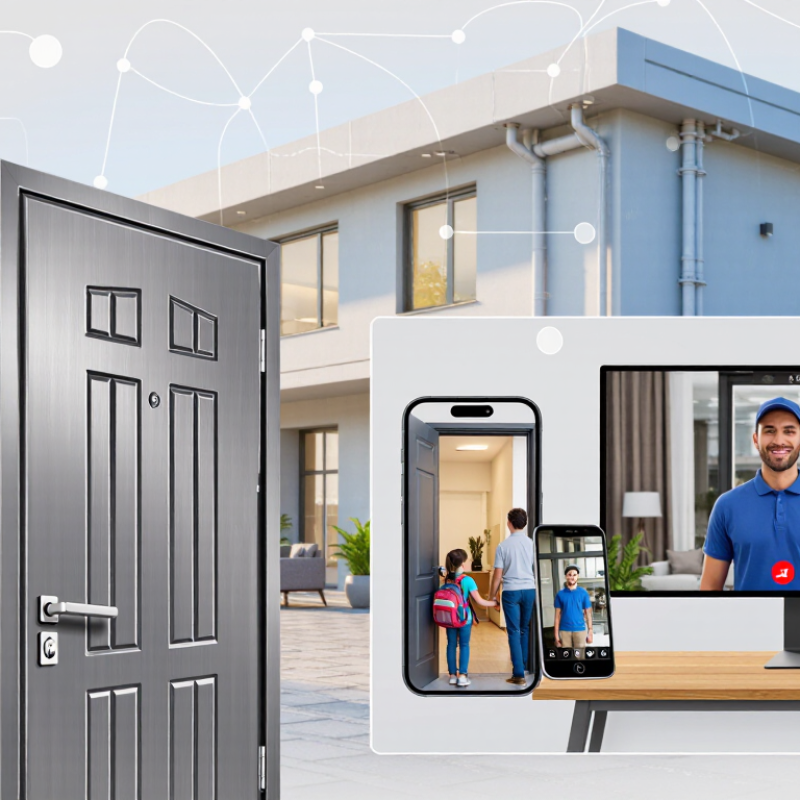
A video door phone lets residents see, hear, and speak with visitors before opening the door. A typical system has an outdoor camera and call button, an indoor monitor or mobile app, and an electric door-release connection. When a visitor presses the button, the camera sends live video and audio to the indoor unit. The resident can answer, check the entrance, and unlock the door if the system supports it. Simple, but useful.
Many models connect over Wi-Fi or a wired network, allowing alerts and two-way calls on a phone. IDC’s Worldwide Smart Home Device Tracker forecast 892.3 million smart-home device shipments globally in 2024, reflecting the wider shift toward connected home equipment. That figure covers many device types, not video door phones alone. In practice, image quality depends on lighting, network strength, camera angle, and installation. A weak signal can delay a call; a camera pointed too high may miss a child or parcel. These details are easy to overlook.
Tips: Test the view at night and in daylight. Check that the visitor’s face is visible at the actual standing position. Choose a mounting height that suits wheelchair users and children, and confirm whether the monitor still works during an internet outage. One limitation remains: video can help identify a visitor, but it cannot prove who they are.
Skynex’s Role in Video Door Phone Manufacturing
A video door phone depends on more than a camera and screen. Its manufacturer coordinates product design, component sourcing, assembly, and quality checks. Engineers consider image clarity, audio pickup, night visibility, and how controls feel under a fingertip. Production teams then build and test units against defined performance requirements. Small details matter. A loose connector or poorly placed microphone can affect daily use.
Tips: Ask how devices are tested. Check warranty terms, installation guidance, and whether replacement parts are available.
Manufacturing experience also helps teams spot practical issues before products reach installers. For example, a bright hallway can wash out a visitor’s image, while a narrow mounting space may complicate wiring. A careful manufacturer can use field feedback to refine layouts and instructions. Testing should cover ordinary conditions, not just ideal lab settings. Still, no product fits every building. Confirm compatibility with existing wiring and entry hardware before choosing a model. Clear documentation makes installation easier, though it cannot replace a skilled technician’s judgment.
Manufacturing Quality, Customization, and Technical Support
Manufacturing Quality, Customization, and Technical Support
Choosing a video door-phone manufacturer means checking more than a clean display sample. Ask how each unit is tested for camera clarity, speaker volume, call stability, and repeated button use. Request documented checks for the screen, wiring terminals, and firmware before shipment. Small faults matter: a loose connection can turn a clear image into a frustrating intermittent call. Fortune Business Insights valued the global smart-home market at USD 101.07 billion in 2023 and forecast USD 633.20 billion by 2032. This is a broad market estimate, not a door-phone sales forecast.
Customization should fit the building, not just the product sheet. Confirm support for panel size, interface language, wiring layout, indoor-monitor options, and integration requirements before approving a sample. Be realistic: custom changes can extend validation and complicate spare-part planning. NISTIR 8259A outlines six cybersecurity capabilities for IoT devices, including secure configuration, data protection, and software updates. Ask how the manufacturer handles updates and communicates technical changes. Good support is practical. It includes clear wiring diagrams, setup guidance, and a named contact who can diagnose a failed call using logs or photos. Test that support before placing a large order; response quality can vary, and that deserves scrutiny.
Why Choose a Video Door Phone Manufacturer?
Resolution options illustrate one practical area for product customization. Pixel counts are calculated from standard image dimensions; available options depend on the product design.
A capable manufacturing partner can help match resolution requirements with the device design, verify production quality, and provide technical support throughout integration.
How to Assess Skynex for a Video Door Phone Project
Assessing a video-door-phone manufacturer means checking more than camera resolution. MarketsandMarkets’ Video Intercom Devices Market report estimated growth from USD 2.8 billion in 2022 to USD 4.4 billion by 2027. That forecast suggests rising demand, but it does not prove any supplier can deliver reliably. Ask for factory audit records, production capacity, defect rates, and sample test results. Small details matter.
Test a sample at the actual entrance: hold a call in bright daylight, then repeat after dark. Check whether faces remain clear, voices stay intelligible, and the door-release relay responds consistently. Ask for documented compatibility with your existing network and access-control equipment. Request evidence of applicable safety and interoperability testing, plus a written firmware-update and spare-parts plan. Paper compliance is not field reliability.
Fortune Business Insights valued the global video intercom devices market at USD 3.47 billion in 2023 and projected USD 6.47 billion by 2032. These are market estimates, not project guarantees. Compare warranty terms, response times, and replacement lead times in writing. I would also speak with a recent installer; specification sheets rarely show the awkward cabling or confusing setup screens. That check takes time. It can still prevent an expensive mismatch.

