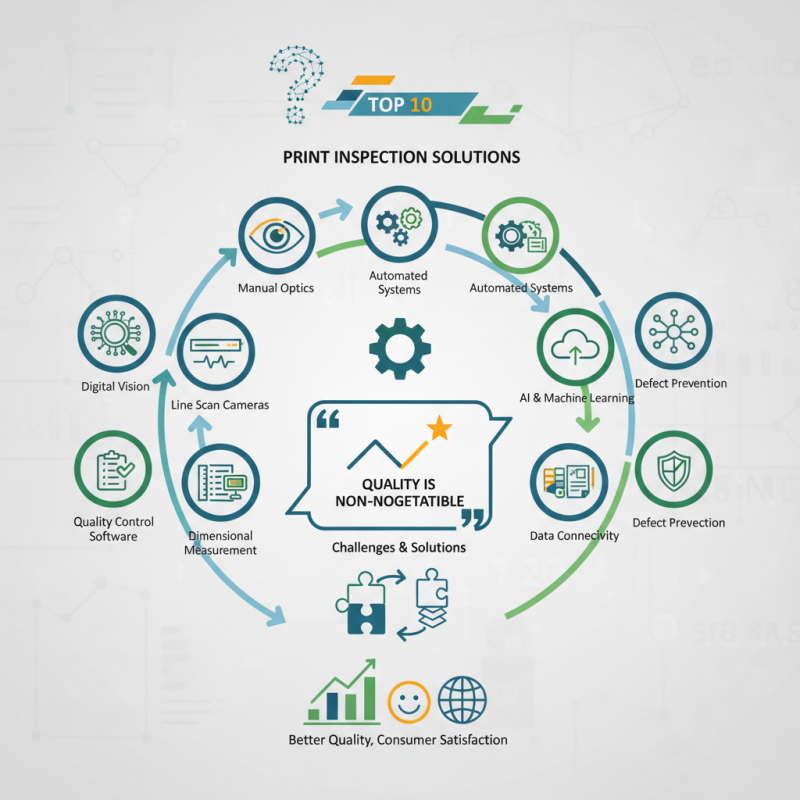
Top 10 Print Inspection Solutions You Should Know?
In the ever-evolving world of Print Inspection, staying ahead of the curve is crucial. John Smith, a leading expert in print technology, once stated, “Quality in print is non-negotiable.” This encapsulates the essence of effective print inspection solutions.
With increasing demands for precision and quality in printed materials, the industry faces numerous challenges. Imperfections can lead to significant financial losses and brand damage. The right print inspection solutions can mitigate these risks, ensuring products meet the highest standards.
As companies strive for excellence, it becomes vital to explore innovative technologies. Some solutions promise high accuracy, yet they may not fit every production line. This highlights the need for careful consideration in selecting print inspection tools. Identifying the top solutions can lead to better quality control and satisfaction for businesses and consumers alike.
Top Trends in Print Inspection Technology
In the evolving landscape of print inspection technology, staying updated with trends is crucial. One significant trend is the integration of artificial intelligence. AI can enhance quality control. Machine learning algorithms can learn from previous print jobs. This dynamic approach reduces errors and improves efficiency.
Another trend is the use of cloud-based solutions. These platforms allow for real-time monitoring. Inspection data can be accessed anywhere, anytime. This accessibility empowers teams to act quickly on defects. Additionally, these solutions often come with built-in analytics.
Tips: Consider implementing AI-driven tools for improved accuracy. Regularly review inspection data to identify recurring issues. Training staff on new technologies can enhance overall performance. Stay adaptable, as technology will continue to evolve. Embracing change can elevate your inspection processes. Reflect on the existing methods. Are they still effective? Always be ready to adjust.
Key Features to Look for in Print Inspection Solutions
When considering print inspection solutions, key features can significantly enhance productivity. A robust system should offer real-time monitoring. This allows for immediate detection of issues. You want an interface that is user-friendly. Complex systems can lead to frustration. Training time should be minimal, ensuring quick adoption.
Additionally, high-resolution imaging is crucial. It ensures that tiny defects are captured accurately. Speed is another vital aspect. The solution should operate efficiently without slowing down production. Mobile accessibility can be beneficial. It allows operators to monitor and address issues on-the-go.
It is also essential to look for flexibility in the system. Customization options can help meet specific production needs. However, many solutions may fall short in this area. Regular updates and technical support should be part of the package. Without these, operators can face unforeseen challenges. Ultimately, reflecting on your needs is important before making a choice.
Comparison of Traditional vs. Modern Print Inspection Methods
In the print industry, the shift from traditional to modern inspection methods is significant. Traditional methods largely relied on human oversight. Mistakes were common due to fatigue and oversight. A study indicates that over 30% of printing defects were missed during manual inspections. This inefficiency can result in costly reprints and lost customer trust.
Modern print inspection leverages advanced technologies like AI and machine learning. These methods offer greater accuracy and speed. A recent report highlighted that automated systems can reduce defect detection time by 50%. Such efficiency allows for real-time quality assurance. This means issues can be addressed immediately, minimizing waste and errors.
Tip: Integrating modern systems not only reduces costs but enhances precision. However, transitioning requires training and may initially disrupt workflows.
Despite technological advances, challenges remain. High initial costs and the complexity of new systems can deter adoption. Some companies hesitate, fearing the unknown. Regular audits of inspection practices are essential to identify areas needing improvement.
Tip: Regularly review your inspection process. Small adjustments can yield significant results. This approach fosters a culture of continuous improvement.
Case Studies: Success Stories in Print Inspection
In the world of print inspection, success stories often highlight innovative solutions. Companies have overcome significant challenges using various inspection technologies. For instance, one organization faced frequent quality issues. They implemented a real-time monitoring system that dramatically reduced defects. It improved overall customer satisfaction.
Another case featured a printer struggling with color consistency. They turned to advanced software that analyzed color variations automatically. The results were impressive. Waste reduced significantly, and production times improved. Yet, even after these improvements, some issues remained. Regular audits revealed occasional discrepancies. This highlighted the need for continuous improvement.
These examples show the potential of embracing print inspection solutions. However, challenges persist in every process. Learning from past mistakes is essential for future advancements. Companies must adapt and innovate continually to stay competitive in an evolving market.
Future Directions and Innovations in Print Inspection Solutions
The future of print inspection solutions is evolving rapidly, driven by advancements in technology and automation. Industry reports indicate that the global market for print inspection solutions is projected to grow at a CAGR of 7.5% from 2021 to 2026. Companies are increasingly adopting automated solutions to enhance quality control and reduce errors. This shift not only minimizes waste but also boosts production efficiency.
Tip: Regularly evaluate your inspection processes. Small changes can lead to significant improvements.
The integration of artificial intelligence and machine learning in inspection systems is a significant innovation. AI algorithms can analyze images and detect defects with higher accuracy than manual methods. This can lead to a reduction in false negatives and ensure that only high-quality products reach consumers. However, implementing these technologies may require a learning curve and investment in training for staff.
Tip: Set clear goals for your print inspection systems. Know what success looks like.
Additionally, implementing real-time monitoring features is becoming a norm. This allows for immediate adjustments during the printing process, reducing the chances of large-scale errors. Yet, many businesses struggle to keep up with the pace of technological change. They need to balance innovation with practical application in everyday operations.
Navigating these emerging technologies can be challenging. Companies must remain adaptable while ensuring they are not caught in outdated practices. The right mix of innovation and reflection is crucial for staying competitive in this evolving landscape.