Who Are the Top LiFePO4 Battery Manufacturers in China?
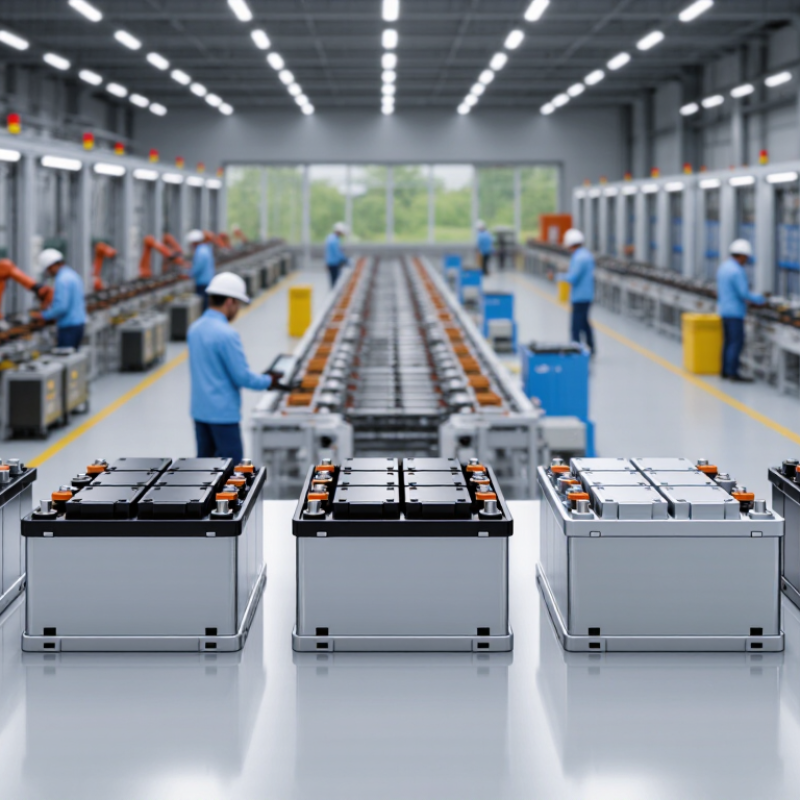
China has become a major center for LiFePO4 battery production, serving electric vehicles, energy storage systems, and industrial equipment. Names such as CATL, BYD, EVE Energy, Gotion High-Tech, and CALB often appear in buyer research. Yet a famous brand alone tells little. Cell consistency, cycle-life testing, safety design, production scale, and after-sales support matter too.
Battery scientist Jeff Dahn’s published work on battery durability offers a useful principle, paraphrased here rather than quoted verbatim: “Long life must be demonstrated, not assumed.” That distinction matters. A data sheet may promise thousands of cycles, while real performance depends on temperature, charging patterns, pack design, and operating conditions. Buyers should compare test methods, not just headline figures.
This guide introduces leading Chinese manufacturers and explains what separates their products and capabilities. It considers manufacturing experience, product range, technical documentation, and suitability for different applications. A compact battery for a small storage cabinet has different demands from a large vehicle pack. Details count. Even so, no short ranking can replace a careful supplier review. Public information may be incomplete, and product quality can vary between models and production batches. Use the comparisons as a starting point, then verify specifications directly with each manufacturer.
Defining China’s LiFePO₄ Battery Market and Its 2023 Scale
China’s LiFePO₄ battery market is best understood as a manufacturing and application ecosystem, not a single sales category. It spans electric vehicles, energy storage, and industrial uses, although public statistics often track these segments separately. For a clear 2023 benchmark, the China Automotive Power Battery Industry Innovation Alliance reported 778.1 GWh of domestic power-battery production. LiFePO₄ batteries accounted for 531.4 GWh, about 68% of that output. That figure describes power batteries, not every LiFePO₄ cell made in China.
Vehicle installations show another useful measure of scale. The alliance recorded 387.7 GWh of power batteries installed in China in 2023, including 261.0 GWh of LiFePO₄ batteries, or roughly 67%. These are not interchangeable with production figures: cells can be produced, stored, exported, or installed in different periods. That distinction matters. The International Energy Agency’s Global EV Outlook 2024 also estimated that LiFePO₄ reached nearly 40% of global electric-car battery demand in 2023, reflecting China’s central role in scaling the chemistry. Still, the numbers leave a gap: they do not fully capture stationary storage or smaller industrial systems. Any market-size claim should state its scope.
Who Are the Top LiFePO4 Battery Manufacturers in China? — Defining China’s LiFePO₄ Battery Market and Its 2023 Scale | Market dimension | 2023 figure | Scope and interpretation | Data source |
| China lithium-ion battery industry output | More than 940 GWh | Output across lithium-ion battery types; this is an industry-wide benchmark, not an LiFePO₄-only figure. | China’s Ministry of Industry and Information Technology (MIIT), 2023 industry operating data |
| China lithium-ion battery industry output value | More than RMB 1.4 trillion | Reported output value for the overall lithium-ion battery industry in China during 2023; it should not be read as LiFePO₄ revenue alone. | MIIT, 2023 industry operating data |
| Power battery production | 778.1 GWh | Production of power batteries in China across chemistries. Production and vehicle installation are different measures. | China Automotive Battery Innovation Alliance, 2023 annual data |
| LiFePO₄ power battery production | 531.4 GWh | LiFePO₄ production for power batteries; approximately 68.3% of the reported 778.1 GWh total. | China Automotive Battery Innovation Alliance, 2023 annual data |
| Power battery installations in vehicles | 387.7 GWh | Total power battery capacity installed in vehicles in China during 2023, covering all reported chemistries. | China Automotive Battery Innovation Alliance, 2023 annual data |
| LiFePO₄ power battery installations | 261.0 GWh | LiFePO₄ capacity installed in vehicles; approximately 67.3% of total power battery installations. | China Automotive Battery Innovation Alliance, 2023 annual data |
| What the market figures indicate | A leading chemistry in China’s power battery market | LiFePO₄ accounted for roughly two-thirds of both power battery production and vehicle installations in 2023. These industry totals do not establish a manufacturer ranking. | Calculated from the production and installation figures above |
Note: GWh means gigawatt-hours. Production and installation figures describe different stages of the battery supply chain and should not be compared as equivalent totals. No company-level ranking or brand data is included.
Why LFP Reached 67.3% of China’s 2023 EV Battery Installations
In 2023, lithium iron phosphate batteries accounted for 67.3% of China’s EV battery installations. That share reflects practical trade-offs, not a single breakthrough. LFP cells generally cost less because their chemistry avoids nickel and cobalt. Their stable thermal behavior also helps vehicle makers manage safety and cooling requirements. For high-volume electric cars, predictable costs matter.
There is a catch. LFP packs usually store less energy per kilogram than some nickel-rich alternatives. Drivers may notice this in larger vehicles or during long winter trips. Yet many urban cars have modest daily range needs. Automakers can design around LFP’s lower energy density with efficient motors, compact pack layouts, and careful temperature control. Cell-to-pack designs can also reduce unused space.
Factories matter, too. Large-scale production and process improvements can lower costs and support consistent output. That does not make every LFP pack equally reliable; materials, cell design, and quality control still matter. A figure as large as 67.3% deserves context. It shows strong adoption, but it does not prove that one chemistry suits every driver. In practice, the best choice depends on range, climate, vehicle price, and charging habits.
Who Are the Top LiFePO₄ Battery Manufacturers in China? Why LFP Reached 67.3% of China’s 2023 EV Battery Installations
China’s 2023 EV battery installations were dominated by lithium iron phosphate (LFP) batteries.
Key takeaway: LFP batteries accounted for 261.0 GWh, or 67.3%, of installations—more than twice the 126.2 GWh of ternary lithium batteries. This chart compares battery chemistries, not individual manufacturers.
Source: China Automotive Battery Innovation Alliance, 2023 annual data. Percentages may not total 100% due to rounding.
China’s Leading Producers: CATL, BYD, Gotion, EVE, and CALB
China’s leading LiFePO4 producers serve electric vehicles, energy storage, and commercial equipment. Their scale can support steady cell supply, but a large factory alone does not guarantee consistent quality. Buyers should compare cell capacity, cycle-life test conditions, safety records, and production traceability. Details matter.
A practical review starts with the data sheet and sample testing. Check whether stated cycle life matches the intended temperature, depth of discharge, and charging rate. For a storage project, inspect cell balance, enclosure design, and battery-management settings. For vehicle use, verify performance under vibration and changing temperatures. These checks help distinguish useful specifications from broad marketing claims.
The five prominent Chinese producers differ in product mix, manufacturing scale, and customer focus, so a simple ranking can mislead. I would also question any comparison that omits warranty terms or after-sales support. Those details are less visible than factory size, yet they shape real operating costs. Supplier information can change, and published figures may use different test methods. Ask for current documentation and confirm that the tested product matches the quoted model. A small mismatch can matter.
Comparing Manufacturers by Shipments, Capacity, and Application Focus
Shipment figures offer a quick view of scale, but they need context. A manufacturer’s annual deliveries may include energy-storage cells, vehicle cells, or both. Compare figures from the same year and check whether they count cells, modules, or complete battery systems. Otherwise, a large number can be misleading.
Capacity tells a different story. Installed production capacity is not the same as actual output. A factory may have impressive nameplate capacity while new production lines are still being qualified. Ask about utilization, yield, and expansion timelines. These details matter. Public disclosures can also use different definitions, so exact comparisons are not always possible.
Application focus helps explain where a manufacturer’s strengths may lie. Some production lines are tuned for electric vehicles, where weight, power delivery, and cycle life matter. Others emphasize stationary storage, with attention to long operating periods and temperature control. Look for evidence such as application-specific product data, testing conditions, and disclosed shipment mix. One caveat: a broad product range does not prove equal experience in every segment. Buyers should verify the figures and ask practical questions before drawing conclusions.
Evaluating Cells by Energy Density, Cycle Life, and Safety Standards
When comparing Chinese LiFePO4 cells, treat energy density as a measured result, not a headline. Check whether the figure is gravimetric (Wh/kg) or volumetric (Wh/L), and whether it describes a cell or a complete pack. A compact cell may look excellent on paper, yet lose practical value when the system needs extra cooling, wiring, and protective structure. The IEA’s Global EV Outlook 2024 reports that LFP chemistry supplied about 40% of the global electric-car battery market in 2023. That scale makes careful cell-level comparison more important, not less.
Cycle-life claims need context: ask for the test temperature, charge rate, depth of discharge, and remaining capacity used to define end-of-life. Sandia National Laboratories’ 2020 Energy Storage Technology and Cost Characterization Report gives a broad 3,000–10,000-cycle range for lithium-ion storage systems; it is not a guarantee for every LFP cell. Test details matter. For safety, request independent reports against relevant standards, such as IEC 62619 for industrial batteries or IEC 62660-3 for vehicle cells. These standards assess defined hazards, but a certificate alone cannot show how a cell performs in your actual operating conditions. I would still compare sample test records with production-batch data; that step is easy to overlook.

