

Top Food Sealing Machine Manufacturers Worldwide
The global Food Sealing Machine market is changing quickly. Manufacturers now compete on seal strength, energy use, automation, and service reliability. A machine may look impressive on a showroom floor, yet fail during a humid, high-volume production shift. That difference matters.
Jorge Izquierdo, Vice President of Market Development at PMMI, has emphasized that “packaging machinery must support food safety, efficiency, and consumer confidence.” This view gives our review a practical foundation. Leading manufacturers should provide stable sealing temperatures, accurate dwell times, compatible film handling, and repeatable results. Operators also need clear controls, accessible heating elements, and hygienic surfaces that withstand regular washdown. Small details matter. A loose conveyor guide can create uneven seals and unnecessary waste.
This guide examines top Food Sealing Machine manufacturers worldwide through real production needs. It considers tray sealers, vacuum sealers, continuous band machines, and automated lines. We assess equipment design, customization, throughput, maintenance support, spare parts, and technical training. Independent testing remains important, especially for products with sauces, oils, powders, or irregular surfaces. A specification sheet cannot reveal every weakness.
Some comparisons are not perfectly simple. A premium machine may deliver excellent precision but require higher investment and specialized technicians. A lower-cost model may suit smaller facilities, but its long-term service network could be limited. Buyers should question attractive claims. They should request sample testing and inspect actual seals. In the end, the best manufacturer is not always the largest. It is the one that consistently matches machine performance with product conditions, operator skill, and measurable quality goals.
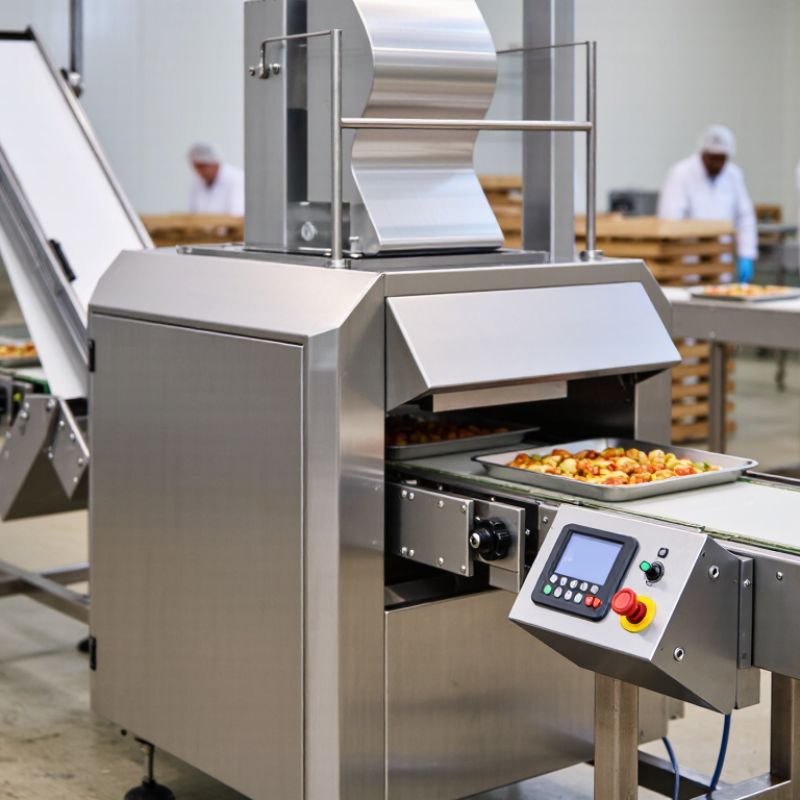
Food Sealing Machines: Types, Functions, and Industry Applications
Top Food Sealing Machine Manufacturers Worldwide
Food sealing machines protect products from moisture, oxygen, dust, and handling damage. Their design directly affects shelf life and production efficiency. Impulse sealers suit small batches, pouches, and irregular work schedules. They heat the film briefly, creating a clean seal with limited energy use. Continuous band sealers support faster lines and consistent pouch spacing.
Vacuum sealers remove air before sealing, making them useful for meat, seafood, cheese, and prepared meals. Tray sealers close containers with lidding film and can support vacuum or modified-atmosphere packaging. These systems often control temperature, pressure, dwell time, and gas flow. Small details matter. A seal may look complete but still fail under pressure. Operators should test seal strength, leakage, and film compatibility during actual production.
Food processors also consider sanitation, changeover time, maintenance access, and operator safety. Stainless steel surfaces and simple cleaning paths reduce contamination risks. In my experience, excessive speed can create weak corners, wrinkled film, or uneven seals. A machine specification may appear impressive, yet it cannot replace proper setup and routine inspection. Snack factories may prioritize throughput, while bakeries often need gentle handling and flexible formats. Frozen-food plants usually demand durable sealing materials and reliable performance in cold, damp rooms. Packaging teams should record temperature settings, sealing pressure, and inspection results for each product. Mistakes still happen, especially during film changes. That is why practical trials remain essential before full-scale installation.
| Machine Type | Primary Sealing Method | Typical Packaging Format | Common Materials | Typical Speed Range | Main Functions | Typical Food Industry Applications |
|---|---|---|---|---|---|---|
| Continuous Band Sealer | Heat sealing with a continuously moving belt | Preformed pouches and open-top bags | PE, PP, laminated films, foil-laminated films | Up to approximately 12–20 m/min, depending on package size and material | Bag closing Date coding Vertical or horizontal sealing | Dry foods, grains, pet food, snacks, coffee, powders, and agricultural products |
| Impulse Sealer | Short-duration electrical heating of sealing bars | Small to medium preformed bags | PE, PP, cellophane laminates, coated films | Generally 10–25 seals/min, depending on operator and bag dimensions | On-demand sealing Adjustable seal time Low energy use | Bakery products, spices, confectionery, small snack packs, and specialty foods |
| Constant-Heat Sealer | Continuous heat applied through heated sealing jaws | Heat-sensitive or thicker laminated pouches | Multi-layer laminates, coated aluminum foil, heavy PE films | Approximately 5–15 seals/min in manual or semi-automatic operation | Strong seals Thick-film sealing Temperature control | Retort-style pouches, sauces, liquid foods, frozen foods, and high-barrier products |
| Vacuum Chamber Sealer | Air evacuation followed by heat sealing inside a chamber | Vacuum pouches and barrier bags | PA/PE films, multilayer barrier pouches, embossed vacuum bags | Approximately 1–8 cycles/min, depending on chamber size and product | Air removal Leak reduction Sealing | Fresh meat, seafood, cheese, prepared meals, coffee, and high-value fresh foods |
| External Vacuum Sealer | Air extraction through a nozzle followed by heat sealing | Open-mouth vacuum bags | Textured vacuum films, PA/PE bags, barrier laminates | Approximately 2–10 cycles/min, depending on bag and product size | Vacuum packing Compact operation Bag sealing | Small food processors, retail preparation areas, catering, meat, fish, and cheese packaging |
| Tray Sealer | Heat sealing of lidding film to a rigid tray flange | Rigid trays with lidding film | PP, CPET, PET, aluminum trays, PE or PET-based lidding films | Approximately 4–20 packs/min for semi-automatic and automatic systems | Lid sealing Gas flushing Film cutting | Ready meals, fresh produce, meat, poultry, seafood, bakery items, and convenience foods |
| Modified Atmosphere Packaging Sealer | Gas flushing followed by hermetic heat sealing | Trays, cups, and preformed gas-barrier packs | High-barrier films, PP trays, PET trays, multilayer lidding materials | Approximately 5–30 packs/min, depending on gas cycle and equipment configuration | Gas replacement Oxygen reduction Shelf-life support | Fresh meat, poultry, seafood, salads, pasta, cheese, and prepared meals |
| Rotary Cup Sealer | Heat sealing of lidding material onto filled cups | Plastic or paper-based cups | PP, PET, PS, coated paperboard, aluminum and plastic lidding films | Approximately 20–100 cups/min, depending on the number of stations | Cup filling integration Lid sealing Film cutting | Yogurt, dairy desserts, sauces, dips, jams, beverages, and single-serve foods |
| Thermoform-Fill-Seal Machine | Film forming, product filling, vacuum or gas sealing, and cutting | Formed trays, pockets, and vacuum packs | Flexible barrier films, rigid-bottom webs, lidding films | Approximately 5–20 production cycles/min, depending on pack length and format | Forming Filling Vacuum or MAP Cutting | Fresh meat, processed meat, cheese, seafood, medical foods, and ready-to-cook products |
| Horizontal Form-Fill-Seal Machine | Longitudinal and transverse heat sealing | Pillow bags, gusseted bags, and three-side-seal packs | PE, PP, PET laminates, foil laminates, paper-based laminates | Approximately 30–200 packs/min, depending on product and film structure | Film forming Product dosing Sealing and cutting | Biscuits, bakery goods, snack bars, frozen foods, produce, and confectionery |
| Vertical Form-Fill-Seal Machine | Vertical heat sealing of formed film bags | Pillow bags, gusset bags, quad-seal bags, and sachets | PE, PP, PET laminates, metallized films, foil laminates | Approximately 20–120 bags/min, depending on product, dose, and bag size | Vertical forming Weighing or dosing Gas flushing | Rice, grains, powders, snacks, coffee, pet food, frozen products, and granular foods |
| Ultrasonic Sealer | High-frequency mechanical vibration at the seal interface | Flexible pouches and difficult-to-seal multilayer packs | Thermoplastic films, coated nonwovens, laminated flexible packaging | Application-dependent; commonly integrated into high-speed packaging lines | Clean sealing Reduced product contamination Low thermal exposure | Liquid foods, oily products, sauces, dairy products, and packs with seal-area contamination risk |
| Induction Cap Sealer | Electromagnetic heating of a foil liner inside a cap | Bottles and jars with screw caps | Plastic or glass containers with compatible foil liners | Approximately 30–300 containers/min, depending on cap size and line design | Hermetic closure Tamper evidence Leak protection | Edible oils, sauces, beverages, dressings, honey, nutritional products, and liquid foods |