Top 10 Thermal Break Aluminium Suppliers Worldwide
Thermal Break Aluminium has become a practical response to rising building-energy demands, stricter envelope standards, and growing expectations for indoor comfort. According to the International Energy Agency’s Buildings report, buildings consume about 30% of global final energy and create roughly 26% of energy-related emissions. Window and façade decisions therefore deserve more than a catalogue comparison.
This guide examines ten leading Thermal Break Aluminium suppliers worldwide. It considers system engineering, production capacity, thermal performance, testing evidence, finish quality, recycled content, and project experience. The assessment also refers to recognized standards, including EN ISO 10077-2 and EN 14024, which support more consistent evaluation of frame U-values and thermal barriers. The International Aluminium Institute reports that recycled aluminium can require only about 5% of the energy used for primary aluminium production. That figure matters when suppliers discuss lower-carbon construction.
Performance is not determined by the profile alone. Glass, spacer design, gaskets, installation accuracy, and local climate can change the final result. A well-designed frame may still underperform beside a poorly installed window. Small details matter. A 24-millimetre polyamide strip, correctly positioned, can separate interior warmth from an exterior winter surface. However, supplier claims should be checked against laboratory data, declarations, certifications, and completed projects. This is not a perfect ranking. Market visibility can favor larger brands, while smaller manufacturers may deliver excellent regional systems. Readers should verify current specifications, lead times, warranty terms, and compliance requirements before selecting a partner.
Thermal Break Aluminium: Definition, Structure, and Operating Principles
Thermal break aluminium is an insulated aluminium framing system designed to reduce heat transfer.
Unlike standard metal frames, it separates the exterior and interior aluminium sections with a low-conductivity barrier. The frame still provides strength. The barrier limits the cold bridge through the metal.
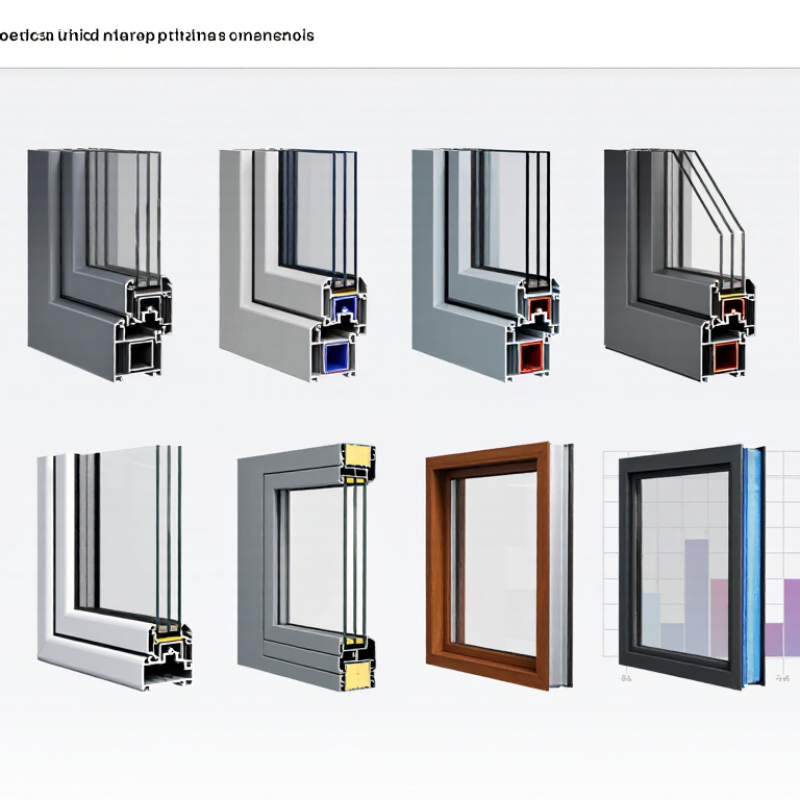
The structure usually includes two aluminium profiles, polyamide strips, seals, glazing pockets, and drainage channels.
Polyamide is commonly selected because it resists heat and supports mechanical stability. During production, the strips are crimped into prepared grooves. This creates a continuous connection without joining the metal sections directly. Small details matter. A weak crimp can reduce long-term performance.
When outdoor temperatures fall, exterior aluminium becomes cold. The thermal break slows that energy path before it reaches the indoor profile. In hot weather, it also limits heat entering the room. Proper seals reduce air leakage, while drainage channels guide condensation toward the exterior. The principle sounds simple, but installation can be less forgiving. A misplaced gasket or poorly adjusted corner may weaken the whole assembly.
Worldwide suppliers should provide verified U-values, air-tightness data, material specifications, and test reports.
Buyers should also examine corner joints, coating quality, strip width, and compatibility with local glass systems. A thicker barrier does not automatically guarantee better insulation. Frame geometry and installation quality influence the result. This is where specifications can look impressive yet perform unevenly on site. Even experienced teams need thermal calculations and careful quality checks.
Key Standards for Evaluating Global Thermal Break Aluminium Suppliers
Evaluating global thermal break aluminium suppliers requires more than comparing catalogue U-values. The IEA’s 2023 Buildings report states that buildings and construction consume about 34% of global energy. That makes verified envelope performance commercially important. Ask for complete test reports, not isolated laboratory figures. Check whether calculations follow EN ISO 10077-2 or an equivalent recognized method. The report should identify frame size, glazing, inserts, temperature conditions, and boundary assumptions. Small details matter.
A credible supplier should demonstrate thermal-barrier quality under EN 14024 or comparable regional standards. Request evidence of air, water, and structural testing under standards such as ASTM E283, E331, and E330. Testing should come from an ISO/IEC 17025-accredited laboratory. Confirm the certificate matches the exact profile series. Not a similar one. Material traceability also deserves attention. Review alloy designations, batch records, polyamide specifications, and production inspection data. A polished brochure is not evidence.
Supply resilience needs measurable proof. Compare published lead times with actual shipment records, minimum order quantities, tooling ownership, and backup extrusion capacity. The International Aluminium Institute reports that recycled aluminium can require far less energy than primary production, but sustainability claims vary sharply. Request an environmental product declaration under EN 15804 or equivalent, with declared recycled content and system boundaries. Factory audits should examine dimensional control, barrier insertion pressure, surface treatment, and packaging damage after transit. I would still leave room for doubt: one successful test cannot represent every batch or climate. Suppliers should explain limitations clearly.
Top 10 Thermal Break Aluminium Suppliers Worldwide
Selecting leading thermal break aluminium suppliers requires more than comparing catalogues. The International Energy Agency reports that buildings consume about 30% of global final energy and produce roughly 26% of energy-related emissions. This makes frame performance a practical procurement issue, not merely a design preference.
Reliable suppliers should provide tested U-values, air-permeability results, water-tightness data, alloy specifications, and documented polyamide-bar performance. Independent laboratory testing matters. Marketing claims alone are weak evidence.
A useful global comparison also examines extrusion accuracy, coating durability, tooling capacity, and technical support across climates. Suppliers serving coastal projects should demonstrate corrosion-resistant finishes and suitable drainage details.
The aluminium extrusion market continues to expand, with Grand View Research identifying construction as a major end-use sector in its aluminium extrusion market analysis.
Still, a ranking can mislead. The largest exporter may not offer the best thermal design for a small project. Nor does a low U-value guarantee correct installation. Frame corners, gaskets, glass selection, and site tolerances can change real performance.
Procurement teams should request recent test reports, factory quality records, sample sections, and references from comparable buildings.
Small details matter. One overlooked thermal bridge can undermine an otherwise excellent specification.
Product Ranges, Customization Options, and Technical Capabilities
Top 10 Thermal Break Aluminium Suppliers Worldwide
The top ten thermal break aluminium suppliers usually cover windows, doors, curtain walls, sliding systems, and façade profiles. Their ranges may include casement frames, lift-and-slide sections, inward-opening doors, and slimline architectural systems. A reliable supplier should provide profile dimensions, wall thickness, polyamide strip width, and tested U-values. Common thermal barriers range from 14.8 to 34 millimetres. Small differences matter.
Customization separates capable manufacturers from simple catalogue sellers. Buyers can request custom dies, glazing channels, drainage paths, corner cleats, and hardware grooves. Surface options often include powder coating, anodizing, wood-effect finishes, and marine-grade treatments. Some suppliers support CNC cutting, drilling, crimping, and assembled frame delivery. Ask for samples.
Technical support should extend beyond production. Experienced teams can review thermal simulations, glass compatibility, condensation risks, and structural loads. They may also provide CAD files, BIM objects, installation manuals, and performance reports for air, water, wind, and sound resistance. Certification should be traceable, not merely printed in a brochure. Factory audits, batch records, and sample testing improve confidence.
A polished catalogue can hide practical limitations. Custom tooling may require time and minimum quantities. Some designs look elegant but weaken drainage or complicate installation. I would compare tested assemblies, not isolated profile claims. Real project experience remains valuable, though even experienced suppliers can overlook local climate conditions.
| Rank | Anonymous Supplier Profile | Primary Market Region | Thermal Break Product Range | Typical Technical Performance | Customization Options | Technical and Manufacturing Capabilities | Common Testing and Compliance Frameworks | Typical Applications |
|---|---|---|---|---|---|---|---|---|
| 1 | European Architectural Systems Specialist | Western Europe | Thermally broken windows, doors, curtain walls, sliding doors, and entrance systems with polyamide insulation bars. | Frame depths commonly from 50–90 mm; system-level Uf values may reach approximately 1.0–2.0 W/m²K depending on design, glazing, and hardware. | Custom profiles, concealed drainage, dual-color finishes, acoustic packages, security upgrades, and oversized opening solutions. | Extrusion design support, CNC machining, crimped or roll-locked thermal breaks, insulated glazing integration, and project-specific shop drawings. | EN 14024, EN 12207, EN 12208, EN 12210, EN 14351-1, and applicable CE marking requirements. | Residential towers, office buildings, schools, hospitals, and energy-efficient renovations. |
| 2 | North American Commercial Fenestration Supplier | United States and Canada | Thermally improved storefronts, curtain-wall framing, projected windows, commercial doors, and folding or sliding systems. | Thermal improvement is typically specified by U-factor, condensation resistance, air leakage, and water penetration results under project conditions. | Imperial or metric dimensions, pressure-equalized curtain-wall options, hurricane-resistant assemblies, custom mullion depths, and integrated sun-control components. | Design-assist engineering, structural calculations, thermal modeling, custom die development, fabrication support, and field-installation guidance. | AAMA/WDMA/CSA 101, ASTM E283, ASTM E331, ASTM E330, NFRC procedures, and local building-code requirements. | Commercial offices, retail centers, public buildings, high-rise façades, and coastal developments. |
| 3 | High-Volume Asia-Pacific Extrusion Group | East and Southeast Asia | Thermal break casement windows, sliding windows, lift-and-slide doors, curtain walls, and aluminum entrance doors. | Common frame depths range from 55–120 mm; thermal results vary according to polyamide width, cavity geometry, glazing, and hardware selection. | Large profile libraries, private-label production without visible branding, bespoke cross-sections, anodizing, powder coating, wood-effect finishes, and screen integration. | High-volume billet extrusion, automated thermal-break assembly, die correction, CNC cutting, punching, assembly, and container-load production planning. | EN, ASTM, AS/NZS, GB/T, and project-specific air, water, structural, thermal, and acoustic test requirements. | Apartment developments, hotels, villas, mixed-use projects, and export-oriented building programs. |
| 4 | Southern European Façade Engineering Supplier | Italy, Spain, Portugal, and Mediterranean markets | Minimal-frame sliding doors, thermal break windows, balcony enclosures, curtain walls, and ventilated façade interfaces. | Specialized sliding systems may use deep interlocking profiles and multi-chamber barriers; final Uw depends strongly on glazing ratio and installation details. | Slim sightlines, concealed rollers, corner assemblies, pocket doors, curved components, special gaskets, and architectural powder-coat colors. | Prototype development, precision die design, thermal simulations, water-management detailing, large-panel fabrication, and façade coordination. | EN 14024, EN 14351-1, EN 13830, EN 12207, EN 12208, EN 12210, and regional energy-performance rules. | Luxury residences, hotels, restaurants, coastal properties, and premium renovation projects. |
| 5 | Middle Eastern Curtain-Wall and Entrance Systems Supplier | Gulf Cooperation Council and wider Middle East | Heavy-duty curtain walls, thermal break windows, monumental doors, automatic-door frames, and solar-control façade systems. | Systems are commonly engineered for high solar exposure, temperature variation, wind loads, and large glazed areas; performance is project-specific. | Deep mullions, reinforced doors, high-performance gaskets, pressure-equalized drainage, solar-control glazing, louvers, and oversized panels. | Wind-load engineering, thermal and solar calculations, façade mock-ups, unitized or semi-unitized fabrication support, and site coordination. | ASTM E283, ASTM E331, ASTM E330, AAMA/WDMA/CSA 101, EN standards, and local authority requirements. | Hotels, airports, hospitals, high-rise towers, shopping malls, and government complexes. |
| 6 | Central and Northern European Passive-Building Specialist | Germany, Scandinavia, Benelux, and Central Europe | Highly insulated windows, passive-house doors, lift-and-slide doors, curtain walls, and low-energy renovation systems. | Frame Uf values can be below 1.5 W/m²K in optimized designs; whole-window Uw depends on glazing, spacer, dimensions, and installation. | Wider polyamide barriers, foam or insulating inserts, triple-glazing compatibility, airtightness upgrades, acoustic options, and low-threshold doors. | Finite-element thermal analysis, condensation-risk assessment, air-sealing design, accredited laboratory testing, and passive-building documentation support. | EN ISO 10077, EN 12207, EN 12208, EN 12210, EN 14351-1, and passive-building assessment methodologies. | Low-energy housing, passive-house projects, schools, public buildings, and deep-energy retrofits. |
| 7 | Turkish and Eastern Mediterranean Export Supplier | Türkiye, Balkans, and Eastern Mediterranean | Thermal break doors and windows, sliding systems, shopfronts, curtain walls, and residential façade packages. | Common profile depths range from 55–100 mm, with performance dependent on chamber design, thermal isolator width, glazing, and fabrication quality. | Custom extrusion dies, project-specific lengths, anodized or powder-coated finishes, insect screens, roller-shutter interfaces, and hardware selection. | Integrated extrusion and fabrication, small-to-medium batch production, CNC processing, glazing, assembly, packaging, and export logistics. | EN 14024, EN 14351-1, EN 12207, EN 12208, EN 12210, and destination-market testing requirements. | Residential buildings, hotels, retail units, villas, apartment complexes, and renovation projects. |
| 8 | Australian and New Zealand Energy-Code Supplier | Australia and New Zealand | Thermally broken awning windows, sliding doors, bifold doors, commercial framing, and coastal-grade aluminum systems. | Performance is commonly evaluated through whole-window U-value, solar heat gain, air infiltration, water resistance, and condensation considerations. | Bushfire-area options, corrosion-resistant finishes, flyscreen integration, acoustic glazing, low-profile thresholds, custom corners, and wind-region reinforcement. | Energy-rating support, wind-region design, salt-spray finish selection, custom fabrication, site measurement, and compliance documentation. | AS 2047, AS/NZS 1170.2, AS 1288, AS/NZS 4666, and applicable National Construction Code provisions. | Coastal homes, apartment buildings, schools, commercial projects, and climate-zone-specific renovations. |
| 9 | Latin American Architectural Aluminum Supplier | Mexico, Brazil, Chile, Colombia, and Southern Cone markets | Thermal break windows, sliding doors, commercial storefronts, curtain walls, and sun-shading assemblies. | Thermal performance is specified according to local climate, glazing selection, solar exposure, air leakage, and required condensation control. | Local profile adaptation, metric sizing, custom colors, impact-resistant glazing, mosquito-screen channels, reinforced sliding panels, and regional hardware. | Extrusion and fabrication partnerships, custom die production, powder coating, anodizing, CNC processing, and project-based technical support. | ABNT, ASTM, AAMA, ISO, EN, and local building-code requirements depending on the destination country. | Residential towers, offices, educational buildings, healthcare facilities, retail developments, and urban retrofits. |
| 10 | Specialty Custom-Profile and OEM Manufacturer | Global export markets | Custom thermal break profiles, equipment enclosures, industrial doors, façade components, solar frames, and project-specific aluminum assemblies. | Thermal results are developed from the requested cross-section, insulation-bar dimensions, alloy temper, glazing or panel interfaces, and target test method. | Low-volume prototypes, private-label production, bespoke dies, non-standard wall thicknesses, hybrid insulation materials, special tolerances, and customized packaging. | 3D profile modeling, rapid prototyping, die trials, CNC machining, friction-stir or mechanical joining options, surface finishing, and inspection reports. | ISO 9001 quality systems, EN 755, EN 12020, EN 14024, ASTM testing where specified, and customer-specific inspection plans. | Special façades, machinery guards, transport equipment, cleanrooms, industrial buildings, and specialized architectural projects. |
Pricing, Quality Control, and International Purchasing Considerations
Top 10 Thermal Break Aluminium Suppliers Worldwide: Pricing, Quality Control, and International Purchasing Considerations
Comparing ten global suppliers requires more than checking profile prices. Aluminium pricing usually follows regional metal benchmarks, while polyamide strips, coating, machining, packaging, and freight add separate costs. The World Bank Commodity Markets Outlook identifies aluminium as a highly price-sensitive industrial metal, so request a clear price-adjustment formula. A low quotation may exclude dies, testing, or export packaging. That hurts later.
Quality control should be documented, not promised. Ask for alloy certificates, dimensional inspection records, coating thickness results, and thermal-performance calculations. EN 14024 covers mechanically assembled thermal-break profiles, while ISO 10077 supports calculation of window and door thermal transmittance. Independent laboratory reports are stronger than supplier brochures. Check whether test samples match the ordered alloy, wall thickness, and polyamide configuration. Small differences matter.
International purchasing also needs practical verification. The International Aluminium Institute reports that aluminium production carries significant energy and emissions impacts, making recycled-content declarations increasingly relevant during supplier evaluation. Confirm origin documents, batch traceability, moisture protection, pallet dimensions, and replacement procedures before payment. Experienced buyers often request a pilot shipment first. It exposes packaging weakness, color variation, and customs delays. I still find supplier comparisons imperfect because freight rates and exchange rates change quickly. A quarterly review is safer than trusting one spreadsheet.