Top 10 Rigid Plastic Tubing Suppliers Worldwide?

Selecting among the top 10 rigid plastic tubing suppliers worldwide requires more than comparing catalog prices. Buyers must examine resin quality, dimensional control, pressure performance, and production consistency. A tube that looks identical on a sample table may behave differently after heat, chemicals, or repeated bending.

Industry scale explains the competition. PlasticsEurope’s Plastics—The Fast Facts 2024 reported global plastics production of approximately 414 million tonnes in 2023. This figure covers all plastics, not tubing alone, but it shows the enormous material base supporting extrusion markets. Grand View Research and MarketsandMarkets both identify construction, water systems, healthcare, automotive, and industrial equipment as important demand areas for plastic pipes and tubing. These sectors require different performance details. Medical tubing may prioritize biocompatibility and cleanroom control. Industrial tubing may need stronger chemical resistance and tighter tolerances.

Small details matter.

This guide compares ten established suppliers through practical criteria, including manufacturing capacity, polymer options, customization, quality systems, geographic reach, and technical support. Public certifications and published specifications provide useful evidence, although they cannot replace production audits or application testing. Some suppliers disclose impressive global capabilities but provide limited information about actual lead times. That gap deserves attention. Rankings are therefore not perfectly universal. A high-volume construction supplier may not suit a laboratory or precision-automation project. Readers should verify dimensions, operating temperatures, pressure ratings, compliance documents, and sample performance before approving a vendor. The following overview aims to make that evaluation clearer, more evidence-based, and less dependent on marketing language.
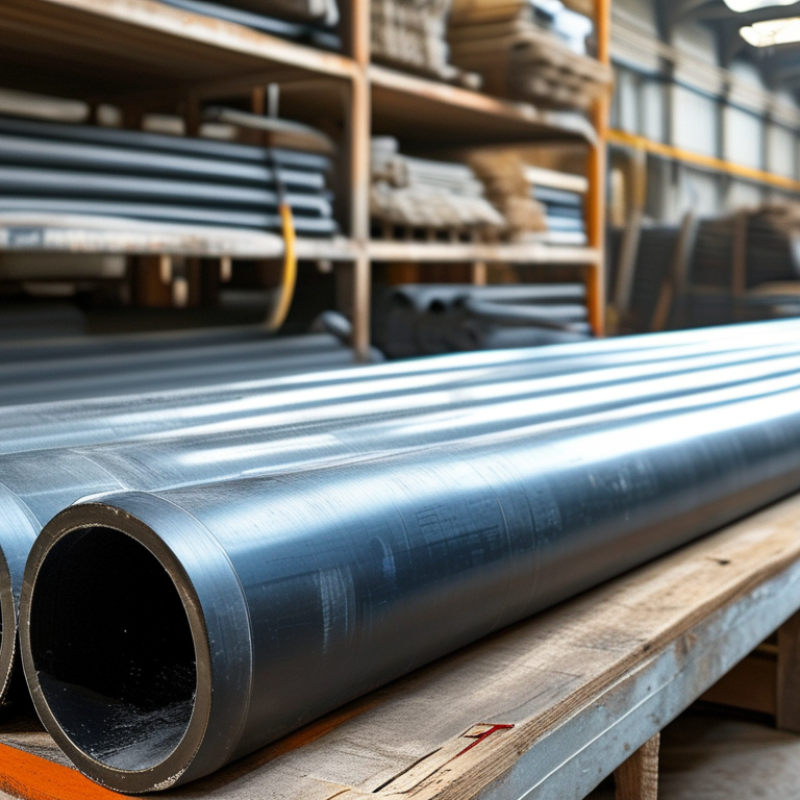
Top 10 Rigid Plastic Tubing Suppliers Worldwide?

What Is Rigid Plastic Tubing and Where Is It Used?

Rigid plastic tubing is a hard, shaped passage used to carry fluids, gases, wires, or small components. Unlike flexible hose, it keeps its form under normal handling and installation. Common materials include PVC, polycarbonate, acrylic, nylon, polyethylene, and fluoropolymers. Each material behaves differently under heat, pressure, sunlight, and chemical contact.

In laboratories, clear rigid tubing helps technicians observe liquid movement and contamination. Medical equipment may use tubing for air, drainage, or fluid delivery. Food-processing systems often require smooth inner walls that reduce residue buildup. Construction and water systems use larger tubing for protection, drainage, and controlled flow. Electronics manufacturers also use narrow tubes to insulate wires or guide sensitive parts. It looks simple.

Choosing the right tube requires more than checking the outside diameter. Engineers normally compare inside diameter, wall thickness, operating temperature, pressure rating, bend limits, and chemical compatibility. A clear tube is not automatically suitable for ultraviolet exposure. A strong plastic may still crack after repeated heating and cooling. Connections also matter, since poor cutting can leave sharp edges or create leaks.

In practical installations, clean square cuts improve fittings and reduce turbulence. Before production, samples should face pressure, temperature, and chemical tests that reflect actual service conditions. Standards can support quality checks, but they do not replace application testing. It is easy to over-specify a tube and increase costs unnecessarily. It is also easy to choose too cheaply. That mistake often appears later, when discoloration, brittleness, or restricted flow becomes difficult to ignore.

How to Evaluate Global Rigid Plastic Tubing Suppliers

Choosing among ten global rigid plastic tubing suppliers requires more than comparing catalog prices. Start with application evidence: pressure, temperature, chemical exposure, bend radius, and expected service life. Ask for dimensional tolerances, resin specifications, and recent batch test reports. A polished brochure is not proof. Request samples from normal production, not specially selected pieces. Keep detailed notes. Small differences often separate reliable production from attractive sales language.

Evaluate manufacturing experience through documented process controls. Look for extrusion records, calibration methods, in-process inspections, and lot traceability. A credible supplier should explain how defects are detected and corrected. Independent testing can confirm tensile strength, opacity, surface finish, and pressure performance. Check whether certificates match the exact tubing grade and size. They should. Yet paperwork can be outdated, incomplete, or reused across products. Verify dates and test conditions with the issuing laboratory when risk is high.

Global supply also depends on communication and continuity. Compare lead times, minimum order quantities, packaging, tooling ownership, and replacement procedures. Ask how the supplier manages resin shortages, port delays, and engineering changes. A remote factory audit, live video inspection, or third-party assessment adds useful evidence. Visit the site when volumes justify it. A small pilot order is safer than an immediate long-term contract. No scorecard is perfect. One missed tolerance can cost more than a modest price difference.

Top 10 Rigid Plastic Tubing Suppliers Worldwide? - How to Evaluate Global Rigid Plastic Tubing Suppliers
A practical, brand-neutral scorecard for comparing global rigid plastic tubing suppliers. The benchmarks below are based on commonly used international standards, regulatory frameworks, and documented manufacturing practices.
Rank Evaluation Dimension Recommended Benchmark Warning Signs
1 Material Range and Resin Traceability Capability to process PVC, PE, PP, ABS, PA, PC, POM, PVDF, and other engineering thermoplastics when required. Each production batch should be traceable to a resin grade and supplier certificate. Resin technical data sheets, certificates of analysis, lot-number records, and material-change notification procedures. Uncontrolled material substitutions, missing lot records, or specifications based only on generic polymer names.
2 Dimensional Accuracy Documented control of outer diameter, inner diameter, wall thickness, ovality, and straightness according to the buyer’s drawing or tolerance standard. Inspection plans, calibrated gauge records, capability studies, and sample dimensional inspection reports. Tolerances are not defined, measurements are taken only at final inspection, or no gauge calibration records are available.
3 Mechanical and Thermal Performance Verification of tensile strength, elongation, impact resistance, hardness, pressure resistance, and service-temperature limits using applicable ASTM or ISO methods. Independent or internal laboratory reports referencing methods such as ASTM D638, ASTM D256, ASTM D2240, ISO 527, or ISO 179. Performance values are quoted without test conditions, specimen dimensions, test method, or environmental exposure details.
4 Application and Regulatory Compliance Compliance documentation should match the intended use, such as food contact, potable water, medical, automotive, electrical, or industrial service. Declarations of conformity, food-contact documentation where applicable, RoHS and REACH statements, and application-specific test reports. A general compliance statement is used for every application without identifying the exact polymer, additive package, or end-use conditions.
5 Quality Management System A certified quality system such as ISO 9001 is a useful baseline. ISO 13485 is relevant for medical-device supply chains, while IATF 16949 may be expected in automotive programs. Valid certificates, certification scope, audit status, corrective-action records, and documented nonconforming-product controls. Certificates are expired, the scope excludes tubing production, or quality controls depend primarily on individual operators.
6 Extrusion and Secondary-Processing Capability The supplier should demonstrate suitable extrusion lines, tooling capability, co-extrusion or reinforced construction where required, and reliable cutting, drilling, flaring, bending, or printing processes. Equipment list, tooling-development process, process-flow diagrams, sample parts, and documented setup or changeover controls. Critical operations are outsourced without disclosure, tooling ownership is unclear, or the supplier cannot provide process-specific samples.
7 Testing and Inspection Infrastructure Access to calibrated equipment for dimensional, visual, mechanical, thermal, pressure, leakage, and surface-quality inspections appropriate to the product. Calibration certificates traceable to recognized standards, laboratory equipment inventory, inspection records, and sample test reports. Testing is performed only by a third party with long lead times, or the supplier cannot explain measurement uncertainty and acceptance criteria.
8 Production Capacity and Supply Continuity Capacity should be demonstrated through monthly output, available extrusion lines, tooling availability, production lead time, and contingency planning for resin or equipment disruptions. Capacity statement, historical on-time-delivery data, production-loading method, backup-equipment plan, and business-continuity procedures. Capacity claims are unsupported, lead times vary significantly, or there is no documented plan for raw-material shortages and equipment failures.
9 Global Logistics and Export Readiness The supplier should provide consistent export documentation, packaging suitable for long-distance transport, shipment tracking, and clear Incoterms for international orders. Sample commercial invoices, packing lists, certificates of origin where applicable, packaging specifications, and delivery-performance records. Documentation errors are frequent, packaging allows deformation or contamination, or shipping responsibilities are not clearly defined.
10 Total Cost, Service, and Technical Support Evaluation should include tooling, material yield, scrap rate, packaging, freight, inspection, minimum order quantity, payment terms, and engineering support—not only unit price. Itemized quotation, tooling terms, sample-development timeline, engineering-change procedure, warranty policy, and response-time commitments. The lowest quoted price excludes tooling, testing, freight, packaging, or future engineering changes.
Suggested evaluation method: Score each dimension from 1 to 5, assign higher weight to dimensions directly linked to safety and performance, and verify all claims through samples, audits, certificates, and production records before placing a large international order.

Top 10 Rigid Plastic Tubing Suppliers Worldwide

Top 10 Rigid Plastic Tubing Suppliers Worldwide

The worldwide market includes ten strong supplier groups serving medical, laboratory, automotive, construction, and fluid-handling applications. Their products commonly use PVC, polyethylene, polypropylene, nylon, acrylic, or fluoropolymers. Each material brings different strengths. Some suppliers focus on tight dimensional control for diagnostic equipment. Others produce impact-resistant tubing for machinery, irrigation, or chemical transfer. Clear tubing helps operators inspect flow, while opaque grades protect light-sensitive contents. Small details matter.

A reliable supplier should provide material certificates, batch traceability, pressure data, and consistent wall thickness. Independent testing can confirm chemical resistance, temperature limits, and tensile performance. Many established manufacturers also support custom cutting, flaring, printing, and coiling. These services reduce assembly time. Yet supplier lists are not perfect. Public information may differ by region, and a large catalog does not guarantee suitable performance. Buyers should request samples and test them under real pressure, bending, heat, and cleaning conditions. One overlooked issue is connection fit. A tube may meet its published diameter but still seal poorly with a particular fitting. That practical check often reveals more than a brochure.

Materials, Manufacturing Capabilities, and Product Standards

Choosing among the top 10 rigid plastic tubing suppliers worldwide requires more than comparing prices. Materials define performance. Polyethylene suits flexible chemical lines, while polypropylene handles heat and many corrosive fluids. Polycarbonate offers clarity and impact resistance, but it may need careful stress testing. Medical or laboratory tubing often requires controlled formulations, clean processing, and documented traceability.

Manufacturing capability matters just as much. A reliable supplier should provide extrusion control, consistent wall thickness, smooth inner surfaces, and tight outside diameters. Ask about co-extrusion, cutting accuracy, flaring, printing, and custom tooling. Factory audits can reveal practical details, such as dusty storage areas or poorly protected tube ends. These details matter. Product standards must match the application, not merely appear on a certificate. Review pressure ratings, temperature limits, chemical compatibility, sterilization data, and batch inspection records. Some documents look complete but leave testing methods unclear.

Tips: Request samples from several production lots. Measure dimensions at multiple points. Check certificates directly with the issuing laboratory when possible. Confirm whether the quoted material is virgin, recycled, or blended. Also ask how defects are recorded and corrected. A supplier that admits occasional process variation may be more credible than one claiming perfection. My own assessment would remain cautious until real-use testing confirms long-term performance. Suppliers should explain resin identification, extrusion temperatures, calibration systems, and final inspection procedures in plain language. That transparency supports safer purchasing decisions.

How to Choose the Right Supplier for Your Application

Choosing a rigid plastic tubing supplier starts with the application, not a ranking. Define the fluid, operating temperature, pressure, bend radius, and expected service life. These details guide resin selection, wall thickness, and dimensional tolerance. Small errors matter. An experienced supplier should ask for drawings, test conditions, and installation details before quoting. That conversation often reveals technical maturity.

Review evidence, not promises. Request material specifications, dimensional inspection reports, batch traceability, and relevant quality certifications. For critical applications, ask for samples from regular production, not specially prepared pieces. Test them under realistic conditions, including heat cycling, pressure exposure, and repeated assembly. A polished sample can hide inconsistent manufacturing.

Supply reliability deserves equal attention. Check minimum order quantities, tooling ownership, lead times, packaging, and change-control procedures. Ask how the supplier handles a failed inspection or delayed shipment. I once treated a low price as strong evidence of value; it was not. The tubing later required extra fitting work, creating avoidable labor costs. Clear communication is useful, but documented controls matter more. A supplier who explains limitations honestly may be safer than one making perfect-sounding claims.

Top 10 Rigid Plastic Tubing Suppliers Worldwide? How to Choose the Right Supplier for Your Application

Use this application-based evaluation framework to compare suppliers without relying on brand names. The percentages represent typical procurement priorities and should be adjusted to your operating conditions, compliance requirements, and total cost targets.

How to use the chart: Assign each potential supplier a score from 1 to 5 for every criterion, multiply the score by the relevant application weight, and compare the weighted totals. Always verify pressure, temperature, chemical compatibility, testing, traceability, and regulatory documentation before approval.