10 Essential Tips for Choosing the Right Acrylic Tube?
Choosing the right acrylic tube can significantly influence the outcome of your projects. According to a report by Smithers Pira, the global acrylic market is projected to grow at a CAGR of 4.5% through 2027. This growth highlights the need for informed choices in material selection. Industry expert Dr. Emily Chen states, "Selecting the proper acrylic tube can make or break your design."
Acrylic tubes are versatile, used in various applications from construction to art. However, not all acrylic tubes are created equal. Factors like thickness, clarity, and UV resistance play critical roles in their performance. Understanding these elements can be daunting. Many buyers often overlook essential specifications, leading to dissatisfaction and wasted resources. The right information helps ensure optimal outcomes.
It's easy to be overwhelmed by choices in the acrylic market. Each option can seem appealing, yet they vary widely in quality and suitability. Engaging with professionals, consulting product data sheets, and exploring reviews from other users can provide valuable insights. Make informed decisions for your acrylic tube needs to enhance your projects.

Understanding Acrylic Tube Types and Their Applications
When selecting acrylic tubes, it’s vital to understand the different types available and their specific applications. Acrylic tubes are commonly used in various industries, including automotive, construction, and medical sectors. According to a report by the Global Acrylic Sheet Market, the demand for acrylic products is expected to grow at a CAGR of 5.1% from 2021 to 2028, highlighting their increasing importance.
There are several types of acrylic tubes, such as extruded and cast acrylic. Extruded acrylic is often more affordable and available in various colors. However, cast acrylic offers superior clarity and higher resistance to impact. While both types serve a wide range of applications, the choice between them can significantly impact performance. For instance, in medical applications, clarity and durability are paramount, often making cast acrylic the preferred option.
Choosing the right tube also requires attention to dimensions, thickness, and UV stability. Research indicates that tubes with a thickness of less than 3mm may not withstand heavy loads, leading to potential failures. Negotiating these choices can be complex. Additionally, some users find it challenging to identify the best match for their needs, especially in less common applications. This complexity can lead to hesitation and uncertainty, emphasizing the need for informed decision-making.
Evaluating the Dimensions and Size Requirements of Acrylic Tubes
When evaluating the dimensions and size requirements of acrylic tubes, precision is key. These tubes are widely used in various applications, from industrial piping to DIY projects. According to a recent industry report, nearly 40% of project failures are attributed to improper sizing of materials. Therefore, understanding the specific dimensions is critical.
Start by measuring the intended space. The diameter and length of the tube should fit the application perfectly. A mismatch could lead to structural weaknesses, as unsupported sections may bend or break. Reports indicate that tubes with a diameter of fewer than 2 inches often yield better flexibility, making them ideal for intricate designs. However, consider the wall thickness as well; a thicker wall supports greater pressure and adds durability.
It’s also essential to think about overall visual appeal. Acrylic tubes come in a range of sizes, but not all will suit your aesthetic needs. It’s easy to overlook how the dimensions impact visibility and light transmission. If the tube is meant for display purposes, dimensions could affect the final outcome dramatically. Short tubes may limit light diffusion, while overly long ones can distort shapes. Please ponder this carefully before making a final decision.
10 Essential Tips for Choosing the Right Acrylic Tube
This chart illustrates the average diameter and length requirements for various applications of acrylic tubes, helping you evaluate dimensions effectively.
Assessing the Optical Clarity and Quality of Acrylic Materials
When selecting acrylic tubes, optical clarity is paramount. It influences the overall appearance and functionality of the finished product. Recent industry reports indicate that high-quality acrylic can provide up to 92% light transmission. This makes it superior compared to traditional glass. However, not all acrylic materials meet this standard. Always request an optical clarity test from suppliers.
Tip: Look for certifications that verify the material's optical quality. This can simplify your selection process. Check for any discrepancies in clarity across different samples.
Assessing the quality of acrylic involves examining its surface finish. A flawless surface prevents distortion and ensures consistent light distribution. Some acrylics exhibit micro-scratches, which can affect optical clarity. Ensure that the thickness of the acrylic is consistent throughout. Variances can lead to uneven light transmission.
Tip: Invest in visual inspection tools. They can help detect imperfections that may be invisible to the naked eye. Ideally, work with suppliers who are transparent about their production processes and quality controls. The right acrylic tube not only enhances aesthetic appeal but also determines durability in various applications.
Comparing Different Types of Acrylic Tube Finishes and Textures
When selecting acrylic tubes, understanding finishes and textures is crucial. Different finishes affect aesthetics and functionality. For example, a glossy finish offers a sleek appearance but may show fingerprints easily. In contrast, a matte finish hides imperfections and provides a more sophisticated look, making it ideal for high-end projects.
Textured acrylic tubes can also enhance the visual appeal of your design. Textures such as frosted or patterned surfaces can diffuse light and create a unique atmosphere. According to industry reports, 70% of designers prefer using textured acrylic for lighting applications. This is because it softens harsh lighting and offers a warmer ambiance.
However, surface choices can impact durability. A textured surface may provide better scratch resistance than smooth finishes. That said, some textures may accumulate dust more easily, complicating maintenance. Evaluating the trade-offs between aesthetics and functionality is essential. Recognizing these variables can lead to more informed choices that balance both style and practicality in your project.
Analyzing Cost Factors and Supplier Options for Acrylic Tubes
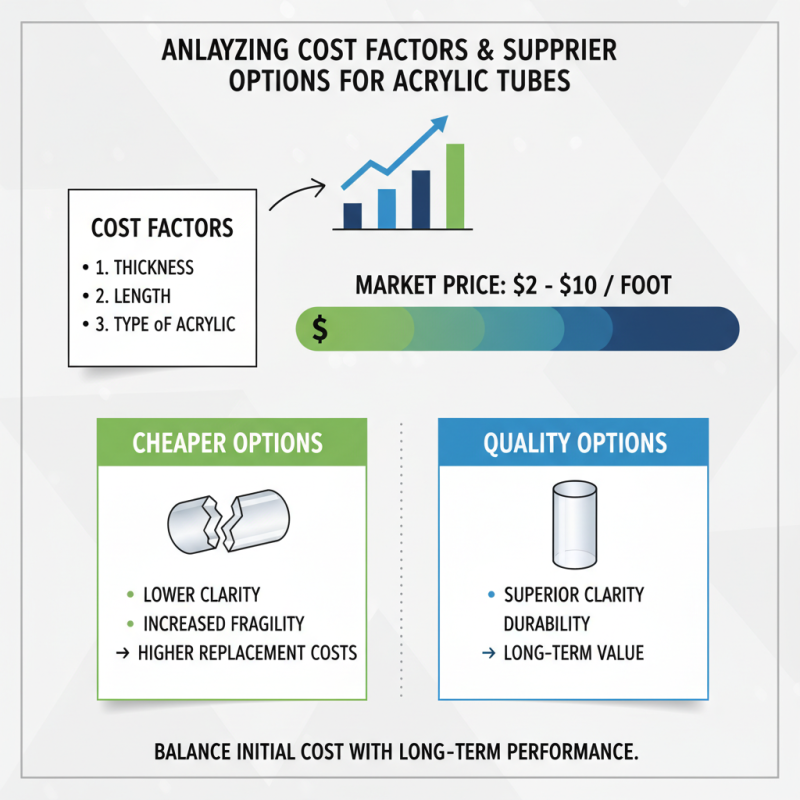
When considering the cost factors for acrylic tubes, several aspects come into play. The price varies based on thickness, length, and type of acrylic used. Reports indicate that the average market price for acrylic tubes ranges from $2 to $10 per foot. While cheaper options exist, they may compromise quality. Often, low-cost acrylic tubes exhibit lower clarity and increased fragility, leading to higher replacement costs.
Supplier selection is equally critical. Established suppliers often provide better quality assurance and customer service. Their acrylic tubes typically undergo rigorous quality testing. Industry data suggests that 75% of businesses prefer suppliers who offer transparent sourcing and production processes. This focus on reliability directly impacts the longevity and durability of the tubes used in various applications.
In contrast, less reputable suppliers may promise lower prices but can lead to unexpected liabilities. Buyers should consider these hidden costs. The cheapest option may soon become the most expensive when factoring in replacements and maintenance. Investing in reputable suppliers can save money over time by reducing the frequency of tube replacements.