7 Tips for Choosing a Restringing Rackets Machine?
Choosing the right Restringing Rackets Machine can affect tension accuracy, string life, and player confidence. A poor choice may create uneven pulls, frame stress, or frustrating adjustments. The machine should match your workload, racket types, workspace, and technical ability.
I learned this through a simple mistake. I once focused on pulling speed and ignored clamp stability. The machine looked impressive, but small tension differences appeared across the string bed. That experience changed my evaluation process. Reliable restringing depends on more than a powerful motor. Calibration, mounting support, clamp design, and consistent operation matter equally.
This guide presents seven practical tips for making a more informed decision. It examines electronic and crank systems, tension ranges, racket compatibility, and available workspace. It also considers maintenance, warranty coverage, replacement parts, and manufacturer support. These details often become important after several months of regular use. Ask difficult questions before buying. Can the machine hold tension accurately? Are the clamps easy to adjust? Does the frame support different racket shapes securely? Small details matter.
No machine removes the need for careful technique. Even an expensive model can perform poorly when installed or calibrated incorrectly. That is worth remembering. Manufacturer specifications should guide your shortlist, while feedback from experienced stringers can reveal everyday weaknesses. The best choice is not always the fastest or most expensive machine. It is the one that delivers repeatable results, safe mounting, and manageable maintenance for your actual restringing needs.
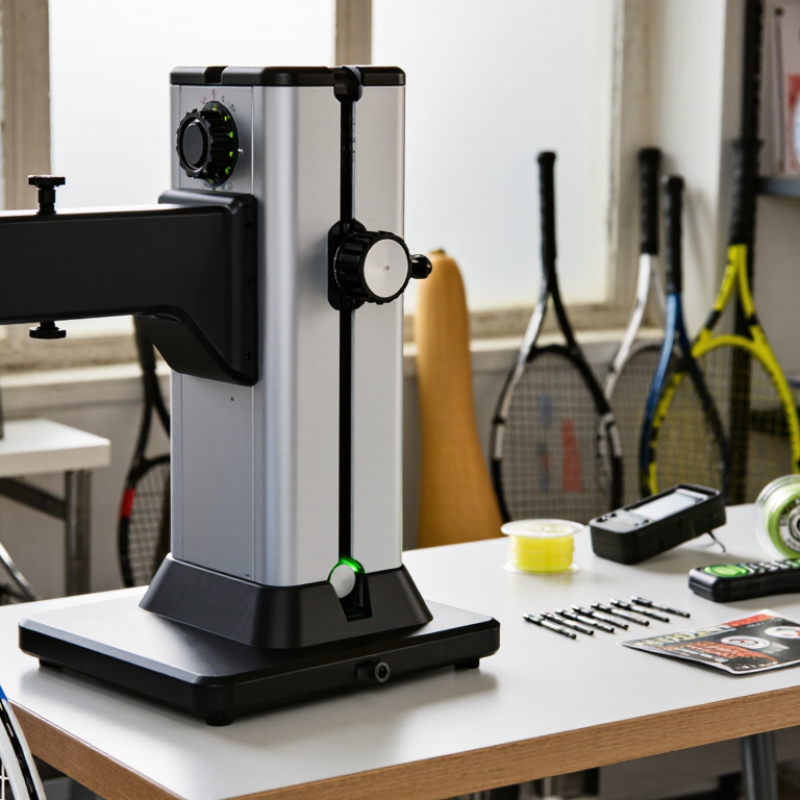
Understanding Racket Restringing Machine Types and Their Uses
Choosing a racket restringing machine begins with understanding how each type creates tension. A drop-weight machine uses gravity and a calibrated bar. It is affordable, durable, and easy to inspect. However, it works slowly and needs careful leveling. A crank machine applies tension faster through a spring mechanism. It suits busy workshops, but its calibration can drift over time. Electronic machines offer precise digital control and efficient workflows. They cost more and require stable power, regular testing, and careful maintenance.
Tip: Match the machine to your workload. Occasional players may prefer a drop-weight model, while stringers handling many rackets need faster operation. Consider racket size too. A firm six-point mounting system supports tennis and badminton frames without unnecessary pressure. I once underestimated table stability; even a good tension head felt unreliable on a shaking surface. That mistake changed my setup.
Tip: Check adjustment range, clamps, and calibration access before buying. Fixed clamps can improve consistency, while floating clamps often reduce cost. Look for clear tension settings and smooth turntable movement. Ask whether replacement parts and service instructions are realistically available. A machine can appear professional yet frustrate daily use. Leave enough space around the frame. Good lighting also helps identify uneven spacing, crossed strings, or damaged grommets. Do not trust digital numbers blindly. Test tension with a suitable measuring tool, record results, and adjust your technique when the racket feels different from the expected response.
7 Tips for Choosing a Restringing Racket Machine
Understanding racket restringing machine types and their practical uses
Relative ratings use a 1–5 scale based on the operating principles of common machine types: drop-weight machines emphasize portability and affordability, crank machines balance speed and control, and electronic constant-pull machines provide the highest repeatability and workflow efficiency. Consider stringing volume, required tension consistency, available space, portability, and budget before choosing.
Assessing Frame Compatibility, Tension Range, and Clamping Systems
7 Tips for Choosing a Restringing Rackets Machine?
Frame compatibility should guide the purchase. Check whether the machine supports the racket’s head shape, drilling pattern, and length. A six-point mounting system usually distributes pressure more evenly around fragile frames. However, “universal” supports are not always universal. Measure the frame carefully. The ITF Global Tennis Report 2024 estimated more than 100 million tennis players worldwide, so stringers increasingly handle varied racket designs. Tip 1: Test an oval, teardrop, and oversized frame before buying. Tip 2: Confirm that the mounting arms clear wide grommet strips.
Tension range matters more than impressive maximum numbers. Many adult rackets specify tensions near 20–30 kilograms, while junior, soft-frame, and specialty rackets may require different settings. Choose a machine that covers the manufacturer’s recommended range with visible, repeatable adjustment. Digital displays help, but calibration matters more. The Tennis Industry Association’s 2023 participation report recorded 23.8 million U.S. tennis players, indicating steady demand for consistent restringing services. Tip 3: Compare the machine’s stated range with your most frequent customer requests. Tip 4: Verify calibration using a certified tension tester. Small errors become obvious.
Clamping systems directly affect tension consistency. Fixed clamps generally offer stronger control, while flying clamps can improve portability and reduce cost. Examine clamp teeth under bright light. They should grip the string without crushing it. Tip 5: Test thin and thick strings. Tip 6: Look for smooth rotation and minimal clamp slippage. Tip 7: Record tension results after several jobs. My own preference would be fixed clamps, but that judgment can change with workload, budget, and maintenance habits. A machine can look precise and still need regular checking.
Comparing Manual, Electronic, and Automatic Machine Features
7 Tips for Choosing a Restringing Rackets Machine
Choosing between manual, electronic, and automatic machines depends on workload, accuracy, and operator experience. The ITF Global Tennis Report 2024 estimates 106 million tennis players worldwide, creating steady demand for dependable restringing services. Tip 1: estimate daily jobs before buying. A manual machine suits occasional home use, while an electronic model better supports clubs. Tip 2: check tension accuracy and calibration options. Tip 3: inspect the mounting system. Six-point supports usually hold the racket more securely during pulling. Tip 4: test the clamps. They should grip tightly without marking the strings.
Manual machines provide direct feedback and lower purchase costs. They also require more time and consistent technique. Electronic machines display tension digitally and reduce repeated adjustments. Automatic machines add motorized pulling, preset tensions, and faster workflows. Speed matters. The SFIA 2024 Topline Participation Report recorded about 23.8 million tennis participants in the United States during 2023, with participation rising approximately 4.8 percent. That growth may justify automation for busy facilities, but not every shop needs it. Tip 5: compare pulling speed with actual demand. Tip 6: calculate maintenance, calibration, and training costs. Tip 7: ask whether replacement parts are easily available.
I have found that a quiet, stable machine can improve concentration more than flashy software. Still, this is not universal. Beginners may overvalue automation and undervalue clamp quality. Reviewers should measure tension consistency across several rackets, not one successful job. A practical trial reveals more than a polished specification sheet.
Evaluating Build Quality, Accuracy, Maintenance, and Ease of Use
Choosing a restringing racket machine starts with build quality, not a glossy casing. Inspect the frame, turntable, mounting posts, and base for flex or loose movement. A rigid structure keeps tension more stable during repeated jobs. Metal components often endure better, but excessive weight can reduce portability. Balance matters.
Accuracy deserves careful testing. Check whether the tension head pulls smoothly and returns consistently. Compare its reading with a calibrated tension gauge when possible. Clamps should hold the string without crushing it or allowing slow movement. Small errors can change a racket’s feel. They can also frustrate experienced players. Ask whether calibration instructions are clear and practical. During hands-on testing, I would repeat the same pull several times. Perfect consistency is uncommon, so record the variation honestly.
Maintenance should not feel like engineering homework. Look for accessible cleaning points, replaceable clamps, lubrication guidance, and available spare parts. A clear manual is valuable, especially for new technicians. Ease of use includes mounting speed, control layout, lighting, and safe cable routing. Try adjusting the machine with one hand while holding a racket. Awkward controls become tiring after several restrings. I once underestimated table height, and my shoulders noticed it quickly. That mistake still matters. Before buying, review service support, warranty terms, and user reports from working stringers, not only promotional claims.
Balancing Machine Performance, Workspace Needs, and Purchase Budget
Choosing a restringing racket machine starts with your workspace, not its feature list. A compact drop-weight model may suit a home room with limited bench space. A busy club needs faster mounting, stable tension control, and durable clamps. I have found that a machine can be technically impressive yet awkward beside a narrow workbench.
Demand also matters. The ITF Global Tennis Report 2021 recorded about 87 million tennis players worldwide. In the United States, the SFIA 2024 Topline Participation Report counted roughly 23.8 million tennis participants in 2023. These figures suggest steady stringing opportunities, but they do not guarantee enough local customers. Check your own booking records first. That step is easy to skip.
Performance should match workload and skill. Electronic tension systems can improve speed and repeatability, while manual systems often reduce the initial purchase cost. Look for calibrated tension settings, firm supports, smooth clamps, and accessible replacement parts. A cramped room may benefit more from a smaller footprint than from extra digital functions. Remember operating costs, including calibration, maintenance, electricity, and training time. A cheaper machine may become expensive when adjustments take too long.
The Tennis Industry Association has repeatedly highlighted participation and racquet-sports business growth, but industry growth is not identical to profitable stringing work. Compare expected monthly jobs with your payback period. Leave space for a tool tray and loose strings. I once underestimated cable clearance. That was annoying. Allow room to move around the frame, and test the machine with several racket shapes before purchasing. Specifications help, but real handling exposes weaknesses.

