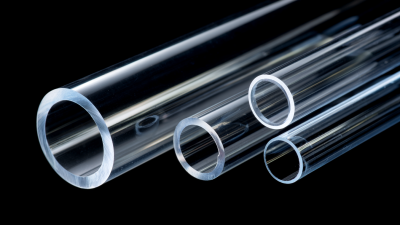
2026 How to Choose the Best Clear Tube for Your Needs?

When considering the choice of a "clear tube," it is vital to understand your specific needs. Industry expert Dr. Emily Carter emphasizes, "Selecting the right tube can profoundly impact your project's success." Clear tubes serve various purposes, from laboratory experiments to packaging in e-commerce. Their transparency allows for easy monitoring of contents, making them a popular choice in many fields.

Each clear tube type comes with its unique features. Some offer superior flexibility, while others provide enhanced durability. For instance, various materials like PET, PVC, and polystyrene influence the tube's applications. Knowing the right attributes is essential to avoid potential mishaps in usage.

Moreover, aesthetics often play a role in selection. A clear tube's appearance can impact consumer perception. It is crucial to reflect on both functionality and design. Questions about clarity, thickness, and sealing methods arise, urging users to think critically about their choices. Understanding these factors can lead to better decisions and ultimately more successful outcomes.

2026 How to Choose the Best Clear Tube for Your Needs?

Understanding the Different Types of Clear Tubes Available on the Market

When choosing a clear tube, understanding the different types available is crucial. Clear tubes come in various materials such as polycarbonate, acrylic, and PVC. Each material offers unique benefits, making it important to know your specific needs. For example, polycarbonate is known for its durability and impact resistance. Acrylic, on the other hand, is lightweight and offers excellent clarity.

Some tubes are designed for specific applications. Medical and laboratory settings often require sterilizable options. In contrast, clear tubes for gardening may need flexibility to withstand environmental conditions. It's easy to overlook the small details, like temperature resistance or chemical compatibility.

You might find that a tube looks perfect in images, but its performance could fall short in real-life applications. Don't hesitate to consult professionals in your field. Their experience can guide you toward the best choice for your situation. Making a decision that feels right at first may require adjustments later on. Keep in mind what works today may not suit future needs.

Key Factors to Consider When Selecting a Clear Tube for Specific Uses

When selecting a clear tube, understanding your specific needs is crucial. Factors like material, clarity, and durability can significantly affect your selection. Polycarbonate or acrylic are popular choices for their strength and transparency. Know the environment where the tube will be used. Will it face extreme temperatures? Choosing the right material is vital for performance.

Consider the dimensions carefully. The diameter and wall thickness can impact functionality. A thicker wall may provide better durability, while a thinner wall can be more lightweight. Sometimes, a larger diameter fits better for your application, but may not be necessary. It's important to strike a balance.

Think about the intended purpose of the tube. Is it for storage, display, or transport? Different uses might require additional features like UV resistance or chemical compatibility. Testing various options can help clarify what works best for your project. Remember that sometimes the perfect choice isn’t clear at first. Reflecting on past experiences can guide future decisions.

Comparing Materials: Glass vs. Plastic Clear Tubes and Their Advantages

When selecting clear tubes, the choice of material plays a crucial role. Glass and plastic are the two primary options, each with unique advantages. According to a report by the American Glass Research Institute, glass offers superior clarity and scratch resistance. It is a non-reactive material, making it ideal for storing sensitive substances, such as chemicals. Glass can withstand higher temperatures, allowing for versatility in various applications. Its durability is unmatched, which is essential for long-term storage.

On the flip side, plastic tubes have gained popularity for their lightweight and shatterproof properties. The Plastics Industry Association highlights that plastic tubing is easier to handle and transport. Certain plastics, like polypropylene, exhibit good chemical resistance and are less likely to break upon impact. However, their clarity may not match that of glass, and they can warp under heat. Consumers should weigh these factors carefully.

It's vital to assess your specific needs. If you require visual clarity and chemical stability, glass may be your best bet. However, for more casual applications where weight and safety are concerns, plastic might suit your needs better. Choosing between these materials requires a thoughtful evaluation of context and usage.

Assessing Size and Diameter Requirements for Your Clear Tube Needs

When selecting a clear tube, size and diameter are vital. Knowing your specific needs helps narrow down choices. A tube's diameter impacts its capacity and flow rate. For example, a narrow diameter might restrict the flow. Consider the substances you’ll be using. Will they require a wide tube to facilitate movement? A careful assessment here can save time and effort.

Measuring is crucial. Use precise tools to determine the inner and outer diameters. Common sizes range from small (under 1 inch) to large (several inches wide). Each has its uses. Collaborative projects may require different tubes; understanding your team's needs can lead to better choices. Look for examples where a wrong size led to complications.

Avoid rushing the process. Misjudgments in size can lead to clogs or breakage. This can cause delays and extra costs. Think about the environment too. Will the tube be exposed to heat or cold? Each factor plays a role in your selection. Adjustments based on real-world usage often reveal hidden needs. Analyzing potential scenarios will guide you to the perfect solution.

2026 How to Choose the Best Clear Tube for Your Needs? - Assessing Size and Diameter Requirements for Your Clear Tube Needs

Application Tube Diameter (mm) Length Options (m) Material Type Transparency (%)
Fluid Transport 6 1, 3, 5 Polypropylene 90
Food Packaging 12 1, 2, 4 Polyethylene 95
Chemical Handling 8 1, 5, 10 PVC 85
Medical Applications 4 1, 2 Silicone 97
Aquarium Use 10 1, 3 Acrylic 92

Exploring Additional Features and Customization Options for Clear Tubes

When selecting clear tubes, customization and additional features play a crucial role. The type of material can significantly impact the tube's durability and application. For instance, some materials are more resistant to UV light, while others excel in high-temperature environments. Understanding these properties can guide you in choosing the right tube for your specific needs. Custom sizes can be beneficial as well; a perfect fit can enhance functionality and aesthetics in your design.

Exploring additional features offers opportunities for enhanced performance. Consider options like seamless edges or anti-static properties. Seamless edges can prevent leaks and offer a sleeker appearance. Anti-static properties, on the other hand, are essential when dealing with sensitive components. Custom printing on clear tubes can also add branding or essential information. This feature is practical and helps in identifying the contents easily.

Reflecting on the customization process can reveal potential pitfalls. It’s easy to overlook certain details like tube thickness or fitting styles. Each choice can lead to unintended consequences in usability. Therefore, a thorough assessment of all options, alongside real-world feedback, can aid in making a more informed decision. Remember, what seems ideal on paper may not always work seamlessly in practice.

2026 Best Clear Tube Features