Best China Wildlife Night Camera Suppliers for Global Buyers?
Choosing the Best China Wildlife Night Camera Suppliers requires more than comparing prices, pixels, or product photographs. Buyers need dependable evidence from real field conditions. A camera may advertise 4K video, yet fail after three rainy nights in a mountain forest. Battery endurance, infrared illumination, trigger speed, image storage, IP protection, firmware stability, and warranty response deserve equal attention.
The WWF Living Planet Report 2024 recorded a 73% average decline in monitored vertebrate wildlife populations between 1970 and 2020. This pressure increases the need for careful, non-invasive monitoring tools. MarketsandMarkets’ wildlife monitoring industry analysis also identifies camera-based observation as an important technology for biodiversity research and habitat management. These reports do not prove that every Chinese supplier is reliable. They show why equipment quality matters. Small technical failures can create large gaps in long-term ecological records.
Wildlife biologist Dr. Roland Kays has said, “Camera traps are revolutionizing the way we study wildlife.” His observation remains practical. A strong Wildlife Night Camera should capture a fox crossing wet leaves at midnight, not merely perform well in a showroom. Global buyers should examine sample footage, sensor performance, export documentation, data-security practices, and after-sales support before placing an order. Supplier rankings can help, but they are never perfect. Factory audits may miss seasonal problems. User reviews may also be incomplete. This guide compares leading China Wildlife Night Camera suppliers through a balanced lens, combining technical specifications, manufacturing experience, compliance awareness, and field-use reliability.
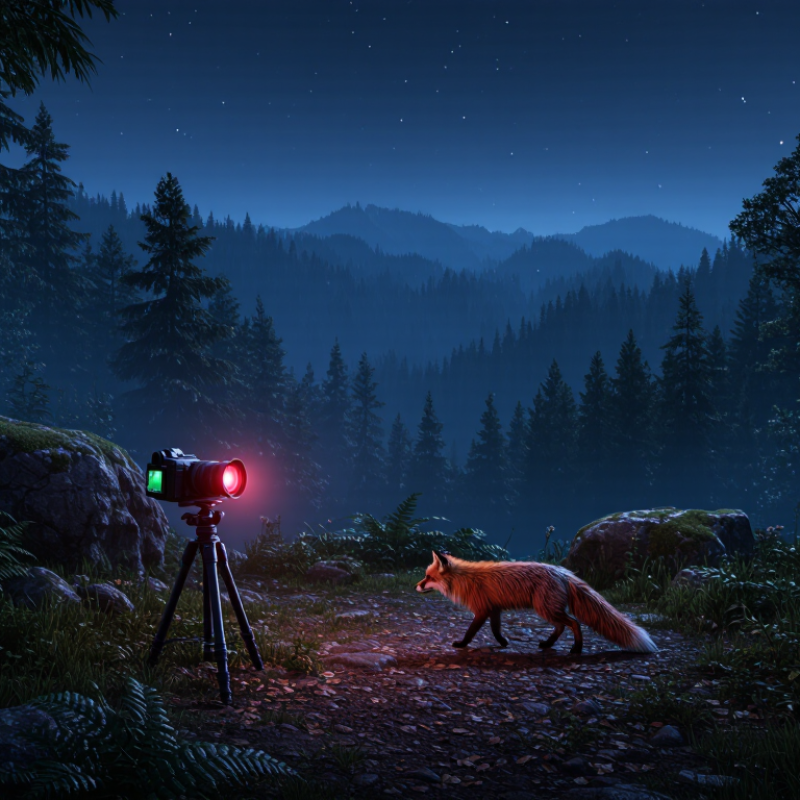
China’s Wildlife Night Camera Manufacturing Landscape
China’s wildlife night camera manufacturing landscape is built around dense electronics supply chains. Image sensors, infrared LEDs, molded housings, and lithium battery systems often come from nearby production clusters. Grand View Research’s 2024 trail camera assessment projects market growth of roughly 7% annually through 2030. This supports continued Chinese investment in compact, low-power devices.
For global buyers, factory capability matters more than catalogue claims. Strong suppliers test 850 nm and 940 nm infrared illumination in dark field conditions. They also measure trigger speed, standby consumption, waterproofing, and false-trigger rates. IP66 protection, sealed cable ports, and stable firmware reduce failures beside humid forest trails. MarketsandMarkets’ 2024 night-vision analysis identifies sensor performance, wireless connectivity, and miniaturisation as major growth factors. These trends are visible in Chinese production lines, where OEM and ODM teams can adjust lens angles, camouflage shells, and software settings.
Yet supplier data is not perfectly comparable. Some reports combine security, hunting, and wildlife applications. That weakens direct market conclusions. Buyers should request twelve-hour battery tests, memory-card error logs, infrared range evidence, and sample units from the same production batch. A useful audit also checks factory quality records and export documentation. Cheap samples can look impressive. Field performance may disagree.
Key Features of Professional Wildlife Night Cameras
Best China Wildlife Night Camera Suppliers for Global Buyers?
Professional wildlife night cameras need more than high pixel counts. The 2024 Living Planet Report found a 73% average decline in monitored wildlife populations between 1970 and 2020. Reliable field data therefore depends on consistent triggers, clear images, and stable operation. Look for fast trigger times, adjustable PIR sensitivity, time stamps, and infrared illumination that minimizes visible red glow. A 940 nm infrared system is less noticeable, though its effective range may be shorter than 850 nm.
Weather exposes weak hardware. An IP66 enclosure resists dust and powerful water jets, while IP67 adds temporary immersion protection. Check both ratings before placing cameras near streams or muddy trails. Battery performance also deserves practical testing. Cold nights, frequent triggers, and weak signal conditions can reduce runtime sharply. Lithium batteries usually perform better in low temperatures, but supplier claims should be verified through sample testing.
The FAO Global Forest Resources Assessment 2020 reported 420 million hectares of forest lost between 1990 and 2020. Monitoring equipment must survive long deployments across changing habitats. Choose models supporting external power, replaceable storage, and encrypted data transfer. Infrared images should retain detail around eyes, fur, and vegetation, not just produce bright silhouettes. A specification sheet can still mislead. Test units outdoors, record missed triggers, and compare night images at 10, 20, and 30 meters before placing a larger order.
Best China Wildlife Night Camera Suppliers for Global Buyers? - Key Features of Professional Wildlife Night Cameras
| Evaluation Dimension | Professional Specification or Buying Benchmark | Why It Matters for Global Buyers |
|---|---|---|
| Image Sensor | Back-illuminated CMOS sensor, typically 12–20 megapixels for still images | A larger and more sensitive sensor generally improves detail and low-light image quality. |
| Night Illumination | 850 nm infrared illumination for longer range, or 940 nm infrared illumination for reduced visible red glow | The wavelength affects illumination distance, animal disturbance, and camera concealment. |
| Infrared Night Range | Approximately 20–30 m under suitable environmental conditions | Actual performance depends on vegetation, weather, subject reflectivity, and infrared LED output. |
| Photo Resolution | Native capture commonly ranges from 8 MP to 20 MP; buyers should distinguish native from interpolated resolution | Native resolution provides a more reliable basis for comparing image detail between suppliers. |
| Video Capability | 1080p is widely used; higher resolutions may be available, subject to frame rate and file-size limitations | Video resolution should be evaluated together with frame rate, night exposure, audio, and storage requirements. |
| Trigger Speed | Approximately 0.1–0.7 seconds, depending on camera configuration and testing method | Faster triggering helps capture moving animals before they leave the detection zone. |
| Detection Sensor | Passive infrared detection with an adjustable detection angle, commonly about 40°–60° | Adjustable sensitivity and angle can reduce false triggers caused by vegetation, sunlight, or temperature changes. |
| Detection Distance | Typically 20–30 m for field-use models, with performance varying by ambient temperature and target size | A longer advertised distance should be verified using practical field-test results. |
| Image Capture Modes | Single photo, burst photo, video, time-lapse, and hybrid photo-plus-video modes | Multiple modes support ecological surveys, population monitoring, and security applications. |
| Remote Connectivity | Optional cellular data transmission using regional 4G networks; SIM and frequency compatibility must be confirmed | Network bands, coverage, roaming, data charges, and regional certifications affect international deployment. |
| Local Storage | Removable microSD storage, commonly supporting capacities up to 256 GB depending on firmware and file format | Storage capacity determines deployment duration and the number of high-resolution files retained. |
| Power Options | AA alkaline or lithium batteries, rechargeable battery packs, and optional external solar power systems | Power selection should match temperature, transmission frequency, installation access, and project duration. |
| Battery Efficiency | Low-power standby design with configurable transmission schedules and PIR sensitivity | Configurable settings can significantly reduce unnecessary triggers and communication power consumption. |
| Weather Protection | IP66 or IP67 enclosure target for protection against dust and water exposure | The specific IP rating should be supported by test documentation and matched to the installation environment. |
| Operating Temperature | Common professional range: approximately −20°C to +60°C, subject to battery and network conditions | Cold weather can reduce battery capacity, while heat can affect electronics and image performance. |
| Security Features | Password protection, lockable housing, mounting strap, tripod thread, and optional security cable compatibility | Physical and software security reduce theft, tampering, and unauthorized access to field data. |
| Time and Location Data | Date, time, temperature, moon phase, battery level, and optional GPS coordinates embedded in files | Metadata improves the reliability of wildlife research, asset tracking, and incident documentation. |
| Data Protection | Secure account access, encrypted transmission where supported, and controlled user permissions | Security controls help protect sensitive locations, research records, and remotely transmitted images. |
| Compliance Documentation | Request applicable electrical, radio, environmental, and transport documentation for the destination market | Documentation supports customs clearance, legal sale, network activation, and buyer procurement procedures. |
| Supplier Verification | Evaluate sample testing, firmware stability, quality-control records, warranty terms, spare parts, and technical support | A reliable supplier should demonstrate consistent production quality and provide support throughout the product life cycle. |
How to Evaluate Chinese Night Camera Suppliers
Choosing a Chinese night camera supplier requires more than comparing catalog prices. According to MarketsandMarkets’ 2024 video surveillance report, the global market is expected to reach over USD 100 billion by 2028. This growth increases supplier competition, but quality still varies widely. Ask for factory audit records, production capacity, and recent export experience. A reliable supplier should explain sensor performance, infrared wavelength, trigger speed, and image storage limits clearly.
Request a sample unit before placing a large order. Test it outdoors at night, not only in a bright showroom. Check motion detection through rain, fog, and moving branches. Examine timestamp accuracy, battery drainage, enclosure sealing, and recovery after a full memory card.
The IP rating should match documented test results. According to the IEC 60529 standard, IP66 protects against dust and strong water jets, but it does not prove long-term field durability. That distinction matters.
Tips: Compare at least three samples using the same batteries and settings. Ask for raw night footage, not edited files. Also verify warranty terms, spare-part access, firmware update procedures, and response times. The International Energy Agency reported that connected devices continue expanding rapidly, yet connectivity can increase maintenance demands. A cellular model may look convenient, but network compatibility differs by country. I have seen promising specifications fail during cold-weather trials. Supplier evaluation is never perfect. Keep test records, challenge vague claims, and leave room for a second inspection before payment.
Supplier Verification, Compliance, and Export Capabilities
Best China Wildlife Night Camera Suppliers for Global Buyers?
Choosing a reliable China wildlife night camera supplier requires more than comparing prices. Request a business license, factory address, product specifications, and recent inspection records. A serious supplier should explain sensor performance, infrared range, waterproof ratings, battery options, and expected service life. Ask for sample units before placing a larger order. Small details matter, such as loose battery covers or unclear night images.
Compliance must match the destination market. Check radio certifications, electrical safety reports, battery transport documents, labeling rules, and warranty terms. Request test reports from recognized laboratories, then verify their dates and product model numbers. Export capability also matters. The supplier should provide commercial invoices, packing lists, accurate HS classification support, and experience with customs procedures. Never accept vague promises.
Tips: Ask for a video showing the camera operating outdoors at night. Confirm carton dimensions and moisture protection before shipment. Put inspection standards in writing. A perfect checklist does not exist. I would still recheck every document before payment, because one outdated certificate can delay an entire shipment. Supplier claims may sound convincing, but evidence remains more useful.
Comparing Prices, Customization, and After-Sales Support
When comparing China wildlife night camera suppliers, price should be judged beyond the initial quotation. A basic unit may cost less, yet exclude memory cards, mounting straps, or shipping. Ask for a detailed cost sheet. Compare sensor resolution, infrared range, battery life, waterproof ratings, and test standards. Request a working sample before placing a large order. Night images often reveal weaknesses that product sheets hide.
Customization can improve field performance, but it usually raises the development cost. Buyers may request different infrared wavelengths, camouflage shells, trigger settings, logos, or firmware languages. Clarify the minimum order quantity and sample fee. Also confirm ownership of customized drawings and software settings. Small changes may require new molds. That matters. A supplier who explains these limits clearly is usually more reliable than one promising everything.
After-sales support deserves equal attention. Confirm response times, spare-part availability, repair procedures, and warranty coverage in writing. Ask whether remote troubleshooting includes firmware guidance and image-quality checks. I have found that fast replies do not always mean useful solutions. Some suppliers answer quickly but avoid technical responsibility. Others respond slowly yet provide clear test steps. This is easy to overlook. Leave room for practical defects, such as condensation, false triggers, or unstable batteries. A realistic supplier should discuss these risks and suggest field tests, rather than claim perfect performance.

