China Best Pulp Molding Products at 2026 Canton Fair?
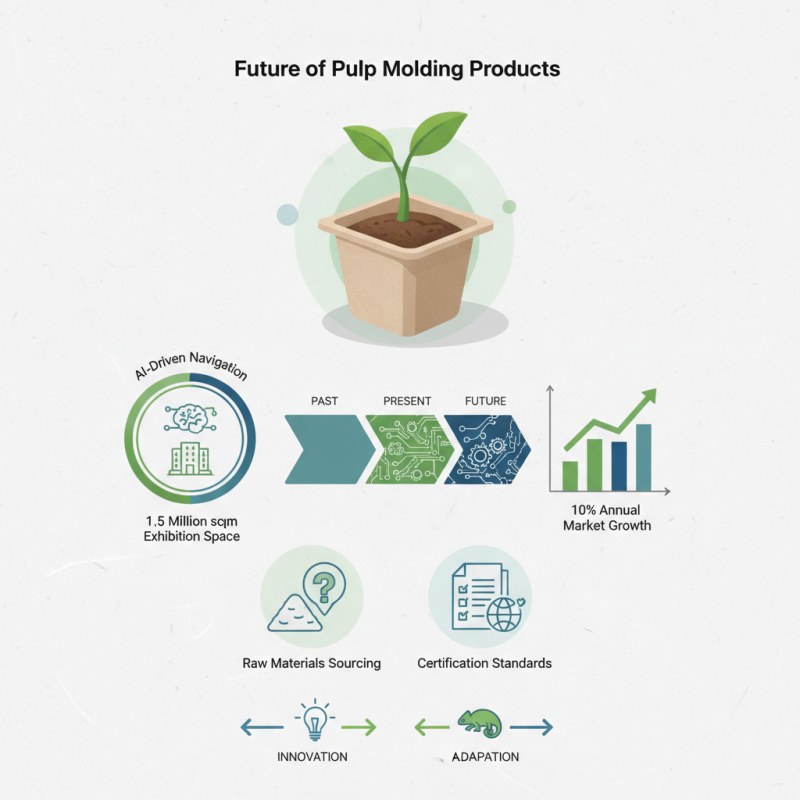
The upcoming 2026 Canton Fair promises to be a significant event for the pulp-molding industry. This year, advancements such as AI-driven navigation will enhance visitor experience. With over 1.5 million square meters of exhibition space, it is crucial for buyers to connect with qualified suppliers efficiently. Notably, the fair will showcase innovative products in several phases, focusing on advanced manufacturing and quality home furnishings.
According to industry expert Dr. Emily Jiang, "Pulp-molding represents the future of sustainable packaging." Her insights reflect the growing demand for eco-friendly alternatives. Data shows that the global pulp-molding market is expected to grow by 10% annually. However, challenges remain in sourcing high-quality raw materials and meeting certification standards. While the industry thrives, continuous innovation and adaptation are essential for success.
China's Leading Pulp Molding Products at the 2026 Canton Fair
At the 2026 Canton Fair, China's pulp molding products will showcase remarkable advancements. Pulp molding is increasingly recognized as an eco-friendly solution. It contributes to sustainable packaging and reduces plastic waste. According to a recent industry report, the global pulp molding market is expected to grow at a CAGR of 5.7% from 2023 to 2030. This growth highlights the rising demand for biodegradable packaging solutions.
China has become a major player in this sector. The country produces a wide variety of pulp molded products. From trays to protective packaging, the options are vast. Yet, challenges remain. Quality control can be inconsistent among manufacturers, leading to varied product reliability. Additionally, some consumers still lack awareness of the benefits of pulp molding. As the fair approaches, addressing these issues will be crucial.
The Canton Fair serves as a platform to feature innovative designs. It encourages collaboration and dialogue among experts. More businesses are investing in research and development. They aim to improve product efficiency and sustainability. As the industry evolves, there is a need for continuous improvement. The shift towards more sustainable practices is a journey, not a destination.
Overview of Pulp Molding Industry in China
The pulp molding industry in China is rapidly evolving. This sector focuses on creating eco-friendly packaging and products from recycled paper. Many manufacturers are stepping up to meet the growing demand for sustainable options. In recent years, technological advancements have boosted production efficiency. This has led to higher-quality products at competitive prices.
Pulp molding products are diverse. From trays and containers to custom shapes, the possibilities are abundant. However, some manufacturers still face challenges regarding consistency in quality. There are varying levels of expertise across the industry. This inconsistency can lead to customer dissatisfaction during quality checks. Continuous improvement is necessary for long-term success.
Sustainability remains a driving force in this industry. Consumers are increasingly seeking greener alternatives. Pulp molding fits well within this trend, but the market is competitive. As more players enter, the need for innovation becomes crucial. Companies must embrace new ideas and practices to stay relevant. The future of pulp molding in China holds great potential, but it demands careful attention to quality and sustainability.
Key Manufacturers and Their Innovations in Pulp Molding
Pulp molding products have gained significant attention in recent years. The demand continues to rise as sustainability becomes a priority. According to market research, the global pulp molding market is expected to reach $5 billion by 2025. Key innovations from manufacturers will drive this growth.
In recent years, manufacturers have focused on improving production efficiency. Some have introduced automated systems that reduce waste and time. This shift has resulted in products that are more eco-friendly. Many companies now use recycled materials in their pulp molding processes. This change appeals to environmentally conscious consumers.
However, challenges remain. The quality of raw materials varies, which can impact final products. Testing and quality control are crucial. Innovations must not only focus on production speed but also on ensuring product integrity. The rise of biodegradable alternatives is promising, yet it requires careful evaluation of material performance.
Market Trends for Pulp Molding Products at the Canton Fair
The pulp molding products market is evolving rapidly. The 2026 Canton Fair will showcase innovations and sustainability in this sector. According to recent industry reports, the global pulp molding market is projected to grow at a CAGR of 6.5% from 2022 to 2028. This trend reflects increasing demand for eco-friendly packaging solutions.
At the Canton Fair, trends indicate a shift towards biodegradable materials. Manufacturers are exploring alternative fibers like bamboo and wheat straw. In 2023, 55% of consumers prioritized sustainable packaging. This changing preference influences product design and material sourcing. However, some companies still struggle with cost-effective production methods. Balancing quality with sustainability can be challenging.
The fair will present a platform for discussing these challenges. Networking opportunities can foster collaborations between producers and technology providers. A significant percentage of attendees will seek insights into optimizing production. Companies need to embrace innovation to stay competitive. Failure to adapt could result in lost market share as consumer habits continue to evolve.
Sustainability and Eco-friendliness in China's Pulp Molding Sector
China's pulp molding sector is experiencing a green revolution. Sustainability and eco-friendliness are now key priorities. This shift is driven by consumer demand for products that are environmentally safe. Companies are increasingly focusing on using renewable resources. The pulp used for molding is often sourced from recycled paper. This approach minimizes waste and reduces the carbon footprint.
The future looks bright, but challenges remain. Not all manufacturers adopt sustainable practices. Some still rely on non-renewable resources. This inconsistency raises questions about the sector's overall impact. Transparency is needed among producers. Consumers must be informed about the sourcing processes. Education on eco-friendly benefits is crucial for market growth.
Innovation is vital in this field. New techniques are being developed to enhance product performance. While many companies strive for eco-friendliness, not everyone achieves it. There is room for improvement. Greater collaboration among industry players can lead to better standards. Sharing knowledge will foster a more sustainable future for pulp molding in China.