

10 Best PVDF Tubing Manufacturers for Global Buyers
Theodore von Kármán, an influential engineer, offered a useful reminder: “Scientists study the world as it is; engineers create the world that has never been.” That idea applies to choosing PVDF tubing, where material properties meet practical operating demands. But a famous engineering maxim cannot replace product data or application testing.
For global buyers, the right manufacturer is not simply the one with the broadest catalog. Tubing may need to handle aggressive chemicals, repeated cleaning, or tight routing inside a compact instrument. Wall thickness, dimensional tolerances, temperature limits, and documentation can all shape performance. A tube that looks identical on a drawing may behave differently in service. Small details matter.
This guide examines 10 PVDF tubing manufacturers through buyer-focused criteria, including product range, customization, quality controls, and international support. It is not a substitute for technical review. Buyers should confirm specifications, request relevant test records, and check compatibility under actual operating conditions. A datasheet helps, but it may not answer every question. That uncertainty deserves attention.
Manufacturers also differ in how clearly they explain limitations, lead times, and available evidence. Those differences can matter as much as headline specifications. The rankings and comparisons ahead aim to make initial research more manageable, not to declare one supplier right for every project. A careful shortlist is a good start. A validated fit is better.
What PVDF Tubing Is and Where It Is Used
10 Best PVDF Tubing Manufacturers for Global Buyers
What PVDF Tubing Is and Where It Is Used
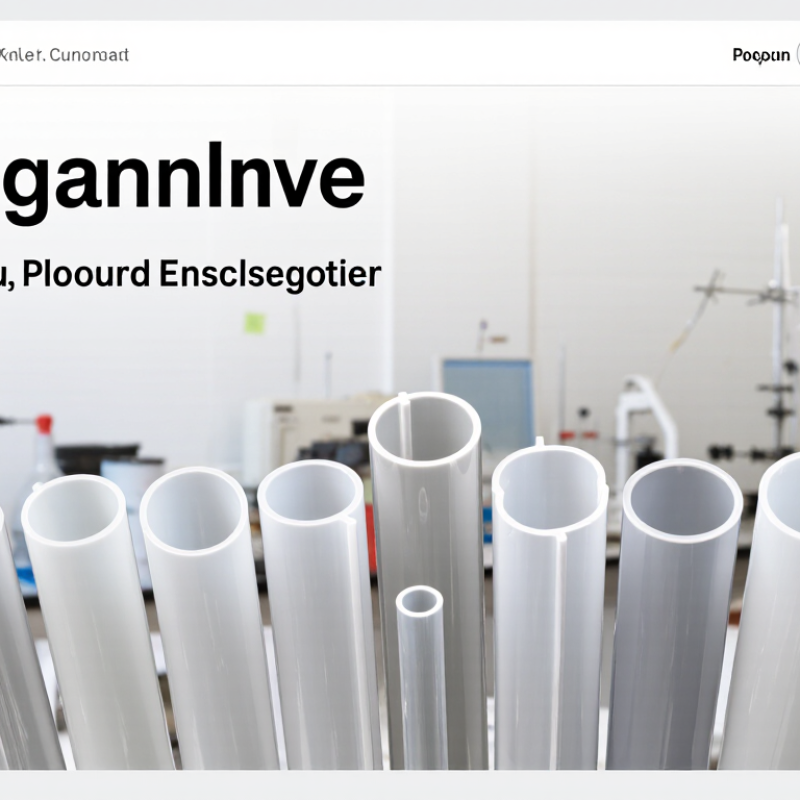
PVDF tubing is made from polyvinylidene fluoride, a fluoropolymer valued for chemical resistance, strength, and low moisture absorption. It can carry many acids, bases, and solvents, but compatibility depends on the fluid, temperature, pressure, and tubing grade. One chart rarely tells the whole story. In chemical processing, PVDF lines may transfer corrosive liquids between storage vessels and dosing equipment. Water treatment systems also use them for chemical feed and sampling. In laboratories, small-bore tubing can connect pumps, sensors, and test equipment.
PVDF is not a universal solution. High temperatures, repeated bending, or pressure surges can affect service life, and some chemicals may still cause swelling or stress cracking. Installation matters, too: a poorly matched fitting can leak even when the tubing itself is suitable. Check the manufacturer’s chemical-resistance data, operating limits, and dimensional tolerances before specifying a line. When the fluid or operating conditions are uncertain, test a sample under realistic conditions.
Tips: Match the tubing’s inside diameter to the required flow rate. Inspect cut ends for burrs, support long runs, and avoid tight bends. Keep a record of fluid concentration and operating temperature; small changes can matter. Don’t guess.
10 Best PVDF Tubing Manufacturers for Global Buyers - What PVDF Tubing Is and Where It Is Used
PVDF (polyvinylidene fluoride) is a fluoropolymer used to make tubing with useful chemical resistance and strength. Its performance depends on the resin grade, tubing construction, temperature, pressure, and the fluid being conveyed. The table below is a practical, brand-neutral framework for comparing manufacturers and matching PVDF tubing to common applications; it is not a ranked list of companies.
| No. | Manufacturer capability to assess | Why it matters to buyers | Relevant PVDF tubing use | Evidence to request |
|---|---|---|---|---|
| 1 | PVDF resin grade and material traceability | PVDF grades can differ in processing characteristics and performance. Traceability helps buyers identify the material used in a production lot. | Chemical transfer lines and industrial fluid-handling systems | Resin grade, lot identification, material data sheet, and certificate of analysis where available |
| 2 | Documented chemical compatibility | Compatibility depends on the chemical, concentration, temperature, exposure time, and mechanical stress; no polymer is suitable for every fluid or condition. | Acid, base, and other process-chemical lines after application-specific review | Written compatibility guidance for the actual fluid, concentration, operating temperature, and exposure conditions |
| 3 | Published temperature and pressure limits | Allowable pressure generally depends on tubing dimensions, wall thickness, temperature, and service conditions. Limits should be confirmed for the specific product. | Process equipment, dosing systems, and temperature-controlled fluid lines | Product-specific pressure and temperature ratings, test methods, and derating guidance |
| 4 | Dimensional control and available sizes | Consistent inside diameter, outside diameter, and wall thickness help with assembly, flow control, and connection fit. | Instrument lines, sampling lines, and equipment connections | Dimensional tolerances, inspection method, standard size range, and custom-size capability |
| 5 | Purity and contamination controls | For sensitive processes, extractables, particles, handling, and packaging requirements should be assessed for the intended system. | High-purity chemical delivery and selected semiconductor or laboratory applications | Cleanliness or extractables data relevant to the application, plus packaging and handling details |
| 6 | Food-contact or pharmaceutical documentation, if required | Regulatory suitability is grade- and jurisdiction-specific; it should not be assumed for every PVDF product. | Selected food-processing or pharmaceutical process systems where material compliance is required | Current, product-specific declarations identifying the applicable regulation and conditions of use |
| 7 | Joining and fitting compatibility | Connection methods and fittings affect system integrity. Compatibility depends on the tubing design and the selected joining or mechanical connection method. | Skid-mounted process equipment, chemical cabinets, and fluid distribution systems | Recommended fittings, joining instructions, dimensional compatibility, and assembly guidance |
| 8 | Quality management and production consistency | Defined production and inspection controls support repeatable dimensions and product documentation across orders. | Industrial systems requiring repeat replacement parts or recurring tubing supply | Quality-system scope, inspection plan, lot-control process, and nonconformance procedure |
| 9 | Application engineering and technical support | Reviewing actual operating conditions can help identify unsuitable assumptions before a tubing specification is finalized. | New installations, chemical changes, and systems with unusual temperature or pressure conditions | Technical review process and written confirmation of the proposed product’s intended service conditions |
| 10 | Packaging, lead time, and export documentation | Packaging requirements, delivery schedules, and import documentation can affect project timing and product handling for international buyers. | Global plant projects, maintenance inventories, and multi-site procurement | Packaging specification, stated lead time, country-of-origin information, and available shipping documents |
Before purchase, confirm the exact tubing grade, dimensions, fluid compatibility, operating limits, and any regulatory requirements with the manufacturer for the intended service.
Related Posts
-
Top Uses of Plastic Tubing in Everyday Applications?
-

10 Best Custom Plastic Extrusion Manufacturers?
-
How to Choose the Right Clear Tube for Your Needs?
-

Why You Should Choose Plastic Channels for Your Next Project
-
10 Essential Tips for Optimizing Plastic Extrusion Profiles and Enhancing Production Efficiency
-
How to Choose the Right Plastic Tubing for Your Project?