Why Choose Automated Crane Systems at the 2026 Canton Fair?
The 2026 Canton Fair is set to spotlight innovative technologies, including Automated Crane Systems. These systems are transforming logistics and material handling. According to a recent industry report by the Robotics and Automation Association, the global market for Automated Crane Systems is projected to reach $6 billion by 2027, reflecting an annual growth rate of 8.5%.
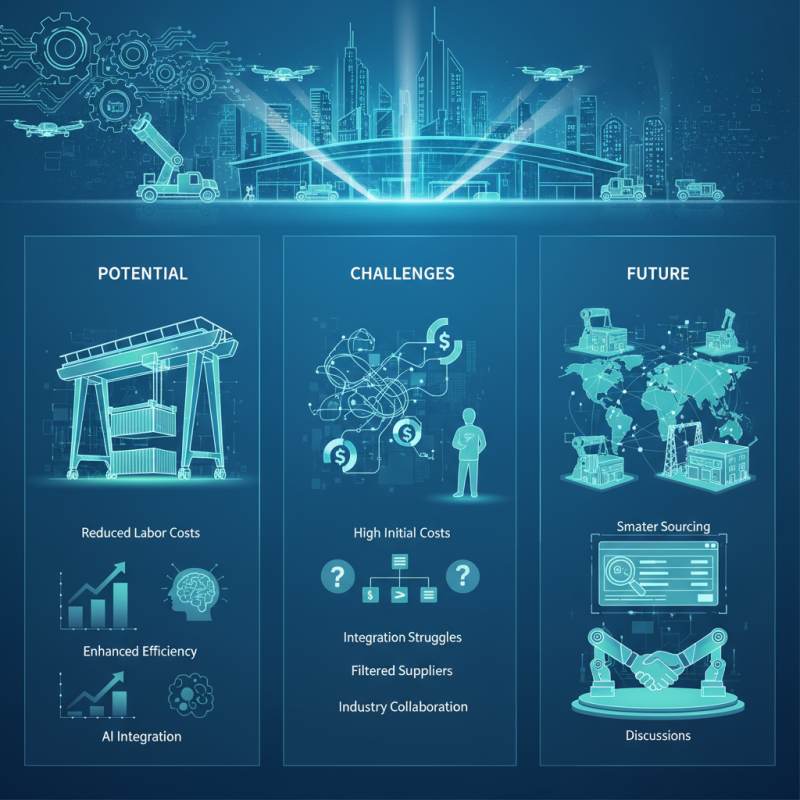
Dr. Emily Tran, an expert in automation technologies, emphasizes, “Automated Crane Systems reduce labor costs and enhance operational efficiency.” At the Fair, advancements in AI integration will facilitate smarter and more efficient navigation within the expansive exhibit space. The introduction of AI search features allows buyers to filter suppliers based on certifications, streamlining the sourcing process effectively.
Despite these advancements, challenges remain. Many companies struggle to fully integrate these systems due to high initial costs and complexity. An effective transition requires proper planning and training. The evolving landscape of material handling at the Canton Fair will showcase both the potential and the hurdles of implementing Automated Crane Systems, driving discussion among industry professionals.
Advantages of Automated Crane Systems for Modern Industry
Automated crane systems are transforming the landscape of modern industry. These systems increase operational efficiency. According to the latest industry report, businesses can boost productivity by up to 30% when they implement automation. This efficiency comes from reduced manual handling and faster load cycles.
Safety is another critical advantage. Automated systems minimize human error, significantly lowering accident rates. Industries report a 50% decrease in workplace incidents after adopting automated cranes. However, the initial investment can be challenging. Many companies hesitate due to high upfront costs. Yet, the long-term savings often outweigh this concern.
Maintenance, while critical, may also pose challenges. Automated cranes require regular checks. Companies sometimes overlook this necessity, risking system failures. Still, when maintained properly, these cranes offer reliability. Investing in training for personnel is also essential. Proper training enhances the effectiveness of these systems, ensuring smooth operations.
Key Features of Automated Crane Systems at the Canton Fair
Automated crane systems are transforming logistics. At the 2026 Canton Fair, their benefits are clear to see. These systems enhance efficiency. Tasks that once took hours can now be completed in minutes. The design is user-friendly, making it simple to operate.
One of the key features is precision. Automated cranes move loads with incredible accuracy. This precise movement reduces accidents and damage. Safety is a priority, especially in busy environments. However, this technology can also create challenges. Initial installation requires careful planning and training. Not all facilities are ready for such changes.
Another vital aspect is integration. Automated systems connect seamlessly with other equipment. This connectivity streamlines operations, but not all components work perfectly together right away. Some fine-tuning may be necessary. Companies must be prepared for tweaks and adjustments. The adaptability of automated crane systems may vary between different setups. Understanding potential hiccups is essential, ensuring smooth operation at the fair.
Comparing Automated and Traditional Crane Systems
Automated crane systems have gained attention at events like the Canton Fair. They offer distinct advantages over traditional cranes. For instance, automated systems can reduce labor costs and enhance efficiency. They operate with greater precision, minimizing errors during lifting and transporting goods. However, they require a significant upfront investment.
When comparing these systems, consider the automation level. Automated cranes reduce manual intervention, which lessens the risk of accidents. Traditional cranes might offer more flexibility in certain situations, but they often involve continuous labor supervision. Thus, it’s essential to evaluate your operational needs before making a choice.
**Tip:** Assess your project's scale. Smaller operations might benefit from a traditional approach. Larger projects may warrant automation. Remember that automated systems need regular maintenance to function effectively. This could lead to additional costs over time. Keep these factors in mind to ensure a wise investment.
Comparison of Automated and Traditional Crane Systems
Future Trends in Crane Automation Technology
The future of crane automation technology is both promising and complex. Recent reports indicate that the global crane automation market is set to grow significantly by 2026. It is expected to reach nearly $6 billion, with a compound annual growth rate (CAGR) of around 14%. This surge is driven by the increasing demand for efficiency and safety in industrial environments.
Automation in cranes enhances precision in operations. With advanced sensors, cranes can detect load weight and balance more accurately. This reduces the risk of accidents, which is crucial. However, integrating these technologies requires careful planning. Companies must ensure their workforce is adequately trained. A lack of training may lead to operational mishaps.
The role of AI in crane systems cannot be overlooked. AI can predict maintenance needs, thus reducing downtime. Yet, reliance on technology means potential vulnerabilities. Cybersecurity concerns arise as connected systems become more prevalent. Businesses must navigate these risks while adopting new technologies. Overall, the path toward a fully automated crane system is filled with both opportunities and challenges.
Impact of Automation on Efficiency and Safety in Warehousing
Automated crane systems are transforming the warehousing landscape. With these systems, efficiency reaches new heights. They can move heavy items much quicker than manual processes. This speed is crucial in busy environments where time is money. Moreover, automation reduces human error. Fewer mistakes mean less wasted time and resources.
Safety is another significant benefit of automation. Cranes can operate in potentially hazardous conditions without putting workers at risk. They follow programmed paths, minimizing the chance of accidents. However, relying entirely on technology may have its drawbacks. System malfunctions can lead to delays and costly downtime. Regular maintenance is vital to ensure smooth operation.
Despite these challenges, the benefits of automated crane systems are compelling. They streamline operations and enhance safety. Companies should weigh both advantages and potential pitfalls. It's essential to adapt and refine processes in the face of advancements.
Why Choose Automated Crane Systems at the 2026 Canton Fair? - Impact of Automation on Efficiency and Safety in Warehousing
| Feature | Manual Operation | Automated Crane System |
| Efficiency | Low (50-60% utilization) | High (80-90% utilization) |
| Safety Incidents | 10-15 incidents/year | 1-3 incidents/year |
| Training Time | 2-4 weeks | 1-2 days |
| Operational Cost (monthly) | $5,000 | $2,500 |
| Space Requirement | More space needed | Compact design |

