2026 Best PVC Extrusion Profiles for Global Buyers

Choosing the right pvc extrusion profiles in 2026 requires more than comparing prices or browsing attractive catalogs. Global buyers must examine material grades, dimensional tolerance, surface finish, and production consistency. A profile may look perfect in a sample. It can still fail during installation.

This guide introduces practical options for construction, furniture, glazing, electrical protection, and industrial assembly. It considers rigid PVC, flexible PVC, co-extruded designs, and profiles with weather-resistant formulations. Each option should match its working environment, including temperature changes, moisture, sunlight, impact, and chemical exposure. Small details matter. A tight corner radius can simplify installation, while an inaccurate wall thickness may create visible gaps.

Experienced procurement teams should request technical data sheets, sample approvals, and recent quality records. They should also confirm tooling capability, color consistency, packaging methods, and shipment protection. Reliable suppliers normally explain their testing procedures instead of making broad claims. Independent verification remains valuable.

No profile fits every project. That is worth remembering. Some recommendations may require revision after field testing, especially in unfamiliar climates. Buyers should compare performance data with actual installation conditions. This approach supports clearer decisions, fewer replacements, and more dependable long-term results. The following overview helps international purchasers evaluate pvc extrusion profiles with greater confidence, practical judgment, and attention to measurable quality.
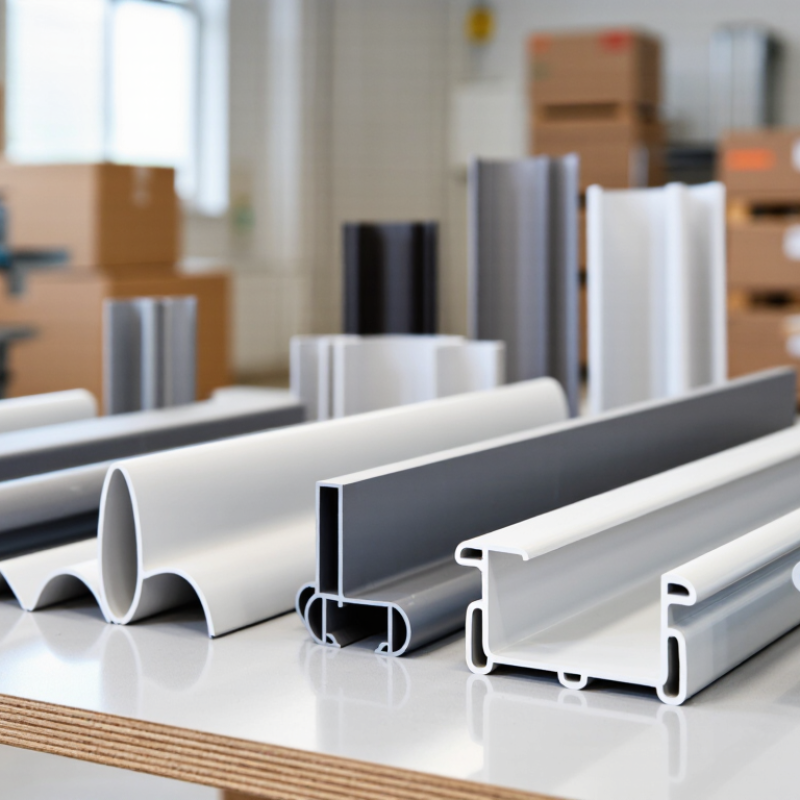
2026 Best PVC Extrusion Profiles for Global Buyers

PVC Extrusion Profiles: Definition, Types, and Core Applications

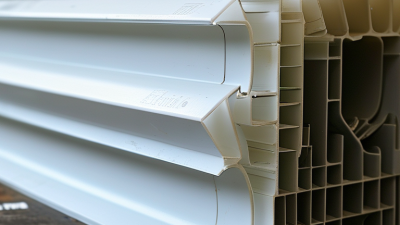
PVC extrusion profiles are continuous plastic sections formed by pushing softened polyvinyl chloride through a shaped die. Unlike injection-molded parts, they maintain a fixed cross-section along their length. Common types include rigid profiles, flexible profiles, co-extruded seals, decorative trims, and reinforced sections. Their shape controls performance: a hollow chamber improves insulation, while a flexible edge supports sealing. Small design choices matter.

Global demand remains linked to construction, renovation, and infrastructure. Grand View Research estimates the global PVC market reached about USD 45.7 billion in 2023, with continued growth expected through 2030. The report identifies building and construction as a major application sector. PVC window frames, door surrounds, wall trims, cable ducts, and flooring edges show how extrusion profiles enter daily projects. In practice, buyers should check dimensional tolerance, impact strength, UV resistance, flame behavior, and temperature range. A profile for a cold warehouse may fail beside a sun-heated façade.

Material selection is not always simple. Rigid PVC offers stiffness and lower maintenance, while flexible PVC improves sealing around irregular surfaces. Co-extruded designs combine both properties in one component. ISO 1163-1 supports consistent terminology for unplasticized PVC materials, but standards alone cannot replace application testing. A catalog sample may look perfect. It can still warp, discolor, or shrink after installation. Regional climate, installation method, and recycling requirements deserve equal attention._久久爱

Key Material Properties and Performance Standards for Global Buyers

PVC extrusion profiles for global buyers must prove more than shape and low cost. They need stable dimensions, controlled impact strength, and predictable weather resistance. In production trials, a profile can look perfect at 23°C yet distort near a dark façade. That gap matters.

PlasticsEurope’s Plastics—the Fast Facts 2024 reports that PVC accounts for roughly 9% of European plastics demand. This supports PVC’s broad construction use, but demand alone proves nothing. Ask suppliers for test results under EN 12608 for window profiles, or ASTM D1784 for rigid PVC compound classification. Thermal expansion also deserves attention. Typical PVC values range near 50–80 × 10⁻⁶/K, based on ASTM D696 testing practices. A 2-metre section may therefore move several millimetres across a large temperature swing. The installation design must allow movement.

Tips: Check the exact compound, not only “premium PVC.” Request tensile strength, impact, Vicat softening temperature, colour-change data, and artificial-weathering results under ISO 4892-3. For outdoor profiles, compare test duration and irradiance settings. They are not always equivalent. Ask for production-lot traceability and dimensional inspection records. A certificate without test conditions is weak evidence. One practical mistake is specifying high rigidity while ignoring low-temperature impact. That trade-off deserves review before approval.

How to Select the Right PVC Profile for Each Project

2026 Best PVC Extrusion Profiles for Global Buyers

Selecting the right PVC profile starts with the project environment, not the catalogue photograph. A rigid window profile needs dimensional stability, weather resistance, and controlled impact performance. A cable duct requires different priorities, including insulation, flame behavior, and installation flexibility. According to Grand View Research, the global PVC market was valued at over USD 40 billion in 2023, reflecting strong demand across construction, infrastructure, and industrial applications. However, market size does not make every profile suitable.

Check the operating temperature, ultraviolet exposure, chemical contact, and expected service life. For window systems, buyers should review EN 12608 requirements and verify heat, impact, and weathering results. ASTM D1784 helps define rigid PVC compound properties, while ISO 1163 supports material classification and testing. Ask for test reports, tolerances, formulation details, and batch traceability. A profile that fits perfectly in a warm factory may shrink or distort after installation in a cold region.

Wall thickness matters more than appearance. Thin sections can reduce cost, but they may twist during transport or fail under repeated loading. I have seen projects specify a general-purpose grade and later discover poor screw retention. That mistake is avoidable. Still, no profile is perfect. Extra reinforcement can increase weight, tooling complexity, and waste. Buyers should compare the complete cost, including dies, machining, packaging, shipping, and replacement risk. Industry data from PlasticsEurope also shows PVC remains a significant material in European plastics production, but local standards and recycling expectations continue to influence specification decisions.

2026 Best PVC Extrusion Profiles for Global Buyers

How to Select the Right PVC Profile for Each Project

The chart compares typical design priorities for common rigid PVC extrusion applications. Use it as an initial engineering guide, then confirm the required dimensions, fire performance, impact resistance, UV stability, and applicable local standards with the project specification.

Higher scores indicate a stronger selection priority for that application. Window and door systems emphasize weatherability and dimensional stability; cable trunking prioritizes electrical insulation and flame performance; conduit systems require impact resistance and dimensional consistency; decorative trims focus on surface quality and profile accuracy.

Manufacturing Processes, Quality Control, and Certification Requirements

2026 Best PVC Extrusion Profiles for Global Buyers

Manufacturing Processes, Quality Control, and Certification Requirements

Reliable PVC extrusion begins with controlled raw materials and a stable formulation. Producers blend PVC resin, impact modifiers, stabilizers, pigments, and processing aids. The dry blend enters a twin-screw extruder, where heat and shear create a uniform melt. A precision die forms the profile. Calibration tables then control its dimensions through vacuum sizing and water cooling. Haul-off equipment maintains speed, while automated cutters produce consistent lengths. Small temperature changes can still cause warping. This detail is often underestimated.

Quality control should cover every production stage, not only final inspection. Experienced teams check melt temperature, surface finish, wall thickness, color, density, and dimensional tolerances. They also test impact strength, heat resistance, weathering performance, and screw retention when relevant. Samples should represent each batch. Records should connect test results with material lots and production dates. No process is perfect. Operators may miss gradual die wear without disciplined monitoring.

Tips: Ask for a documented control plan, recent test reports, and traceability records. Confirm whether testing follows recognized methods, such as ISO or ASTM procedures. Certification needs depend on the destination and application. Construction profiles may require fire, weathering, or building-product evidence. Electrical applications can need additional safety documentation. Environmental compliance may involve restricted-substance declarations and recycling information. Verify certificates directly with the issuing body, because outdated documents create unnecessary risk.

Global Sourcing, Cost Factors, and Supplier Evaluation Criteria

2026 Best PVC Extrusion Profiles for Global Buyers

Global sourcing starts with a precise profile drawing, not a broad product description. Specify dimensions, wall thickness, surface finish, color tolerance, hardness, and application conditions. Start with the drawing. A reliable supplier should confirm tooling feasibility before quoting. Request production samples, dimensional reports, material declarations, and packaging photographs. Samples can mislead. Check samples from regular production, not specially selected pieces.

Cost depends on more than resin price. Tooling design, extrusion speed, electricity, labor, trimming, inspection, packaging, and freight can change the final landed cost. Recycled content may reduce material expense, but it can affect color stability or impact performance. Ask for a cost breakdown. Compare prices using the same length, weight, tolerances, and delivery terms. A low quote can hide higher waste or weak packaging.

Supplier evaluation should combine technical evidence with operational behavior. Review extrusion capacity, calibration equipment, quality records, process controls, and corrective-action procedures. Ask how the supplier handles warpage, surface marks, and batch variation. Check lead times against actual shipment history when available. No scorecard is perfect. One weakness remains: buyers often overvalue factory size and undervalue communication. A smaller producer with clear records may reduce sourcing risk more effectively than a larger but less transparent factory. Insist on pre-shipment inspection for the first orders, then adjust the frequency according to performance.

2026 Best PVC Extrusion Profiles for Global Buyers - Global Sourcing, Cost Factors, and Supplier Evaluation Criteria
Practical comparison framework for selecting PVC extrusion profiles, estimating landed cost, and evaluating international suppliers.
Profile Category Typical Applications Common Material and Performance Typical Wall Thickness Indicative Export Price Range* Main Cost Drivers Global Sourcing Considerations Supplier Evaluation Priorities
Rigid PVC Profiles Window frames, door frames, partition systems, architectural trims, and construction assemblies Unplasticized PVC; commonly designed for dimensional stability, weather resistance, and low maintenance 1.5–3.5 mm, depending on section size and structural requirements US$1.80–4.80 per kg Resin grade, impact modifiers, titanium dioxide, stabilizers, profile complexity, and tooling Confirm climate suitability, UV requirements, applicable building standards, and packaging protection for long-distance transport Material traceability, dimensional control, weathering data, and tooling capability
Flexible PVC Profiles Seals, edge guards, gaskets, automotive trim, protective channels, and cable protection Plasticized PVC; hardness is commonly specified by Shore A and may range from soft to semi-rigid 1.0–5.0 mm, with thicker sections used for impact or sealing functions US$2.00–5.50 per kg Plasticizer type, hardness, compound formulation, color, surface finish, and scrap rate Check restrictions on plasticizers, odor requirements, migration performance, and low-temperature flexibility Hardness consistency, plasticizer compliance, sealing performance, and batch-to-batch stability
Co-Extruded PVC Profiles Window seals, dual-hardness trims, decorative edging, and profiles combining rigid and flexible zones Two or more PVC compounds extruded together to combine structural support with sealing or cushioning 1.5–6.0 mm, depending on the number of layers and functional zones US$2.80–7.00 per kg Multiple extruders, compound compatibility, line speed, tooling precision, and start-up waste Require cross-section drawings, bonding specifications, sample approval, and clear tolerance agreements Co-extrusion experience, layer adhesion testing, profile geometry control, and stable production speed
Foamed PVC Profiles Signage frames, decorative moldings, lightweight panels, furniture components, and interior trims Cellular PVC with reduced density; suitable where low weight and easy machining are important 2.0–10.0 mm, with larger dimensions possible for board and molding systems US$1.60–4.20 per kg Density, foaming system, surface skin quality, filler content, color, and dimensional stability Compare price by density and usable volume, not only by weight; inspect surface quality and cut-edge consistency Density uniformity, surface finish, machining behavior, and resistance to warping
Decorative PVC Profiles Furniture edging, wall panels, ceiling systems, flooring transitions, and interior design details Rigid or semi-rigid PVC with embossed, printed, laminated, or wood-look surfaces 0.8–3.0 mm for edging and 2.0–6.0 mm for larger decorative sections US$2.20–6.50 per kg Surface treatment, color matching, film or foil, tooling detail, minimum order quantity, and packaging Approve color samples under agreed lighting conditions and define acceptable shade variation before production Color control, surface adhesion, scratch resistance, sample retention, and repeatability
Sanitary and Medical-Use Profiles Protective edging, tubing-related components, equipment trims, cleanable enclosures, and healthcare assemblies Formulated PVC selected for cleanability, chemical resistance, and application-specific regulatory requirements 1.0–4.0 mm, subject to functional and compliance requirements US$3.50–9.00 per kg Specialized compounds, testing, controlled production, documentation, inspection, and traceability Define the destination-market requirements before quotation; request declarations, test reports, and change-control procedures Quality management system, traceability, contamination control, technical documentation, and audit readiness
Cable Management Profiles Cable ducts, wire covers, electrical channels, protective conduits, and equipment wiring systems Rigid or semi-rigid PVC designed for insulation, flame performance, impact resistance, and installation efficiency 1.0–4.0 mm, depending on the enclosure and impact requirements US$2.00–5.80 per kg Flame-retardant additives, electrical performance, profile design, locking features, and testing Confirm voltage environment, flame classification, operating temperature, and local electrical standards Electrical test data, flame-performance documentation, closure fit, and dimensional consistency
Automotive PVC Profiles Door seals, interior trim, luggage-compartment edging, window channels, and protective molding Flexible, rigid, or co-extruded PVC engineered for vibration, temperature variation, abrasion, and chemical exposure 1.0–5.0 mm, with localized reinforcement or inserts where required US$3.00–8.50 per kg Performance additives, inserts, tight tolerances, testing, tooling, and production validation Require detailed drawings, material specifications, environmental-cycle data, and documented change management Process capability, automotive quality controls, validation testing, traceability, and corrective-action response
Custom Industrial Profiles Machine guards, conveyor components, industrial seals, protective rails, and equipment assemblies PVC compound selected according to impact, chemical, thermal, electrical, or abrasion requirements 1.5–8.0 mm, based on application loading and profile geometry US$2.20–7.50 per kg Custom tooling, engineering time, compound development, testing, order volume, and production efficiency Provide a complete 2D or 3D drawing, annual demand, tolerance requirements, and intended operating environment Engineering support, first-article inspection, process capability, tooling ownership, and delivery reliability
Recycled-Content PVC Profiles Construction trims, non-critical protective components, packaging-related sections, and selected interior applications PVC containing verified recycled content; performance depends on source, purity, and formulation control 1.5–6.0 mm, depending on recycled content and required finish US$1.40–4.00 per kg Recycled feedstock quality, sorting, compounding, color consistency, testing, and certification Verify recycled-content claims, chain of custody, odor, color variation, and suitability for the destination market Feedstock traceability, consistency data, contamination controls, and transparent sustainability documentation
Low-Temperature PVC Profiles Cold-storage doors, outdoor equipment, refrigeration assemblies, and products used in cold climates Impact-modified PVC formulated to retain flexibility and toughness at reduced temperatures 1.5–5.0 mm, depending on impact and sealing requirements US$2.80–7.00 per kg Impact modifiers, low-temperature testing, formulation complexity, and controlled processing Specify minimum service temperature, outdoor exposure, installation method, and required impact test conditions Cold-impact data, formulation stability, dimensional control, and application-specific validation
*Indicative export price ranges are general 2026 budgeting references for standard PVC extrusion products and may vary by region, order volume, resin market conditions, profile weight, tooling, testing, packaging, Incoterms, and destination duties. Final quotations should be based on an approved drawing, material specification, annual volume, and delivery term.